Just as a sponge absorbs water, capacitors store electrical charge. But what makes a capacitor truly effective? The answer lies in the often-unseen hero: the dielectric. This insulating material, nestled between the capacitor's plates, is essential for enhancing its performance. This article will explore the fascinating relationship between capacitors and dielectrics, demystifying their role in modern electronics and highlighting their influence in both life and the world of technology. By understanding how they work, we unlock insights into improved energy storage and optimized electrical systems.
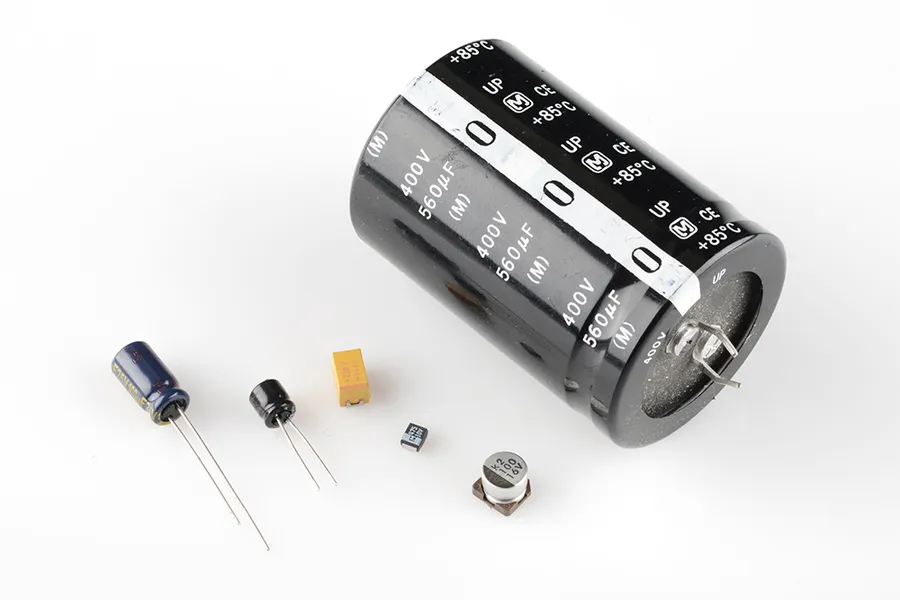
A capacitor is a fundamental electrical component designed to store energy in an electric field. At its core, a capacitor comprises two conductive plates separated by an insulating material known as a dielectric. This arrangement allows for the accumulation of electric charge, making capacitors essential in a wide range of electronic applications.
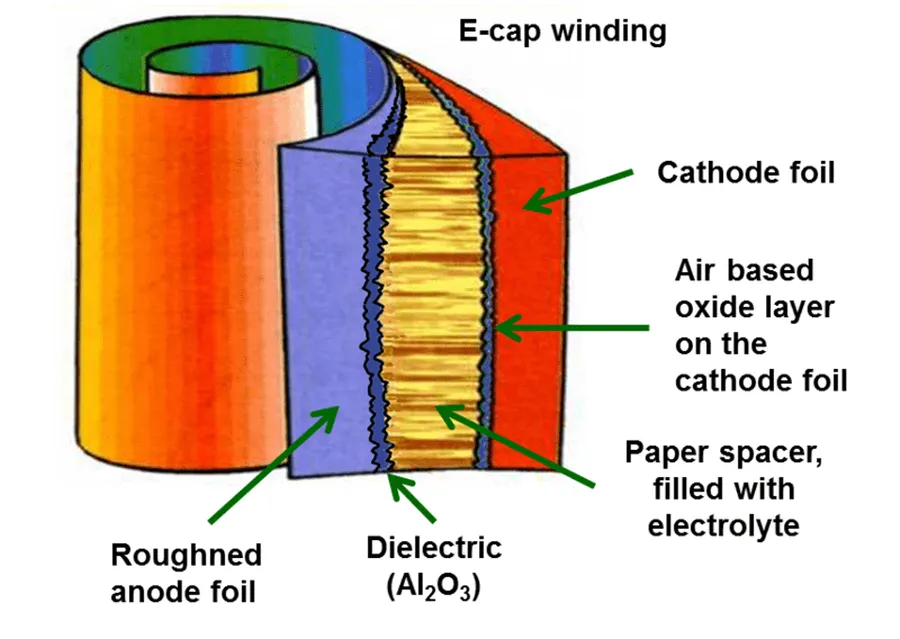
Dielectric materials are integral to the function of capacitors, acting primarily as insulators positioned between the conductive plates. This critical placement serves two fundamental purposes: enhancing the capacitor's capacity to store electrical charge and preventing direct physical contact between the plates, which would lead to a short circuit. The selection of a specific dielectric material directly influences a capacitor's performance characteristics.
Fundamentally, a capacitor's ability to store charge is directly linked to the dielectric material’s characteristics. By acting as an insulator, the dielectric facilitates the separation of charge, allowing for a greater accumulation of charge at a given voltage. This is a key feature in all capacitive applications, enabling the use of capacitors in electrical circuits.
The presence of a dielectric is not merely about insulation; it also plays a crucial role in increasing the capacitance of the device. This enhancement stems from a process called dielectric polarization, where the molecules of the dielectric align themselves in response to the electric field created by the charge on the capacitor plates. This polarization effect counteracts the field, reducing the net electric field, which allows for even more charge to be stored. Without the dielectric, a capacitor's ability to store charge would be significantly diminished.
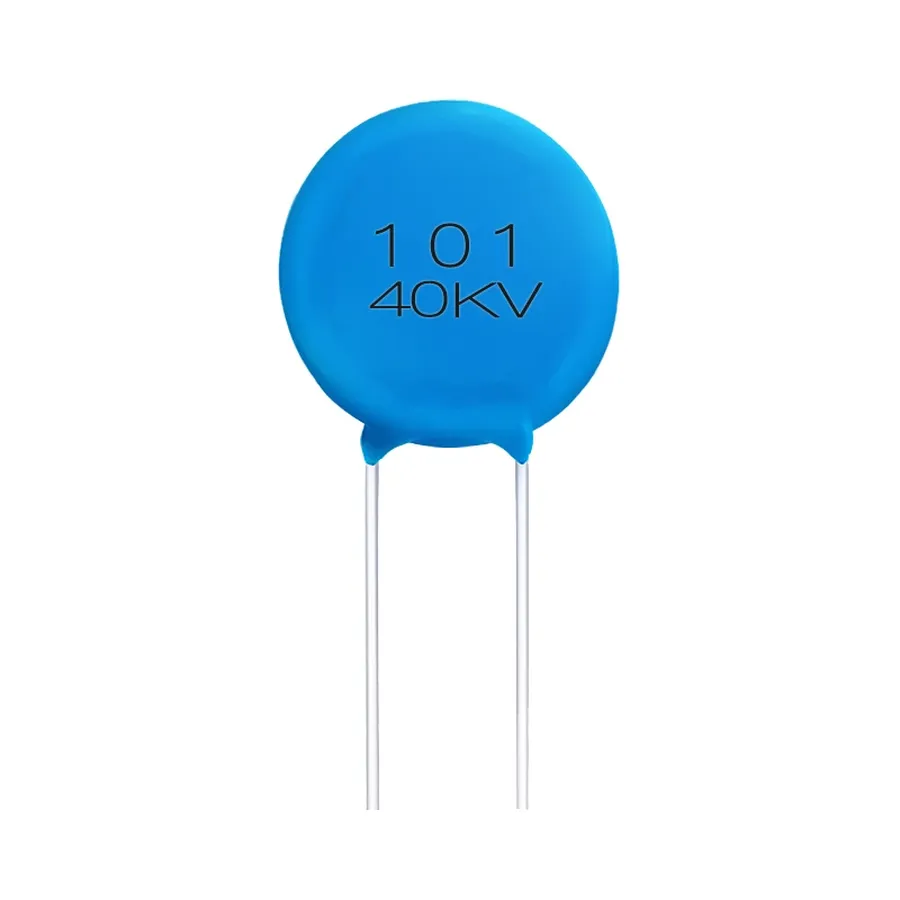
The insertion of a dielectric material between the conductive plates of a capacitor dramatically increases its ability to store charge. This enhancement stems from the dielectric's ability to reduce the electric field strength within the capacitor, thus allowing for a greater charge accumulation at a given voltage.
At the heart of this phenomenon is the reduction of the electric field. Without a dielectric, the electric field between the capacitor plates is determined by the applied voltage and the distance separating them. However, when a dielectric is introduced, it polarizes in response to the applied field. This polarization creates an internal electric field that opposes the external applied field. This reduction in the net electric field enables a capacitor to store more charge before reaching its maximum voltage capacity. The relationship between the capacitance with a dielectric (C) and without a dielectric (C₀) is given by the equation C = κC₀, where κ represents the dielectric constant, a measure of how effectively a material reduces the electric field within the capacitor.
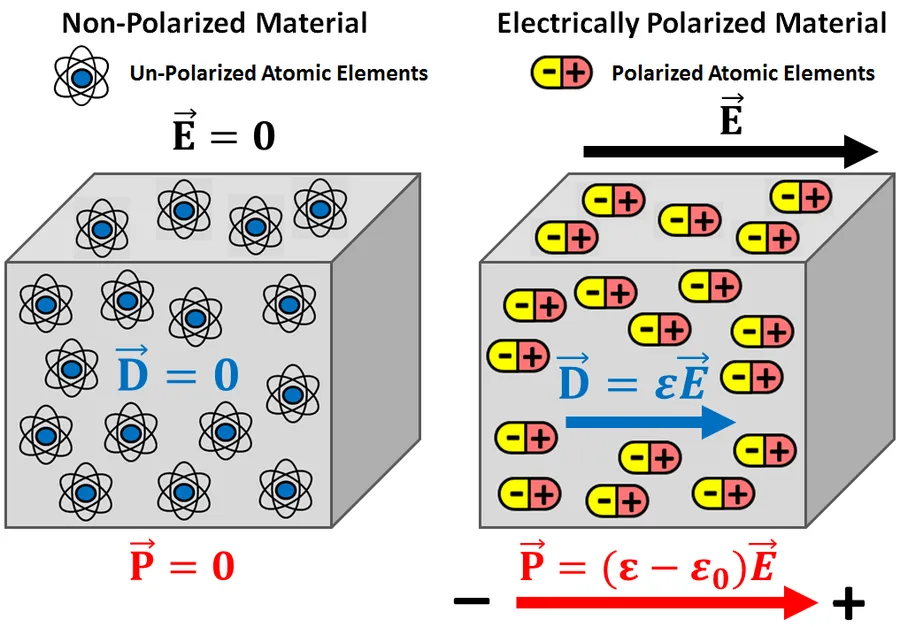
Dielectric polarization is the fundamental process by which a dielectric material enhances a capacitor's charge storage capacity. This phenomenon occurs when an external electric field is applied across the dielectric, causing a redistribution of charges within the material at the molecular level. This redistribution counteracts the applied field, enabling the capacitor to store more charge at a given voltage.
At the heart of dielectric polarization lies the behavior of molecular dipoles. In the absence of an electric field, these dipoles, present in many dielectric materials, are randomly oriented. When an electric field is applied, these dipoles tend to align themselves with the field. In essence, the negative ends of the dipoles orient towards the positive electrode of the capacitor, and the positive ends towards the negative electrode. This alignment isn’t perfect and is dependent on the material’s composition and the field's strength.
There are several types of polarization that can occur, including electronic polarization, where the electron cloud of an atom is displaced; atomic or ionic polarization, where ions are shifted in position; and orientational polarization, which involves the rotation of molecules with permanent dipole moments. The overall effect of these polarization mechanisms is to create an internal electric field that opposes the external applied field. This reduction in the net electric field within the capacitor allows for more charge to be stored at the same voltage, effectively increasing the capacitance.
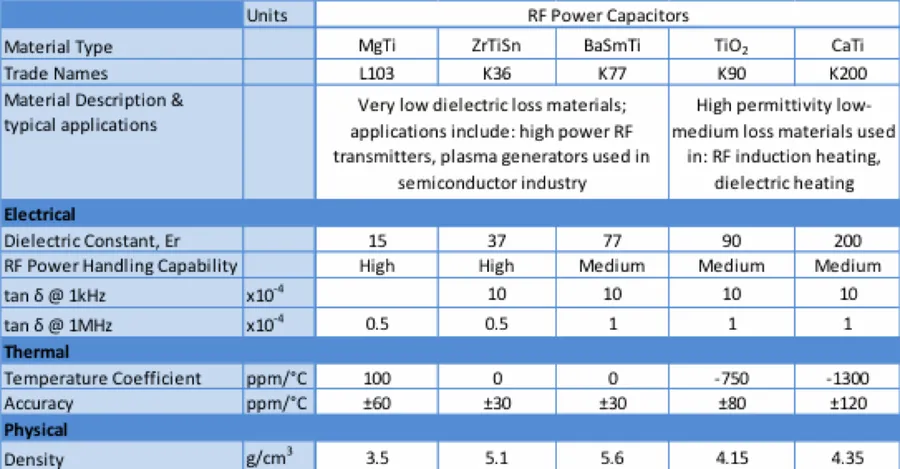
Dielectric materials, acting as insulators within capacitors, exhibit a range of properties that dictate their suitability for various applications. These materials are primarily characterized by their dielectric constant, breakdown strength, and operational temperature range. The choice of dielectric material significantly impacts a capacitor's performance, determining its capacitance, voltage tolerance, and stability across different operating conditions. Understanding the nuances of these materials is crucial for optimizing capacitor design and function.
Here, we explore common dielectric materials, highlighting their unique characteristics:
The selection of a dielectric material significantly impacts a capacitor's performance characteristics. This table provides a comparative analysis of common dielectric materials, highlighting their key properties and typical applications.
| Material | Dielectric Constant (εr) | Advantages | Disadvantages | Applications |
|---|---|---|---|---|
| Ceramic | 10 - 10,000 | High capacitance, temperature stability, readily available | Can be brittle, limited voltage handling, may exhibit piezoelectric effects | General purpose, high-frequency circuits, decoupling, bypass applications |
| Polymer (e.g., Polyester, Polypropylene) | 2 - 8 | Flexible, inexpensive, lightweight, good insulation properties | Lower capacitance per volume, can be temperature sensitive, potential for degradation over time | Bypass capacitors, filtering, general-purpose applications in consumer electronics |
| Teflon (PTFE) | 2.1 | Chemically inert, extremely low loss, high temperature stability, low dielectric absorption | Expensive, difficult to process, lower capacitance per volume | High-frequency circuits, critical timing circuits, applications requiring very low signal loss |
| Air | 1 | Low loss, high breakdown voltage, no dielectric absorption | Bulky, low capacitance, requires large plate separation | High-voltage applications, tuning circuits, variable capacitors |
| Mica | 6 - 8 | High precision, low loss, excellent stability | More expensive, can be brittle, limited availability | Precision circuits, RF applications, high-stability capacitors |
| Paper | 3-4 | Inexpensive, can be impregnated with oil to increase performance | Moisture absorption issues, limited temperature range, bulkier construction | Historically used for high voltage applications, less common in modern electronics |
| Glass | 4-10 | Good temperature stability, chemical inertness | Brittle, more expensive than ceramics | High reliability, high voltage applications, implantable medical devices |
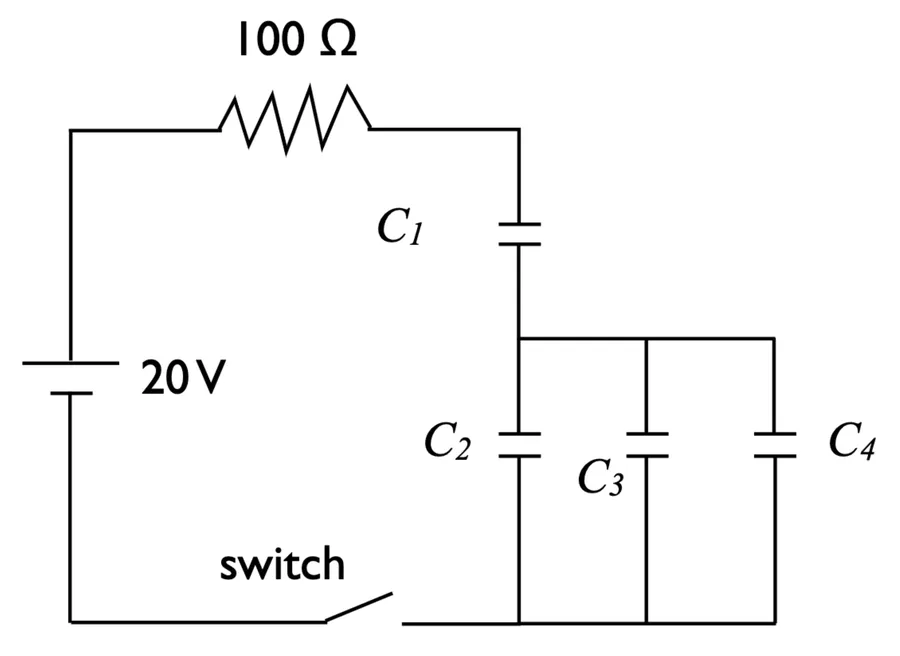
Removing the dielectric material from a capacitor significantly alters its electrical characteristics, primarily leading to a reduction in capacitance and a potential increase in voltage if the charge is held constant. This occurs because the dielectric material, with its unique permittivity, directly influences the capacitor's ability to store charge at a given voltage.
Specifically, the capacitance of a parallel-plate capacitor is described by the formula C = ε(A/d), where ε is the permittivity of the material between the plates, A is the area of the plates, and d is the separation distance. When a dielectric material is removed, the permittivity changes from that of the dielectric (ε_dielectric = ε_r * ε_0 where ε_r is the dielectric constant and ε_0 is the permittivity of free space) to that of free space (ε_0), which is significantly lower. Consequently, the capacitance decreases to a lower value, reflecting the reduced ability to hold charge at a specific voltage.
If the capacitor is isolated after being charged (not connected to a voltage source), the charge on the capacitor's plates remains relatively constant. According to the relationship V=Q/C, where V is the voltage, Q is the charge, and C is the capacitance. When the dielectric is removed, causing the capacitance to decrease, the voltage across the capacitor must correspondingly increase to maintain the same charge. This is a crucial consideration in circuit design, where changes in dielectric can unexpectedly alter circuit behavior.
This section addresses common questions regarding capacitors and dielectric materials, providing clear and concise answers to enhance understanding of these essential electronic components.
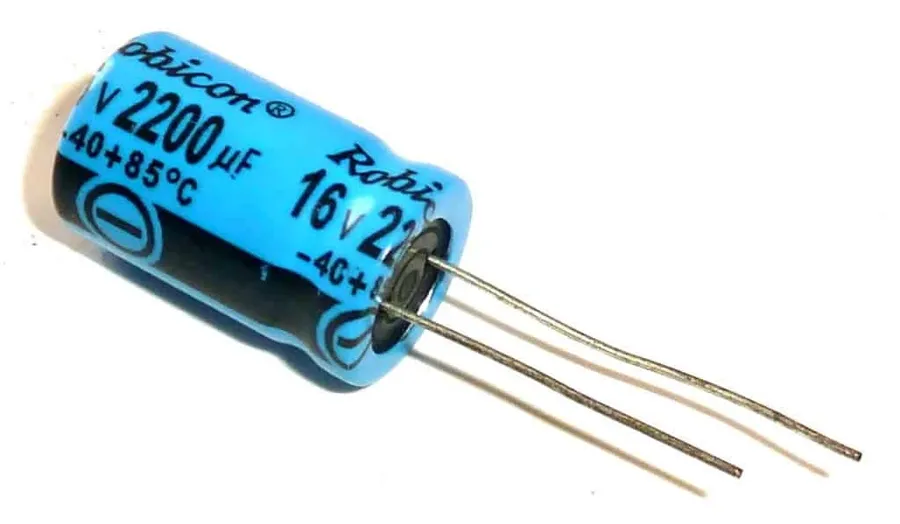
Capacitors and dielectric materials are fundamental components in a vast array of technologies, underpinning both everyday electronics and cutting-edge innovations. Their ability to store electrical energy efficiently and reliably makes them indispensable across various sectors.
The interplay between capacitors and dielectrics is fundamental to countless modern technologies. Dielectrics, by their nature, enhance a capacitor’s ability to store electrical charge and improve its stability and performance. By understanding their properties and applications, we gain a deeper appreciation for their role in our daily lives and how they enable advancements in electronics and energy storage solutions. The ongoing research and development in new materials will continue to expand the applications of capacitors and dielectrics, promising further advancements in technology and efficiency.

