In the realm of electronics, capacitors are essential components that store electrical energy. Just as a well-placed brick can support a towering structure, choosing the right capacitor from a supplier like DigiKey is critical for a circuit's stability and performance. This guide will delve into the diverse range of DigiKey capacitors, exploring their types, applications, and selection process, to help you make informed choices for your projects.
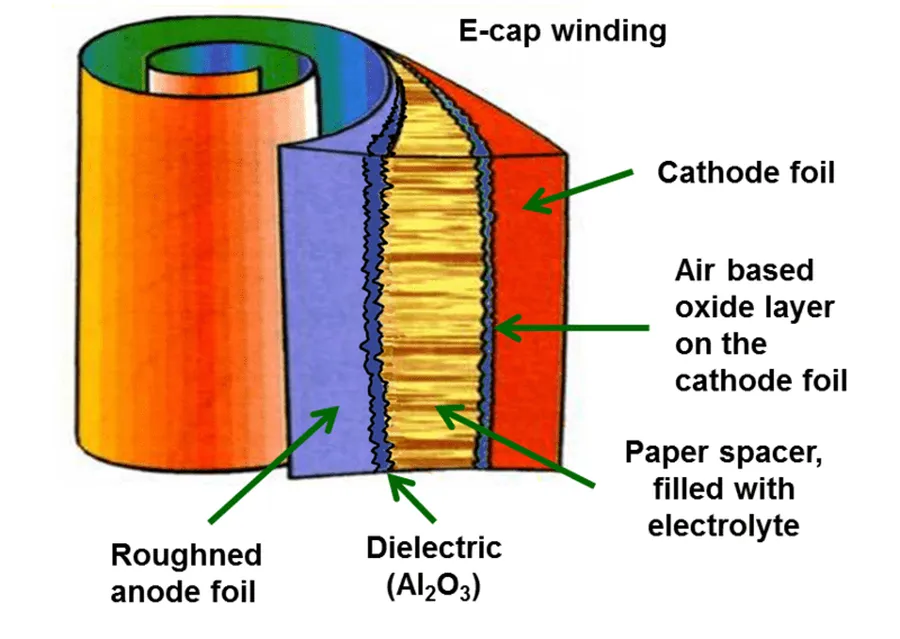
A capacitor is a fundamental passive electronic component designed to store electrical energy in an electric field, effectively acting as a temporary reservoir of charge. This energy storage capability is crucial in diverse electronic circuits, enabling functions ranging from filtering and smoothing to timing and energy decoupling. Key parameters characterizing a capacitor include capacitance, which measures its charge storage ability; voltage rating, indicating the maximum voltage it can withstand before failure; and tolerance, reflecting the acceptable deviation of the actual capacitance from its nominal value. Understanding these parameters is crucial for selecting the appropriate capacitor for any application.
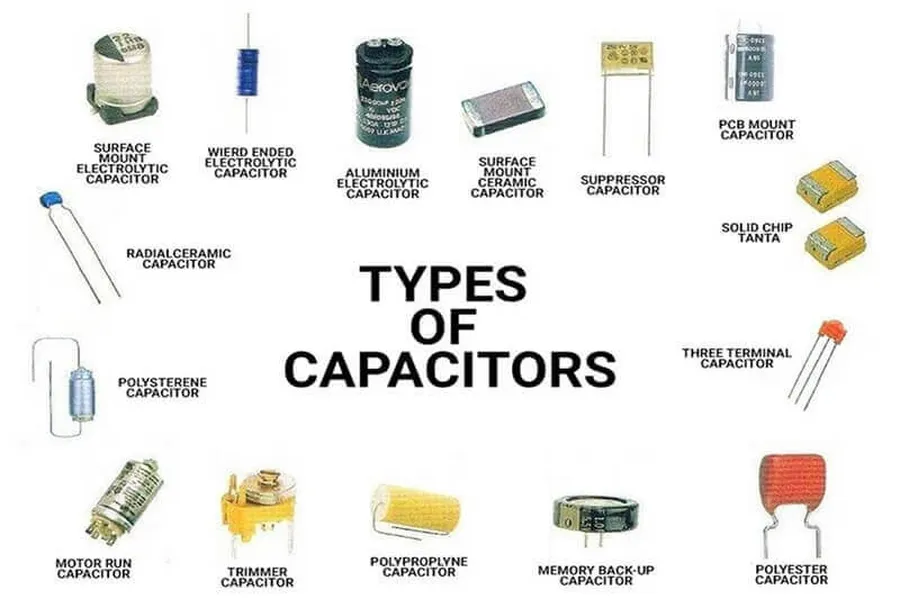
DigiKey offers a broad spectrum of capacitors, catering to diverse electronic design needs. These components, fundamental to circuit operation, are available in various types, each with unique characteristics and applications. Understanding these distinctions is crucial for effective component selection.
| Capacitor Type | Key Characteristics | Typical Applications |
|---|---|---|
| Ceramic | Small size, low cost, non-polarized, good high-frequency performance, temperature and voltage dependent. | Bypass capacitors, decoupling, filtering, general-purpose applications. |
| Tantalum | High capacitance per volume, polarized, good temperature stability, prone to failure under overvoltage conditions. | Power supply filtering, decoupling in space-constrained applications. |
| Electrolytic | High capacitance values, polarized, larger size, used for bulk energy storage, relatively large tolerance. | Power supply filtering, audio coupling, energy storage. |
| Film | High precision, stability, low losses, various temperature and voltage ratings available, non-polarized. | Precision timing circuits, audio equipment, high-frequency applications where stability is important. |
| Supercapacitors (Ultracapacitors) | Extremely high capacitance values, lower voltage ratings, used for energy storage with fast charging and discharging. | Hybrid energy storage, power backup, regenerative braking. |
Each capacitor type has its specific advantages and limitations, making it essential to consider the application's requirements when making a selection. DigiKey's comprehensive catalog allows engineers to find the most suitable capacitor for their design goals.
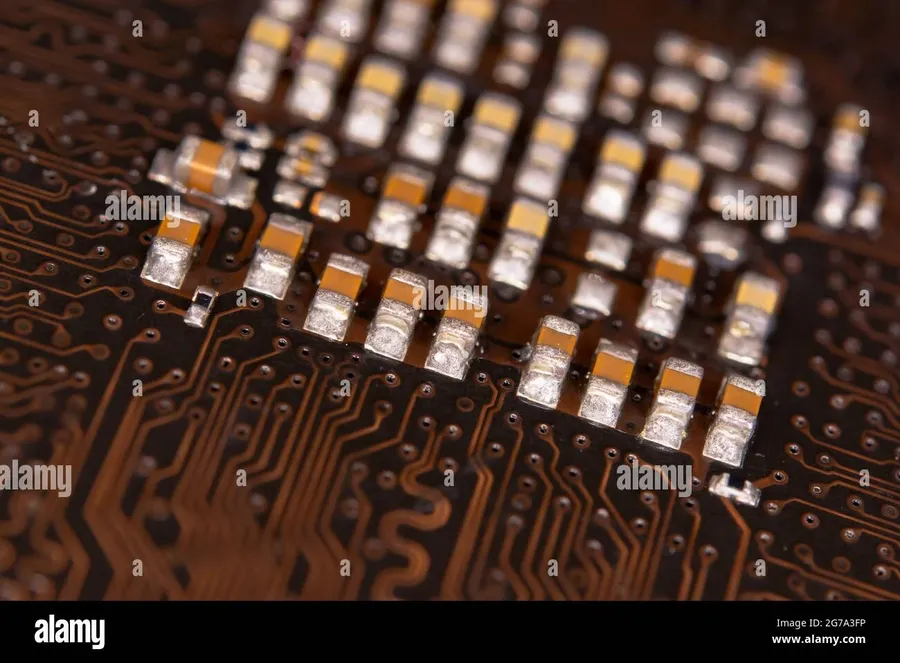
Ceramic capacitors, ubiquitous in modern electronics, leverage ceramic materials as their dielectric. Their compact size, cost-effectiveness, and wide range of values render them suitable for numerous applications. This section delves into their construction, diverse types, and performance characteristics.
The construction of a ceramic capacitor involves alternating layers of ceramic dielectric and metallic electrodes, typically silver. These layered structures are then sintered at high temperatures to form a monolithic block. The type of ceramic material used dictates the capacitor's electrical properties, such as temperature stability and capacitance variation.
Different classifications of ceramic capacitors exist, primarily based on their dielectric material, influencing their performance. Key types include:
| Characteristic | C0G/NP0 (Class 1) | X7R (Class 2) | Y5V (Class 3) |
|---|---|---|---|
| Capacitance Stability | Excellent | Moderate | Poor |
| Temperature Coefficient | Very Low | Moderate | High |
| Voltage Coefficient | Very Low | Moderate | High |
| Aging Rate | Negligible | Moderate | Significant |
| Dielectric Constant | Low | Medium | High |
| Applications | Precision circuits, Timing | General purpose, decoupling | Decoupling, bypass |
Ceramic capacitors offer numerous benefits, including small physical size, wide availability of capacitance values, low cost, and excellent high-frequency characteristics. However, some disadvantages include the potential for capacitance variation over temperature and voltage, as well as the possibility of piezoelectric effects in some types. Careful selection is vital to ensure the proper performance in different applications. The part number on digikey provides all the parameter you need for proper selection.
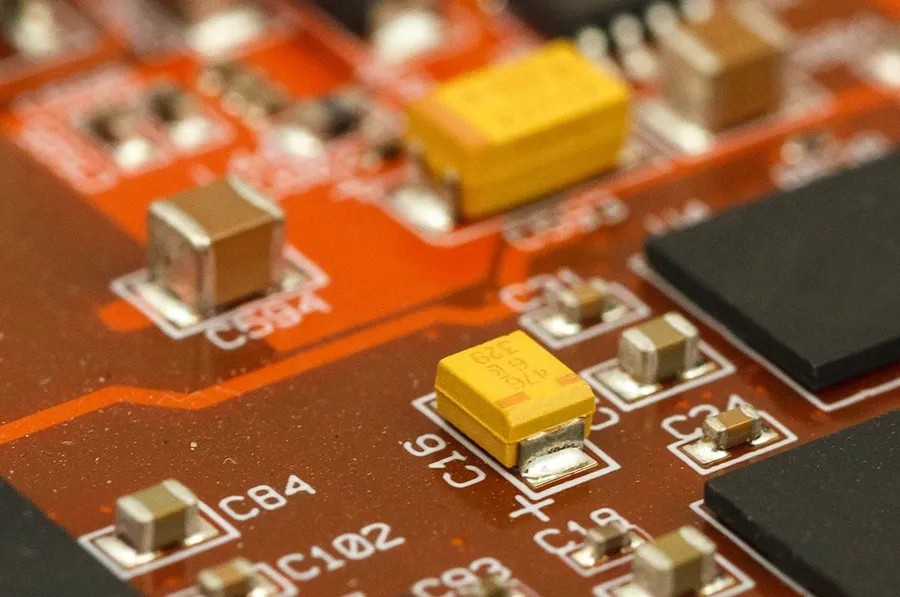
Tantalum capacitors are a specialized type of electrolytic capacitor distinguished by their use of tantalum as the anode material. They are particularly favored in applications demanding high capacitance within a small form factor. This characteristic makes them ideal for space-constrained environments, such as portable electronics, where component density is a critical design parameter.
Key advantages of Tantalum capacitors include their high volumetric efficiency, meaning they can store a large amount of charge for their size, and their stability over a range of temperatures. However, they also present some disadvantages, such as their higher cost compared to ceramic or aluminum electrolytic capacitors, and their sensitivity to reverse voltage conditions. Understanding these characteristics is vital when deciding if tantalum capacitors are the right choice for a specific project.
| Feature | Tantalum Capacitors | Ceramic Capacitors | Aluminum Electrolytic Capacitors |
|---|---|---|---|
| Capacitance Range | High (µF Range) | Low to Medium (pF to µF Range) | High (µF to mF Range) |
| Size | Small, High Volumetric Efficiency | Smallest | Larger |
| Cost | Higher | Lower | Moderate |
| Polarity | Polarized | Non-Polarized | Polarized |
| Temperature Stability | Good | Good, Varies with Type | Moderate |
| Reliability | Good, Sensitive to Reverse Voltage | Excellent | Moderate |
| Common Applications | Space-constrained, high-performance devices | General purpose, high frequency | Power supply filtering, decoupling |
The reliability of tantalum capacitors is generally considered good, but they are susceptible to failure if subjected to reverse voltage or excessive current. Therefore, care must be taken during circuit design and implementation to ensure they operate within their specified limits. Despite their specific constraints, tantalum capacitors offer a valuable solution for applications that require a high capacitance-to-volume ratio, making them a preferred choice in many modern electronic circuits.
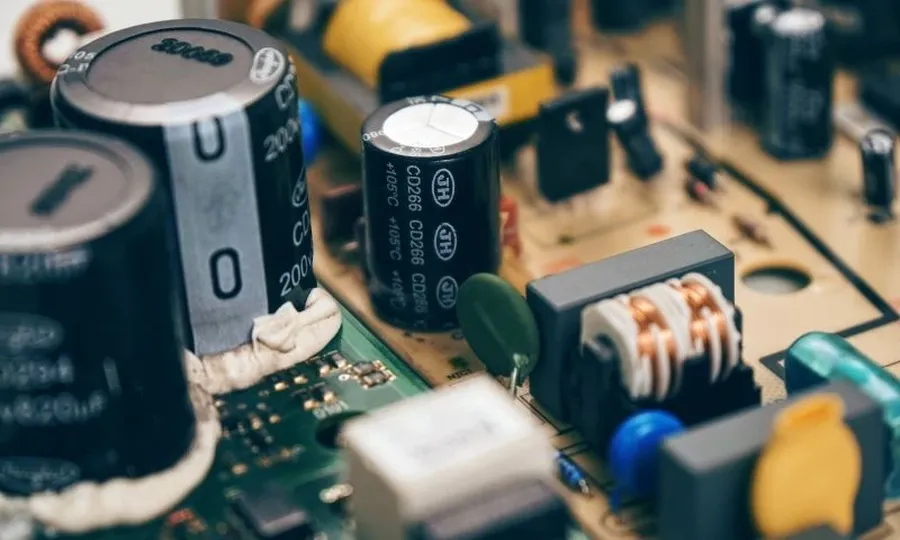
Electrolytic capacitors are a class of capacitors characterized by their high capacitance values relative to their physical size, achieved through the use of an electrolyte. These capacitors are predominantly used for power supply filtering and decoupling applications due to their ability to store large amounts of electrical charge.
| Characteristic | Description |
|---|---|
| Capacitance | High, typically ranging from microfarads to farads. |
| Polarity | Typically polarized, meaning they must be connected with the correct positive and negative terminals to prevent damage. |
| Size | Generally larger compared to ceramic or film capacitors for the same capacitance value. |
| Voltage Rating | Available in various voltage ratings, but generally lower than ceramic capacitors. |
| Frequency Response | Not ideal for high-frequency applications due to their construction. |
| Leakage Current | Higher leakage current compared to other capacitor types. |
| Lifespan | Limited lifespan, often dependent on temperature and usage conditions. |
| Common Applications | Power supply filtering, decoupling, energy storage in pulsed applications |
Electrolytic capacitors leverage an electrolyte, which can be liquid, solid, or polymer, to create a large effective surface area for charge storage. This design, while providing high capacitance, results in other characteristics that must be considered in application. For instance, the electrolytic capacitor’s polarity means that incorrect reverse voltage can damage or destroy it. Additionally, they are generally not suited for high-frequency applications due to their equivalent series resistance (ESR) and equivalent series inductance (ESL). The ESR may cause a temperature rise if subjected to a high ripple current. Degradation in performance of electrolytic capacitors will occur with extended use or extended storage under high temperatures. In essence, an electrolytic capacitor’s lifetime is a function of temperature, ripple current and other electrical and environmental factors.
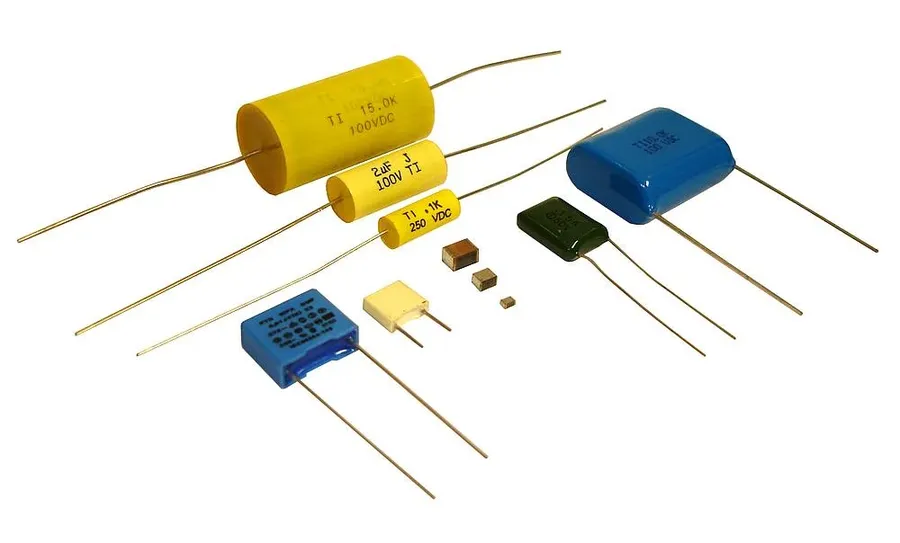
Film capacitors are characterized by their exceptional precision and stability, making them indispensable components in applications demanding high reliability and consistent performance. These capacitors utilize thin plastic films as their dielectric material, resulting in low loss and excellent long-term stability, and they're essential in various electronic circuits.
| Characteristic | Description |
|---|---|
| Dielectric Material | Thin plastic films (e.g., polyester, polypropylene, polystyrene, Teflon) |
| Precision | Very high, with tight tolerance values, ensuring consistent performance. |
| Stability | Excellent stability with minimal variation in capacitance over time and temperature. |
| Loss | Low loss factors, resulting in minimal energy dissipation. |
| Temperature Coefficient | Generally low, with different materials offering varying levels of stability. |
| Applications | Audio circuits, high-frequency filtering, timing circuits, power electronics, and applications requiring stable capacitance. |
| Advantages | High precision, excellent stability, low loss, high voltage capabilities. |
| Disadvantages | Typically larger size than ceramic capacitors, higher cost, less suitable for high-density applications. |
Selecting the appropriate capacitor for a specific application is a crucial step in electronic circuit design. This section outlines a systematic approach to choosing the right capacitor from DigiKey's extensive inventory, focusing on key parameters and practical application of DigiKey's filtering tools to refine your selection.
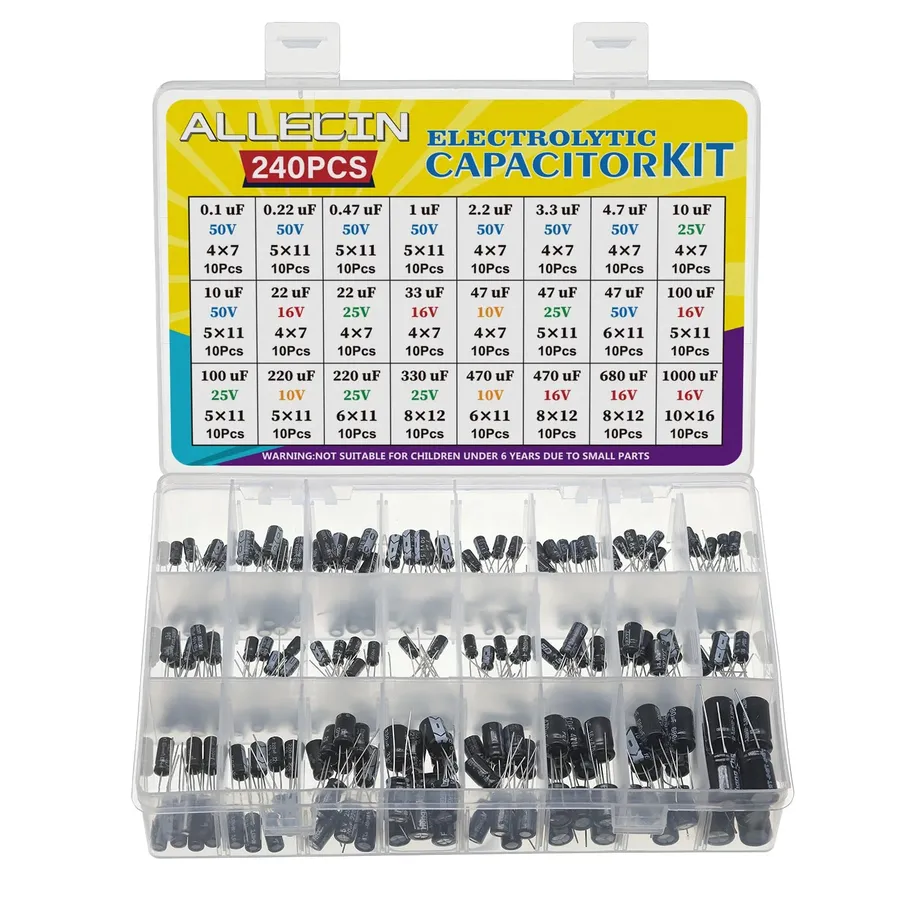
DigiKey capacitor kits offer a streamlined solution for engineers and hobbyists engaged in prototyping and experimentation. These curated collections provide a variety of capacitor values and types, eliminating the need to purchase individual components and significantly accelerating the development process.
The primary advantage of utilizing DigiKey capacitor kits is the convenience they offer. Instead of sourcing and ordering numerous individual capacitors, often with minimum order quantities, users can acquire a diverse assortment in a single purchase. This not only saves time but also ensures that a wide range of capacitance values is readily available, facilitating iterative testing and design adjustments.
DigiKey offers a variety of capacitor kits tailored to different needs. These kits often include a mix of ceramic, tantalum, and electrolytic capacitors, catering to both general-purpose and specialized applications.
| Kit Type | Typical Contents | Applications | Advantages |
|---|---|---|---|
| General Purpose Kits | Mixed selection of ceramic, tantalum, and electrolytic capacitors with common values. | Basic electronic circuits, educational projects, initial prototyping. | Broad coverage of common capacitor values; suitable for diverse applications. |
| SMD Kits | Surface mount ceramic capacitors in various sizes (e.g., 0603, 0805, 1206). | Surface mount assemblies, compact designs, high-density PCBs. | Facilitates the rapid testing of SMD component designs, small package sizes. |
| Electrolytic Kits | Range of electrolytic capacitors with different capacitance and voltage ratings. | Power filtering, smoothing, and energy storage applications. | Convenient access to higher capacitance values, suitable for power-related circuits. |
| High-Voltage Kits | Specialized capacitors with high voltage ratings. | Applications involving high voltage requirements. | Allows safe experimentation in high voltage and power related projects. |
When selecting a capacitor kit from DigiKey, it's important to consider the specific needs of your project, and factor in key parameters like operating voltage, capacitance values, and temperature rating.
This section addresses common questions related to selecting, using, and understanding DigiKey capacitors. We'll cover topics from basic capacitor selection to advanced applications, aiming to provide clear and concise answers to your queries.
Choosing the right capacitor, especially from a vast inventory like DigiKey, requires a clear understanding of your project's needs and the characteristics of different capacitor types. Whether you need ceramic, tantalum, electrolytic, or film capacitors, DigiKey offers a wide variety for any application. Remember that selecting the correct DigiKey capacitor ensures optimal performance and reliability of your electronic circuits and is crucial for successful project outcomes. By following this guide, you will be well-equipped to navigate the world of DigiKey capacitors and make the best choice for your specific needs. Moreover, understanding capacitor specifications is a gateway to creating more advanced electronic designs and applications.

