Just as a painter needs a diverse palette of colors, electronics enthusiasts require a variety of resistors to bring their projects to life. From the humblest LED circuit to complex microcontrollers, resistors are indispensable components. This article delves into the world of resistor kits, guiding you through the selection process, different types available, and how to choose the perfect set for your needs, ensuring your projects achieve the desired results and function flawlessly.
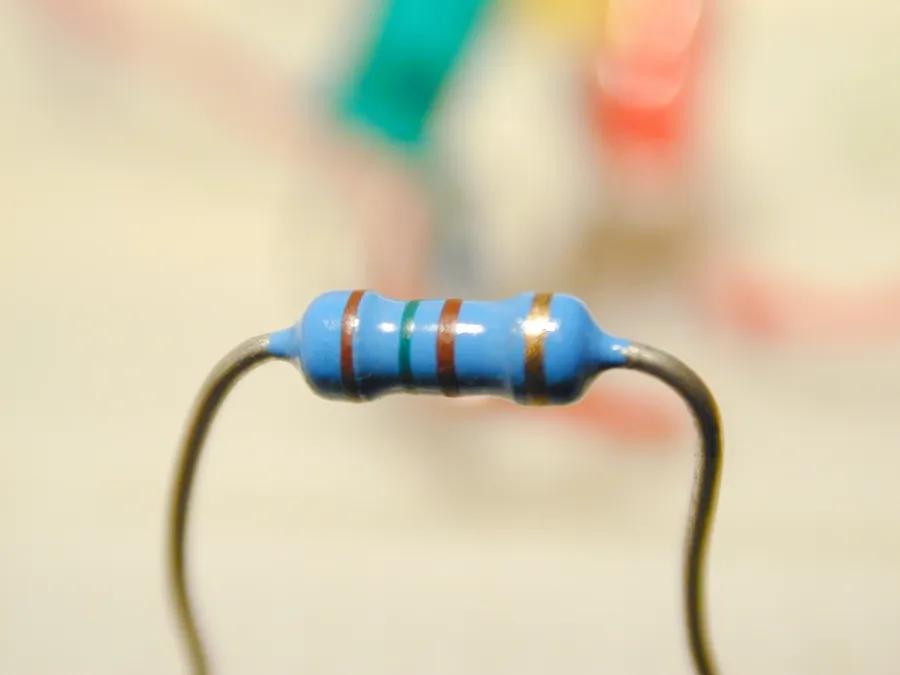
Resistors are fundamental electronic components that impede the flow of electric current, and their behavior is defined by three key properties: resistance, tolerance, and power rating. Understanding these characteristics is crucial for effective circuit design and application. Resistance, measured in ohms (Ω), dictates the degree to which a resistor opposes current flow. Tolerance, expressed as a percentage, indicates the allowable deviation from the stated resistance value. Power rating, measured in watts (W), specifies the maximum power a resistor can safely dissipate without damage. Each of these aspects is critical to ensure the appropriate performance and longevity of electronic circuits.
| Property | Description | Unit | Impact on Circuit Performance |
|---|---|---|---|
| Resistance | The opposition to the flow of electric current. | Ohms (Ω) | Determines current flow; higher resistance means less current. |
| Tolerance | The allowable deviation from the stated resistance value. | Percentage (%) | Indicates the precision of the resistor; lower tolerance is more accurate. |
| Power Rating | The maximum power the resistor can safely dissipate. | Watts (W) | Ensures the resistor doesn't overheat or fail; must be greater than or equal to the anticipated power dissipation. |
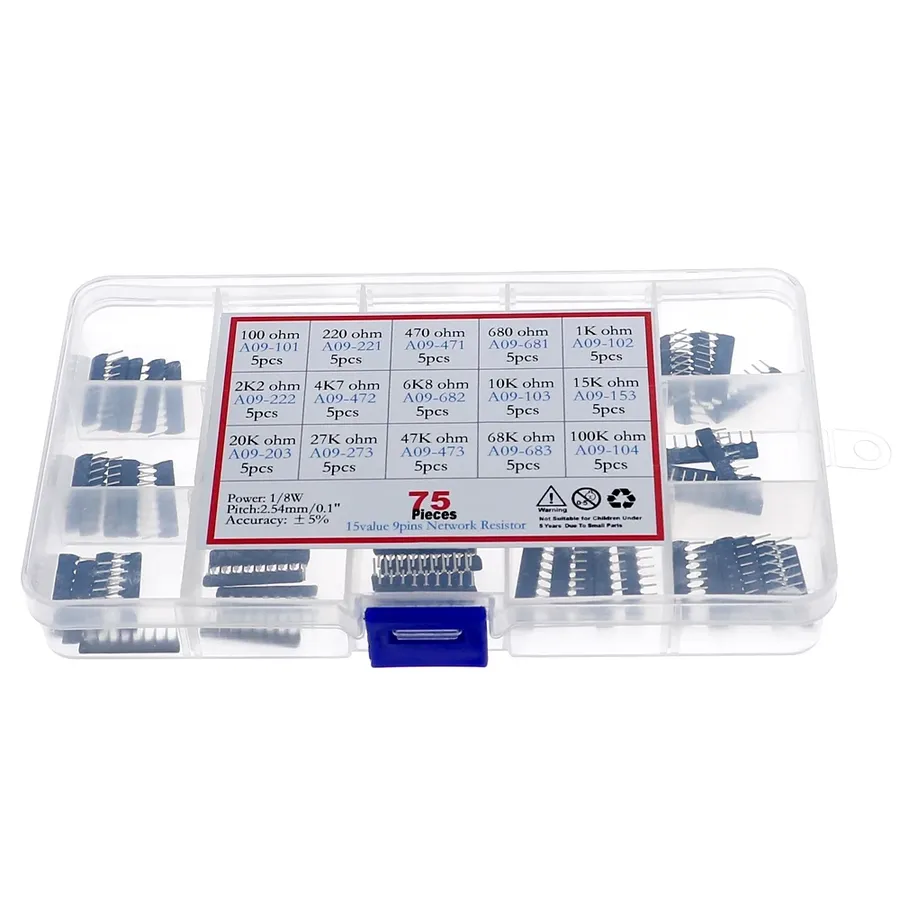
Resistor kits are essential for electronics prototyping and repair, providing a range of resistance values for various circuit designs. These kits primarily categorize resistors by their construction material and mounting style, which significantly affect their performance and application. Understanding these differences is crucial for selecting the correct kit for specific electronic tasks.
| Resistor Type | Construction | Typical Applications | Advantages | Disadvantages |
|---|---|---|---|---|
| Carbon Film | Carbon film deposited on a ceramic substrate, with a protective coating. | General-purpose electronics, hobbyist projects. | Low cost, widely available, suitable for many basic circuits. | Higher temperature coefficient, less precise tolerance, higher noise compared to metal film. |
| Metal Film | Thin metal film deposited on a ceramic substrate, with a protective coating. | Precision circuits, audio equipment, applications requiring stability. | Better tolerance, lower temperature coefficient, lower noise than carbon film. | More expensive than carbon film. |
| SMD (Surface Mount Device) | Miniature resistors designed for surface mounting, typically with a ceramic substrate and metal film. | Modern electronics, high-density PCBs, portable devices. | Small size, high-density mounting, excellent electrical performance. | Require specialized handling and soldering, less suitable for breadboarding. |
Each resistor type offers distinct characteristics, and the optimal choice depends on project-specific requirements. For basic hobby projects or where cost is a primary concern, carbon film kits can be sufficient. For projects requiring precision and stability, metal film resistors are the preferred choice. SMD kits are indispensable for modern electronics, though they need more advanced soldering techniques.
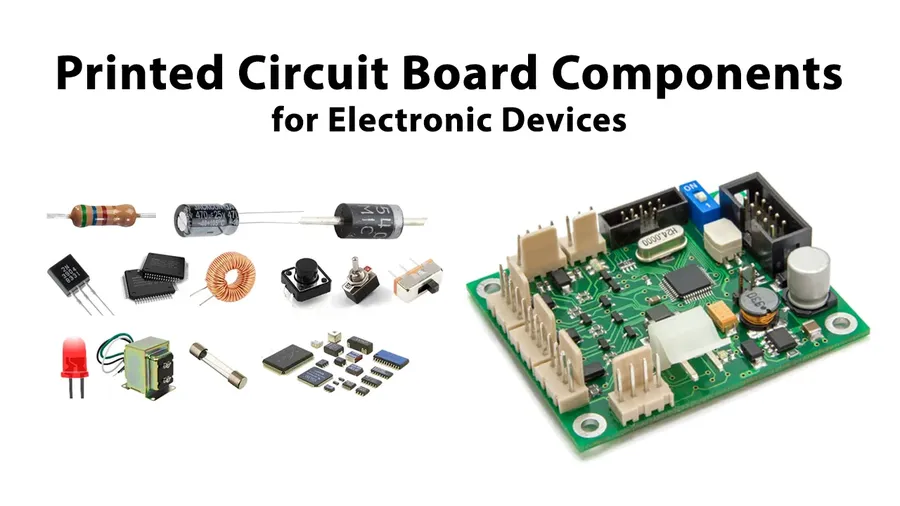
Choosing the correct resistor values is crucial for the proper functioning of any electronic circuit. Incorrect values can lead to circuit malfunction, component damage, or suboptimal performance. This section details the importance of selecting precise resistance values, utilizing Ohm's Law for calculations, and strategically choosing a resistor kit that meets the immediate needs of your project while also accommodating future design variations.
Ohm's Law, a fundamental principle in electrical engineering, establishes the relationship between voltage (V), current (I), and resistance (R) in a circuit, expressed as V = I * R. By manipulating this equation, you can determine the required resistance for a given voltage and current or vice-versa. This is crucial in the selection process for resistors, allowing you to choose values that will give you your required voltage or current.
When selecting resistors for a project, it's essential not only to calculate the theoretical value but also to consider practical factors. Resistors are not perfectly accurate; they come with a tolerance rating that indicates the acceptable variance from the nominal value. Standard tolerance levels are 1%, 5%, and 10%. For many common applications, 5% resistors are adequate, but for precision circuits, a higher grade like 1% may be needed. The power rating of the resistor must also be taken into consideration. The power dissipated by a resistor is P = V*I = I^2 * R = V^2 / R . Ensure the selected resistor’s power rating is higher than your calculated power dissipation to avoid overheating and failures.
| Parameter | Description | Importance |
|---|---|---|
| Resistance Value (Ohms) | The nominal resistance of the resistor, which is the value indicated by color bands or labeling. | Critical for achieving desired voltage drops and current limits according to Ohm's Law. |
| Tolerance (%) | The maximum allowed variance from the nominal value, typically 1%, 5%, or 10%. | Affects circuit precision; tighter tolerances needed for sensitive circuits. |
| Power Rating (Watts) | The maximum amount of power the resistor can dissipate without overheating or failing. | Important to prevent resistor failure due to excessive heat; calculated with P=V*I. |
| Temperature Coefficient | The change in resistance with temperature variations. | Important for applications where temperature stability is necessary. |
When choosing a resistor kit, consider the range of values included, whether they are in the E series such as the E12 or E24 series, which provide a good selection of values, and the quantity of each value. Also, plan your purchase based on the projects you envision in the short and long term. A comprehensive kit with a wide selection of values is preferable, ensuring you have the necessary values on hand, reducing project delays. Selecting a kit that anticipates your future needs is a wise choice, as it saves time and the expense of purchasing individual resistors later. Also, consider the form factor, ensuring you are getting the Through-Hole or SMD components that you will be using.
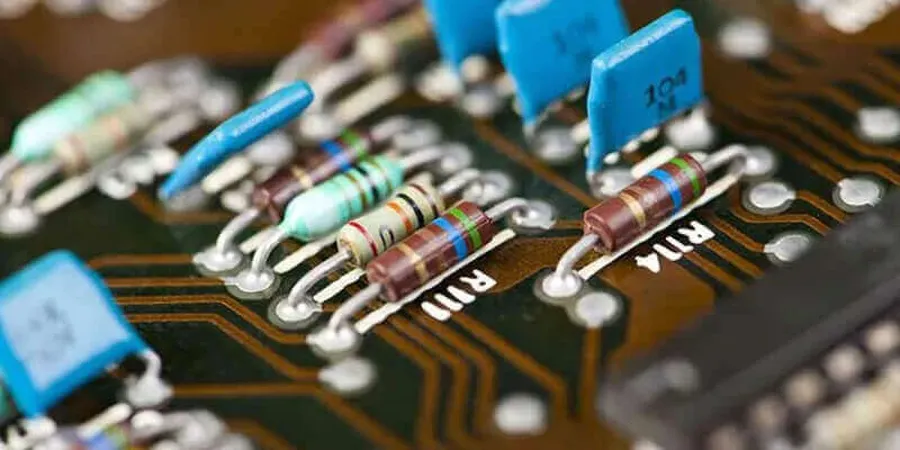
The choice between through-hole and Surface Mount Device (SMD) resistor kits hinges on project requirements, user expertise, and available tools. Through-hole components, with their leads designed to pass through holes in a printed circuit board (PCB), are traditionally favored for prototyping and educational purposes due to their ease of handling and breadboard compatibility. Conversely, SMD components, which mount directly onto the surface of a PCB, are smaller, offering significant space savings in compact designs and are often used in mass production.
| Feature | Through-Hole Resistors | SMD Resistors |
|---|---|---|
| Size | Larger, easier to handle | Smaller, requires precision handling |
| Ease of Prototyping | Excellent, suitable for breadboards | Challenging, requires custom PCBs or breakout boards |
| Assembly | Easier to solder manually | Requires specialized soldering equipment (reflow oven or hot air station) |
| PCB Design | Less dense layouts | Higher density layouts |
| Cost | Generally slightly higher per component due to size | Lower per component cost in bulk due to smaller size, but requires PCB and specialized equipment |
| Repair | Easier to replace | Challenging to replace |
| Applications | Prototyping, educational projects, hobby electronics | Mass production, compact devices, high-frequency circuits |
The selection of a resistor kit should be determined by your specific project needs, expertise, and intended application. Beginners may find through-hole kits more accessible for their ease of handling and use with breadboards. On the other hand, professionals and designers aiming for compact designs or mass production would likely prefer the smaller size and density advantages of SMD resistor kits, even though they demand more sophisticated tools and methods.
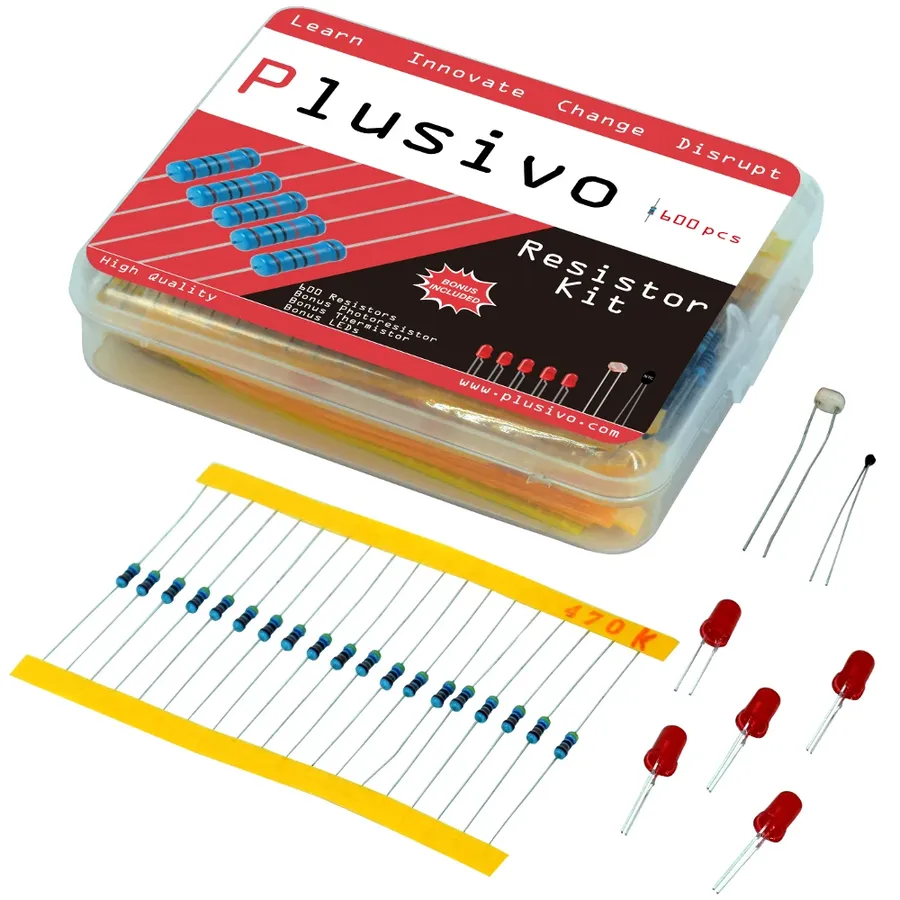
Selecting the right resistor kit involves evaluating several key characteristics to ensure it meets your project needs and avoids future component shortages. Crucial factors include resistor tolerance, the quantity of each resistance value, the power rating of the resistors, and the overall organization of the kit. These elements collectively determine the practicality and long-term usefulness of the kit.
| Feature | Description | Importance |
|---|---|---|
| Resistor Tolerance | The precision of a resistor's actual resistance value compared to its stated value, expressed as a percentage. Common tolerances include 1%, 5%, and 10%. | Critical for circuits requiring high accuracy, such as precision measurement or analog signal processing. Lower tolerance (e.g., 1%) resistors offer more precision. |
| Quantity per Value | The number of resistors provided for each resistance value in the kit. | Ensures sufficient parts for multiple projects and allows for replacement of damaged components. A well-stocked kit should have an ample quantity of commonly used values. |
| Power Rating | The maximum amount of power a resistor can safely dissipate without overheating or failing. Typically measured in watts. | Essential for preventing component failure in circuits that draw significant current. Selecting resistors with appropriate power ratings is crucial for ensuring long-term reliability. |
| Kit Organization | How the resistors are arranged and labeled within the kit, including compartmentalization and clear identification of each value. | Facilitates quick and easy access to the correct resistor value, reducing time spent searching and preventing accidental misselection of components. |
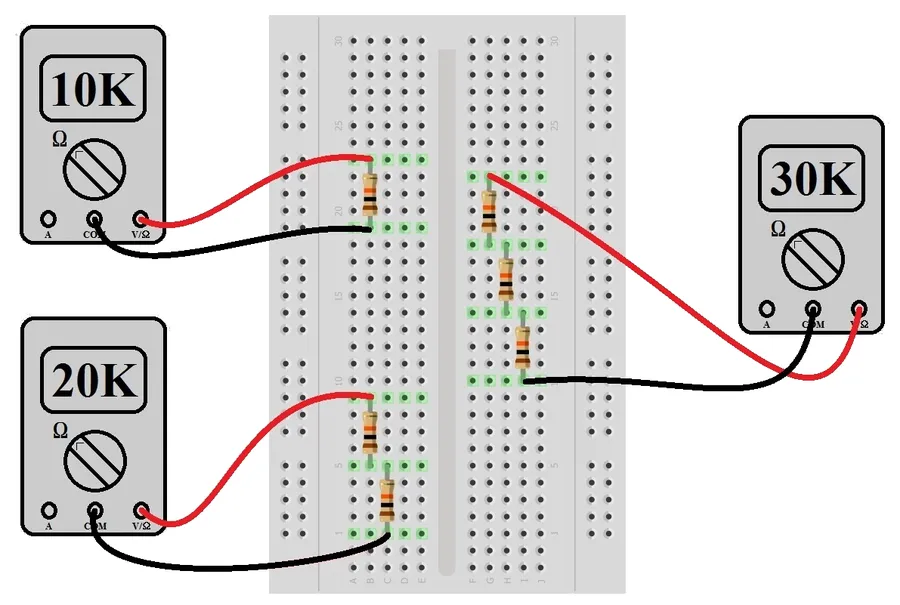
Resistor kits are indispensable for a vast array of electronic projects, providing the necessary components to control current flow, divide voltage, and interface with various sensors. Their versatility makes them a cornerstone for both beginners and experienced electronics enthusiasts.
Proper storage and organization of resistor kits are crucial for maintaining the integrity of components and streamlining your workflow. Effective organization minimizes the risk of damage, simplifies the retrieval process, and ultimately enhances the efficiency of your electronics projects.
This section addresses common inquiries about resistor kits, providing clear, concise answers to help users make informed decisions and effectively utilize their kits. These questions cover crucial aspects from material types to practical handling.
For experienced electronics enthusiasts and engineers, selecting a resistor kit involves more than just basic resistance values and tolerances. Advanced considerations, such as temperature coefficient, noise characteristics, and long-term stability, become critical to ensure optimal circuit performance and reliability in demanding applications. Understanding these nuances can significantly impact the success of high-precision and long-duration electronic projects.
| Parameter | Description | Impact on Circuit | Considerations for Selection |
|---|---|---|---|
| Temperature Coefficient | The change in resistance value per degree Celsius of temperature variation. Expressed in ppm/°C. | Affects the accuracy of circuits under varying operating temperatures. Crucial for temperature-sensitive applications. | Choose resistors with a low temperature coefficient for stable performance over a wide temperature range, such as metal film resistors. |
| Noise Characteristics | The level of unwanted electrical noise generated by the resistor itself. This includes thermal noise and current noise. | Can degrade the signal-to-noise ratio in sensitive circuits, leading to measurement errors or signal corruption. More pronounced in higher resistance values. | Select low-noise resistor types, such as metal film or wire-wound, particularly for low-signal circuits (e.g., instrumentation and audio amplifiers). |
| Long-Term Stability | The change in resistance value over extended periods of operation, often due to factors like environmental exposure and stress. | Can cause gradual drifting of circuit performance over time, affecting long-term reliability and calibration. A more stable resistance is needed for long-term deployments. | Opt for high-stability resistors, like precision metal film or bulk metal foil types, for applications that demand consistency over a long lifespan. |
Resistor kits are essential for any electronics enthusiast, providing a vital collection of components for a wide range of projects. Choosing the right kit depends on the project needs, skill level, and understanding of the various resistor types available. By carefully considering these factors, you can ensure you have the right resistors on hand to bring your projects to life and avoid interruptions. Whether it's for basic LED control or sophisticated circuit design, a well-chosen resistor kit will enable you to confidently design and build any electronic project. So make sure to stock up on your preferred [resistor kits] today, and happy building!

