In our digitally driven world, electronic devices have become ubiquitous, silently performing countless functions. These marvels of engineering are built from a fascinating array of electronic components, each with its unique purpose. From the humble resistor to the complex integrated circuit, understanding these fundamental building blocks is key to appreciating the technology that shapes our lives. This article delves into the world of all electronic components, providing a clear and comprehensive guide suitable for both beginners and seasoned enthusiasts.
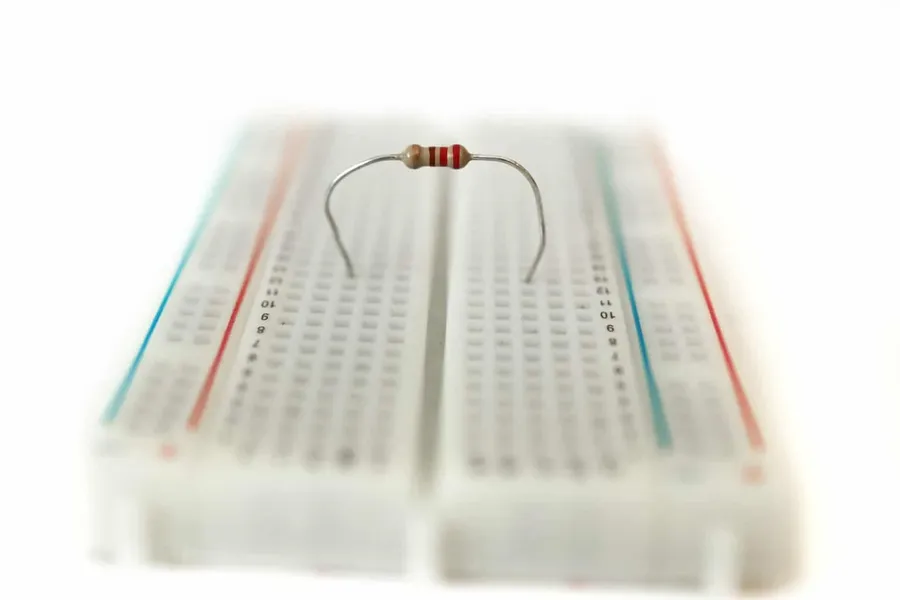
Resistors are fundamental electronic components designed to impede the flow of electrical current within a circuit, thereby controlling voltage and current levels. Their primary function is to introduce a specific amount of resistance, which is measured in ohms (Ω), influencing the circuit's behavior and ensuring proper operation and component protection.
| Characteristic | Fixed Resistor | Variable Resistor | Special Resistor |
|---|---|---|---|
| Resistance Value | Fixed | Adjustable | Variable with physical parameter |
| Primary Use | Current Limiting | Voltage Division and variable resistance | Sensing |
| Examples | Carbon film, Metal Film | Potentiometers, Rheostats | Thermistors, Photoresistors |
Resistor color codes utilize a series of colored bands to indicate resistance value and tolerance. Each color corresponds to a numerical value and multiplier, which are interpreted sequentially to determine the resistor's nominal value in ohms. For example, a resistor with color bands brown, black, red, and gold would correspond to a 1000-ohm resistor with a 5% tolerance.
Resistors are crucial components in a wide variety of electronic applications, including, but not limited to: signal conditioning, voltage division, current limiting, pull-up and pull-down configuration, temperature and light sensing. Understanding their properties and functions is foundational for electronic circuit design and analysis.
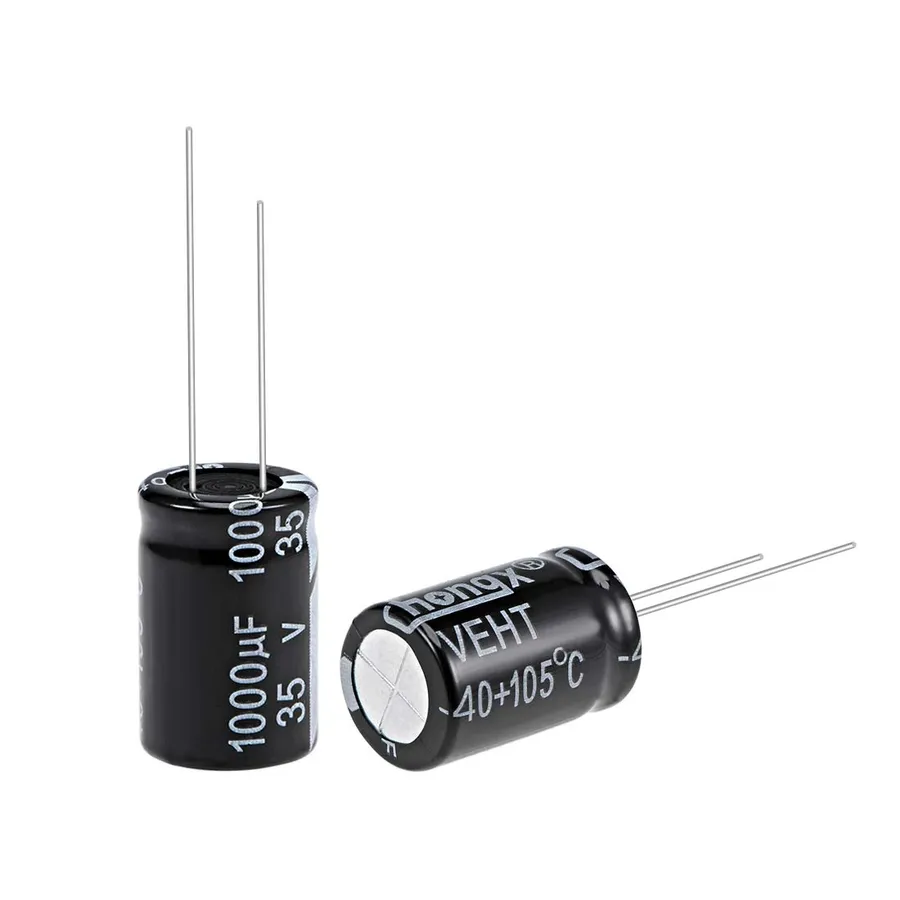
Capacitors are fundamental passive electronic components designed to store electrical energy within an electric field. They are characterized by their ability to accumulate charge and release it when needed, making them crucial in various applications such as filtering, energy storage, and timing circuits. The basic structure of a capacitor consists of two conductive plates separated by a dielectric material, which prevents the direct flow of charge and allows the build-up of an electric field.
| Type | Dielectric Material | Typical Applications | Capacitance Range | Voltage Rating |
|---|---|---|---|---|
| Ceramic | Ceramic | Bypass, Coupling, Filtering | pF to μF | Low to Medium |
| Electrolytic | Aluminum Oxide, Tantalum Oxide | Power Supplies, Smoothing | μF to mF | Medium to High |
| Film | Plastic Film | High-frequency filtering, Audio | pF to μF | Medium to High |
| Supercapacitor | Porous Carbon, Metal Oxides | Energy Storage, Backup power | F to kF | Low |
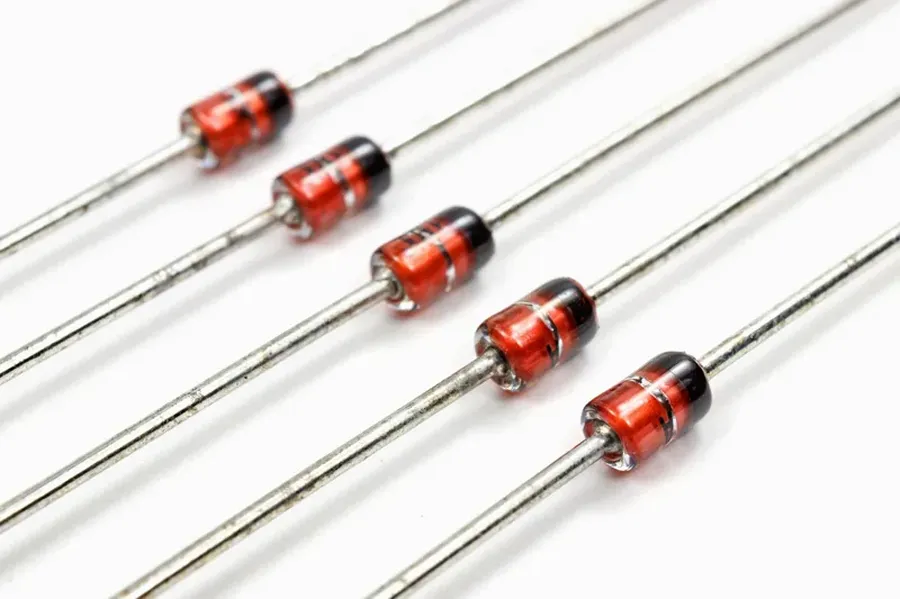
Diodes are semiconductor devices that act as one-way valves for electrical current, allowing current to flow easily in one direction (forward bias) while significantly impeding it in the opposite direction (reverse bias). This directional conductivity is fundamental to their function in electronic circuits.
Diodes are not simply on/off switches. The relationship between the current through the diode and the voltage across it is described by the diode equation, which shows a non-linear behavior, and it's also temperature-dependent. This non-linearity is key to many of the useful properties of diodes.
| Diode Type | Description | Typical Application |
|---|---|---|
| Rectifier Diode | Standard diodes designed for power rectification, with a relatively low switching frequency. | AC to DC conversion in power supplies |
| Light-Emitting Diode (LED) | Emits light when current flows through it in forward bias. | Illumination, displays, indicator lights |
| Zener Diode | Designed to operate in reverse bias at a specific voltage (Zener voltage) without damage. | Voltage regulation |
| Schottky Diode | Has a low forward voltage drop and a very fast switching speed. | High-frequency switching applications |
| Photodiode | Generates current when exposed to light. | Light detection, solar cells |
Understanding the concepts of forward and reverse bias is essential for utilizing diodes effectively. In forward bias, a positive voltage is applied to the anode (the 'arrow' side of the diode symbol) and a negative voltage to the cathode (the 'bar' side), allowing current to flow. Conversely, in reverse bias, the voltage is applied in the opposite direction, which ideally prevents current flow. In practice, a small leakage current may exist in reverse bias.
Diodes are fundamental building blocks in numerous electronic systems. They enable AC-to-DC conversion for providing stable power, and they form part of complex digital circuits where they perform signal rectification, clipping, and clamping. Their applications range from basic power supplies to sophisticated optical sensors.
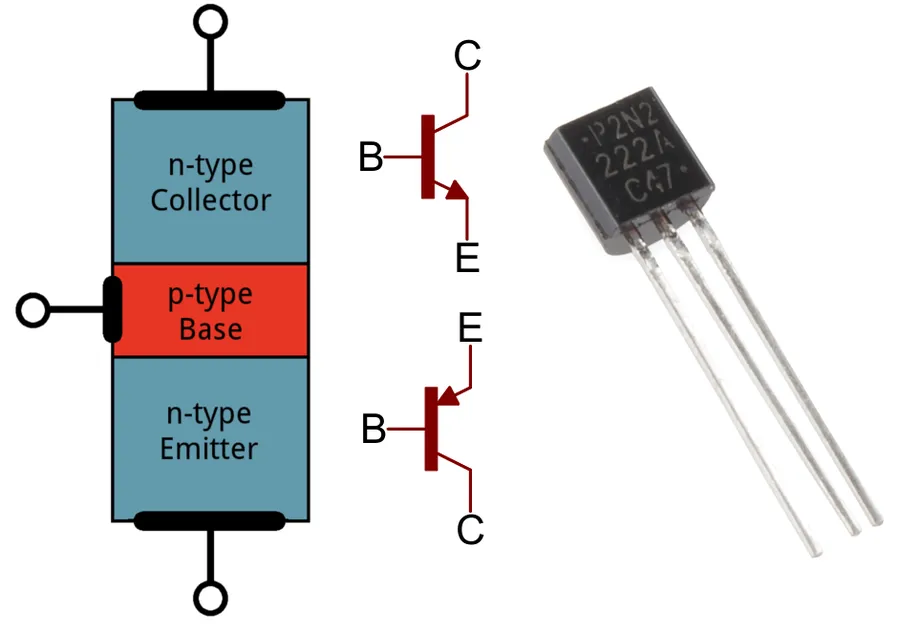
Transistors are fundamental semiconductor devices that act as both electronic switches and signal amplifiers, forming the backbone of modern electronics. Their ability to control electron flow makes them indispensable in applications ranging from simple circuits to complex microprocessors.
| Feature | Bipolar Junction Transistor (BJT) | Metal-Oxide-Semiconductor Field-Effect Transistor (MOSFET) |
|---|---|---|
| Control Mechanism | Current-controlled (base current controls collector current) | Voltage-controlled (gate voltage controls drain current) |
| Input Impedance | Lower | Higher |
| Polarity | NPN or PNP | N-channel or P-channel |
| Applications | Amplifiers, switches | Digital circuits, logic gates, power switching |
| Complexity | Generally simpler | Generally more complex in terms of fabrication |
The transistor's dual functionality—switching and amplification—underpins its ubiquitous role in electronic systems. The switching action allows transistors to act like electronic on/off switches controlled by electrical signals, a property that's critical for digital logic. Amplification, in contrast, makes transistors suitable for boosting weak signals into stronger, more usable forms. Together, these two properties have enabled countless applications.
Transistors are not merely components; they are fundamental building blocks of modern electronics, enabling the digital revolution through their functions in memory, logic, and power control. Understanding transistors is crucial to comprehending the intricacies of nearly every electronic device.
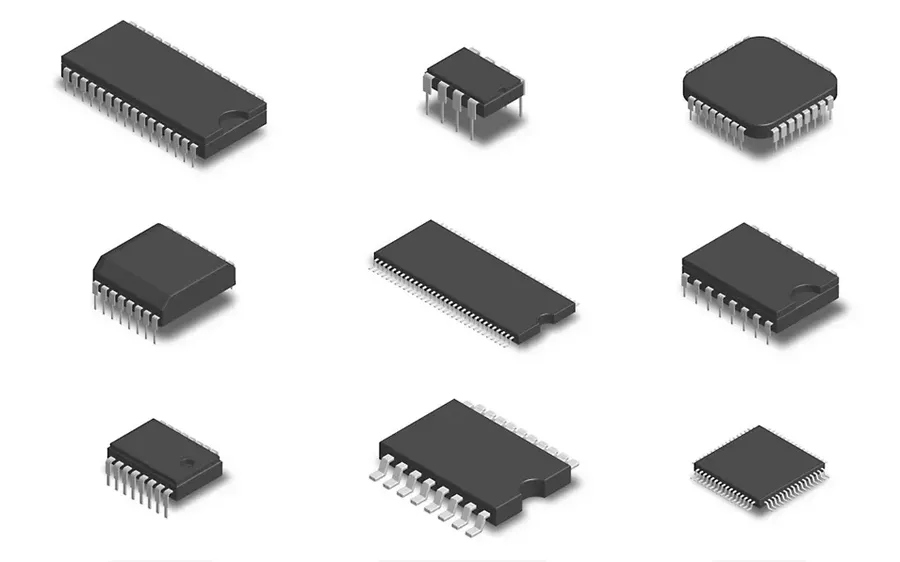
Integrated Circuits (ICs) represent a monumental leap in electronics, encapsulating entire circuits within a single, tiny semiconductor chip. This miniaturization has revolutionized technology, enabling the development of compact and powerful devices, from smartphones to complex computing systems. ICs, also known as microchips or chips, are the building blocks of modern electronics, featuring digital logic gates, microcontrollers, and microprocessors. Their versatility and complexity stem from the intricate manufacturing processes that create these densely packed circuits.
The fabrication of an IC involves sophisticated techniques such as photolithography, where patterns are transferred onto silicon wafers. These wafers undergo a series of chemical and physical processes to create transistors, diodes, resistors, and capacitors, all connected within a tiny space. This advanced manufacturing allows millions or even billions of components to be integrated onto a single chip, showcasing the sheer engineering brilliance behind IC technology.
| IC Type | Description | Application Examples |
|---|---|---|
| Digital Logic Gates | Implement basic logic functions (AND, OR, NOT, etc.) | Digital circuits, microprocessors, control systems |
| Microcontrollers | Complete single-chip computers with CPU, memory, I/O | Embedded systems, IoT devices, robotics |
| Microprocessors | Central processing units (CPUs) responsible for executing instructions | Computers, smartphones, high-performance devices |
| Operational Amplifiers | Analog circuits to perform signal conditioning and amplification | Audio equipment, instrumentation, sensor circuits |
| Memory Chips (RAM, ROM) | Store data and instructions for the system | Computers, smartphones, storage systems |
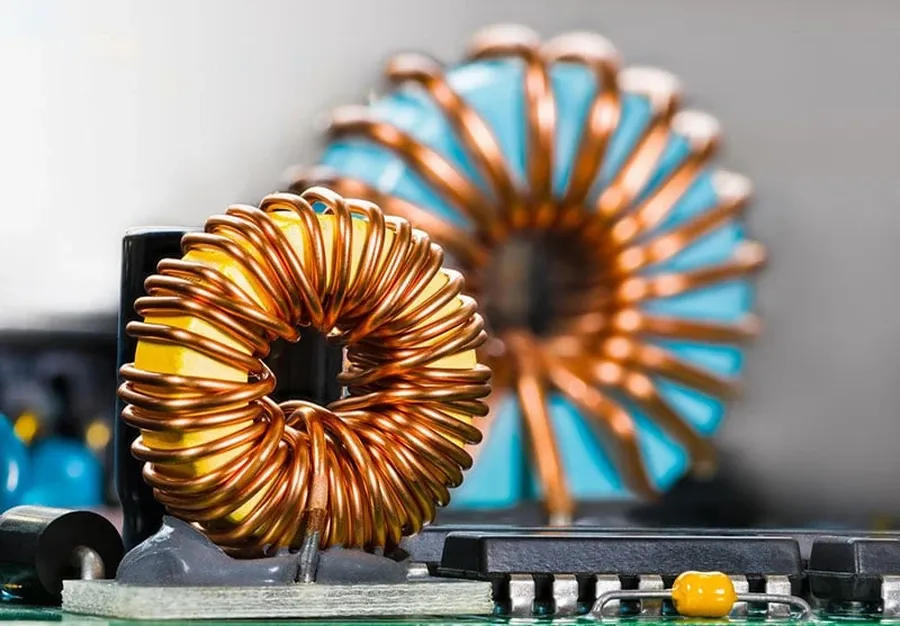
Inductors are fundamental electronic components that store energy within a magnetic field generated by the flow of electric current. This property makes them crucial for various applications, including filtering, energy storage, and signal processing, particularly at higher frequencies where their behavior becomes more pronounced. Unlike resistors that dissipate energy as heat and capacitors that store energy in an electric field, inductors store energy in a magnetic field.
The core principle of an inductor is based on Faraday's Law of Induction, which states that a changing magnetic field induces an electromotive force (EMF) or voltage in a conductor. In an inductor, this EMF opposes changes in current flow, a property known as inductance, measured in Henrys (H). The amount of inductance is determined by the geometry of the coil, the number of turns, and the core material.
| Inductor Type | Core Material | Typical Applications | Inductance Range |
|---|---|---|---|
| Air Core Inductors | Air | High-frequency circuits, Radio transmission | Few nH to few μH |
| Ferrite Core Inductors | Ferrite (ferromagnetic ceramic) | Power electronics, EMI suppression, Filtering | Few μH to tens of mH |
| Iron Core Inductors | Iron laminations or powder | Low-frequency power supply circuits, audio amplifiers | mH to several H |
| Toroidal Inductors | Ferrite or Iron Powder | Switching Power supplies, high efficiency filters | Few μH to several H |
| Multilayer Inductors | Ceramic or ferrite | Compact electronics, mobile devices | nH to few μH |
Inductors find diverse applications in electronic circuits. In filter circuits, they are utilized to block or pass certain frequencies. For instance, in low-pass filters, they allow low-frequency signals to pass while attenuating high-frequency signals. In energy transfer applications, inductors play a crucial role in switching power supplies by storing and releasing energy as needed, often in conjunction with capacitors. The inductive reactance, which opposes changes in current, increases with frequency, a key parameter in filter design. Furthermore, inductors are employed in resonant circuits, transformers, and as chokes in power supplies to mitigate current spikes and EMI.
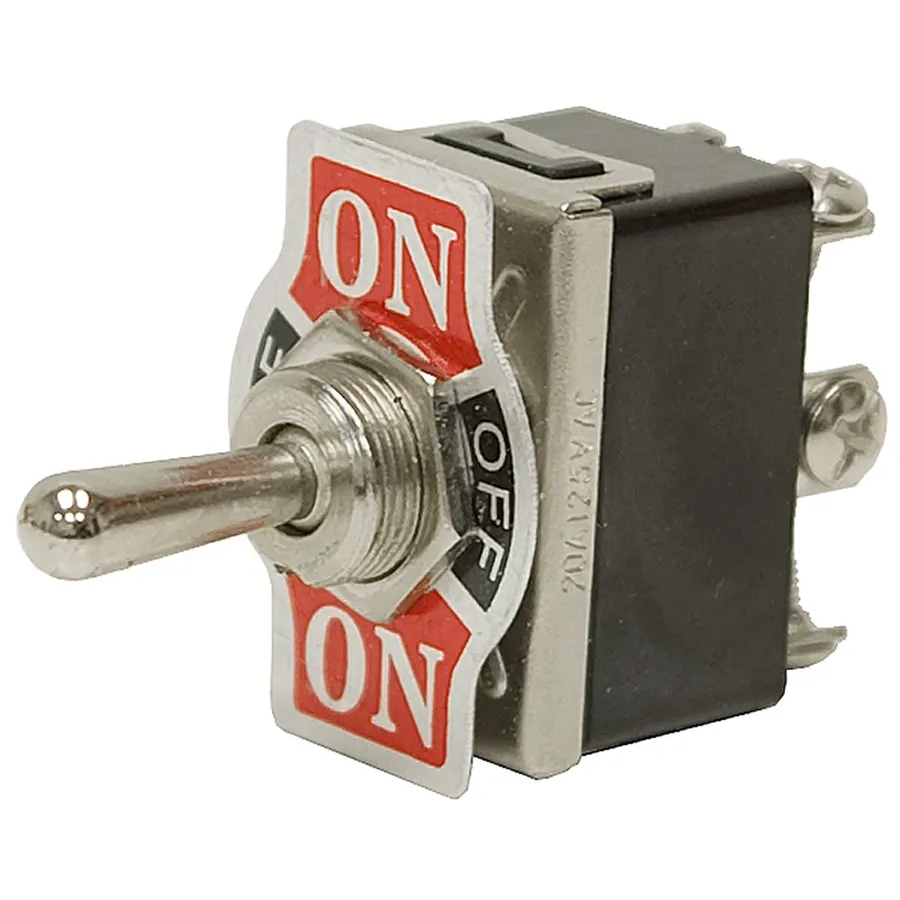
Switches are fundamental components in electronic circuits, serving as a means to control the flow of electrical current by selectively opening or closing a circuit. Their primary function is to establish or interrupt an electrical path, thus enabling or disabling the operation of a circuit or its components. The selection of switch type is dictated by factors such as application needs and operational voltage or current.
| Switch Type | Description | Typical Applications | Symbol |
|---|---|---|---|
| SPST (Single Pole Single Throw) | A basic on/off switch that either connects or disconnects a single circuit. | Simple on/off control, power switches for appliances. | [Image: SPST switch symbol] |
| SPDT (Single Pole Double Throw) | Switch that connects a single input to one of two outputs; a transfer switch. | Selecting between two power sources or paths, or signal routing. | [Image: SPDT switch symbol] |
| Push Button | Momentary switch that closes a circuit when pressed, and opens when released. | Activating functions temporarily, keyboards, and control panels. | [Image: Push Button switch symbol] |
| Relay | Electromagnetically operated switch, using a small control current to switch a higher current. | Controlling high power circuits with low voltage signals, automation control. | [Image: Relay switch symbol] |
The application of switches ranges from simple household appliances to complex industrial control systems. Their role is vital to allow precise management of current flow, ensuring controlled operation and safety of electronic devices. Understanding switch functionality is paramount for design and maintenance of electrical and electronic circuits.
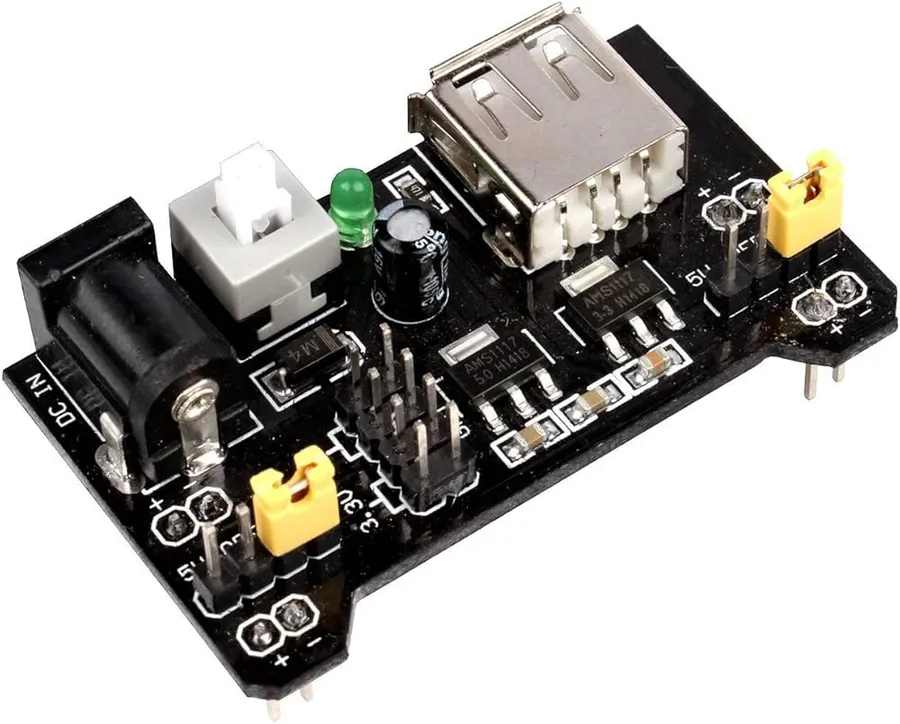
Power sources and signal generators are fundamental to the operation of any electronic circuit, providing the necessary energy and control signals for components to function correctly. Power sources provide the energy required for the circuit to operate, while signal generators provide the waveforms that carry information or control the behavior of the circuit.
| Characteristic | Power Sources | Signal Generators |
|---|---|---|
| Primary Function | Provide energy to operate circuits | Provide time-varying electrical signals |
| Output Type | DC (Direct Current) or AC (Alternating Current) | AC (Alternating Current), various waveforms (sine, square, triangle, etc.) |
| Typical Examples | Batteries, DC power supplies, solar cells | Function generators, arbitrary waveform generators, oscillators |
| Parameters of Interest | Voltage, Current, Power, Capacity | Frequency, Amplitude, Waveform, Duty cycle |
Power sources can be broadly categorized into several types: Batteries convert chemical energy into electrical energy. DC power supplies transform AC mains power into stable DC voltages and currents. Solar cells directly convert light energy into electrical energy. Each type serves a different application depending on circuit needs. Signal generators create electrical waveforms that are used to test circuits or operate as control signals. Types of signal generators include Function Generators which produce basic waveforms, Arbitrary Waveform Generators (AWG) which can generate complex waveforms, and Oscillators which generate periodic signals with a specific frequency.
This section addresses common questions about electronic components, providing clear and concise answers to enhance understanding of these essential elements of electronic circuits.
From the foundational resistors and capacitors to the advanced transistors and integrated circuits, all electronic components work harmoniously to drive the devices we use daily. Understanding the function of each component, be it an inductor storing energy or a diode directing current, is vital to appreciating the complex systems that shape our world. By continuously learning about the ever-evolving landscape of electronics, we empower ourselves to be active participants in the age of technology and innovation. This guide provides a foundation for your journey into the world of electronics, encouraging you to explore further and deepen your knowledge of these essential building blocks.

