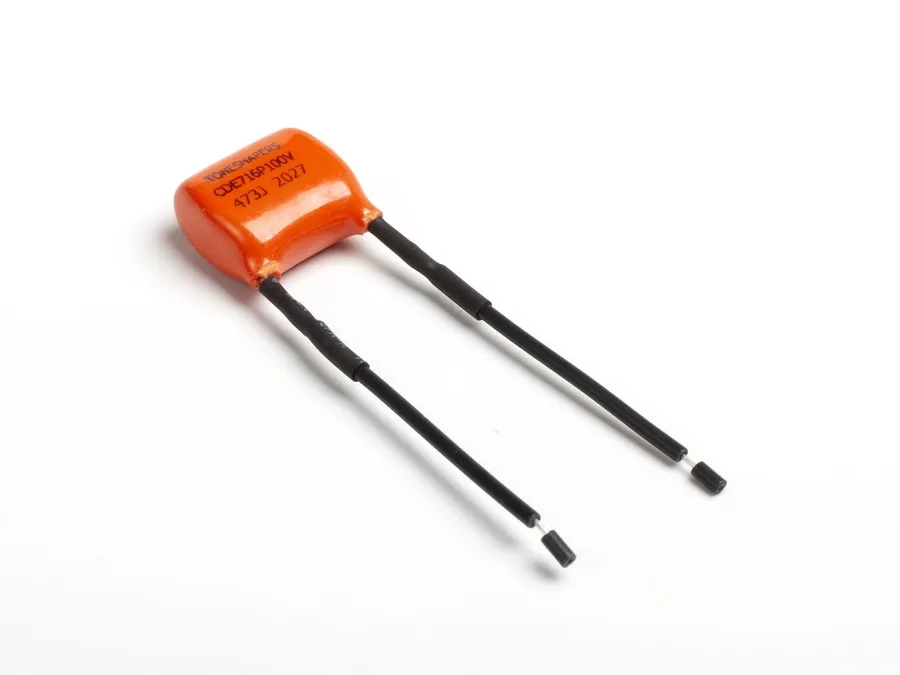
Decoding the 10 Microfarad Capacitor: Uses, Types, and Selection
2025.02.06
Capacitors, fundamental components in modern electronics, store electrical energy. Among them, the 10 microfarad capacitor plays a vital role in numerous applications, from smoothing power in circuits to filtering signals. Similar to a small reservoir storing water, a 10 microfarad capacitor holds electrical charge, readily releasing it when required. This article delves into the types, functions, and selection process of a 10 microfarad capacitor, bridging the gap between technicalities and practical understanding for both novices and experts.
What is a 10 Microfarad Capacitor?
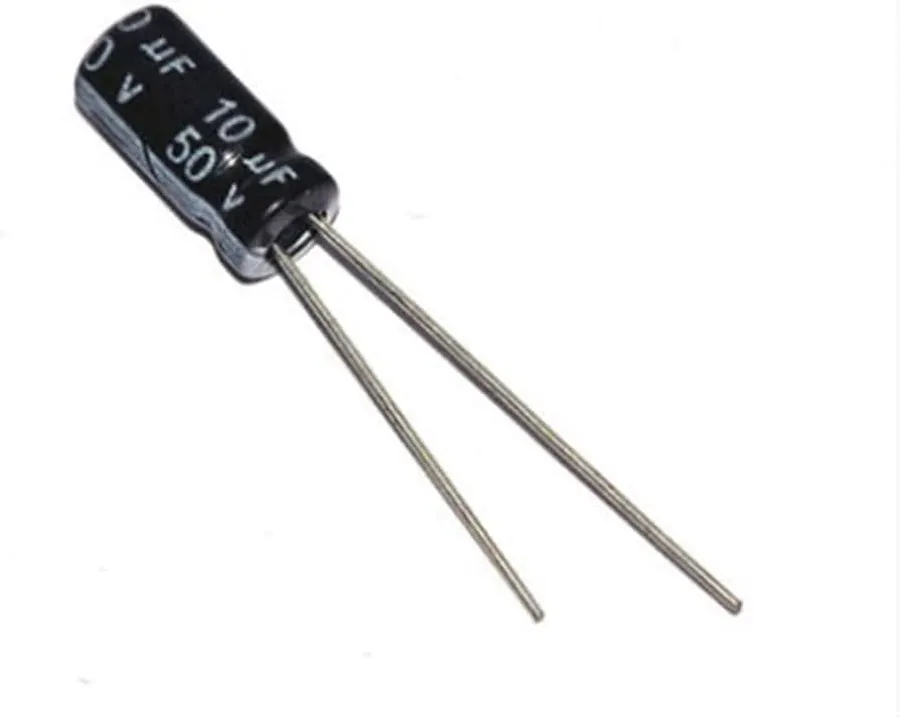
10 Microfarad Capacitor
A 10 microfarad (10µF) capacitor is a fundamental passive electronic component engineered to store electrical energy within an electric field. This storage capacity, quantified in microfarads, determines the amount of charge it can accumulate at a given voltage. Functionally, it acts like a miniature, rapidly discharging energy reservoir, in contrast to batteries, which deliver energy over extended periods.
Different Types of 10 Microfarad Capacitors
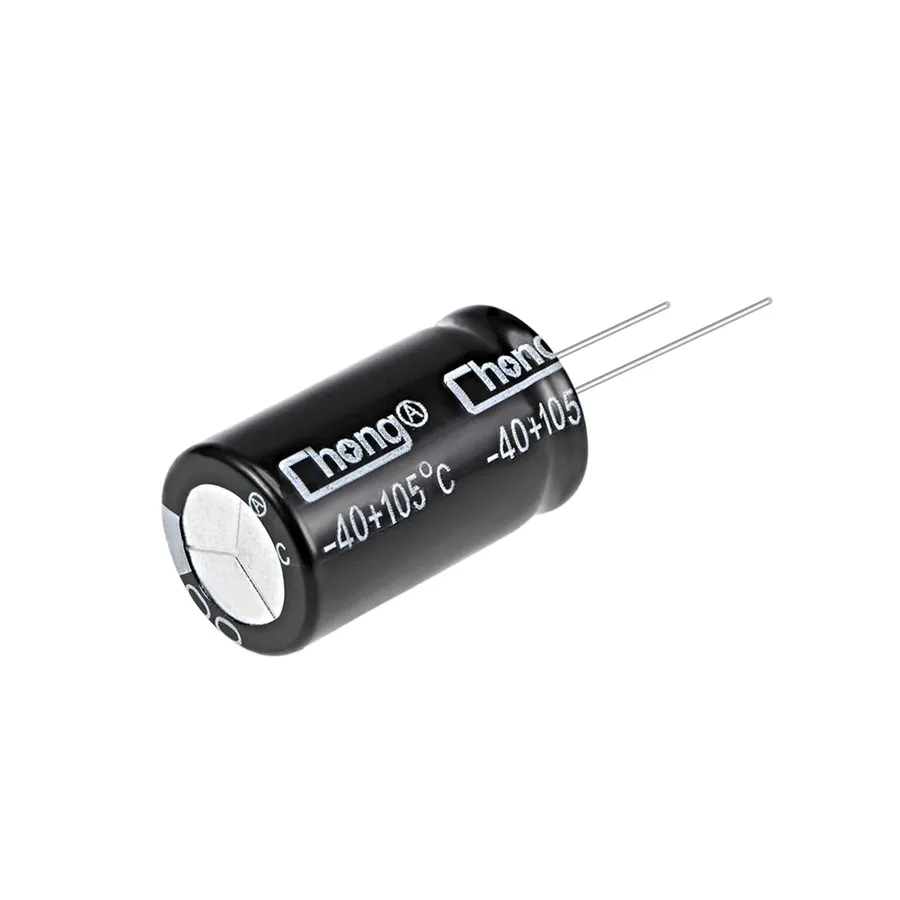
Aluminum Electrolytic Capacitors
The versatility of 10 microfarad capacitors is underscored by the variety of types available, each engineered with distinct characteristics that cater to specific applications. These variations in construction and materials lead to differences in performance parameters such as temperature stability, frequency response, and equivalent series resistance (ESR). Selecting the appropriate type is crucial for optimal circuit functionality and reliability.
Ceramic Capacitors These are characterized by their high-frequency performance and non-polarized nature. They are suitable for applications requiring minimal loss at higher frequencies, often used in bypass and coupling applications in digital circuits.
Electrolytic Capacitors Known for their high capacitance values, electrolytic capacitors are polarized and have a higher ESR compared to other types. They are typically used for filtering and decoupling in power supplies, where high capacitance is needed for energy storage and smoothing. Aluminum electrolytic capacitors are the most common.
Film Capacitors Film capacitors offer high precision and low ESR, making them ideal for audio circuits and precision timing applications. They often exhibit higher stability and lower drift over time. They are available in different materials such as polyester, polypropylene, and Teflon.
Tantalum Capacitors Tantalum capacitors are recognized for their stability and compact size. They are often chosen for their robust performance and are suitable for applications that require high reliability, but they are sensitive to voltage spikes and reverse polarity. They are commonly used in aerospace and military applications.
Common Applications of 10 Microfarad Capacitors
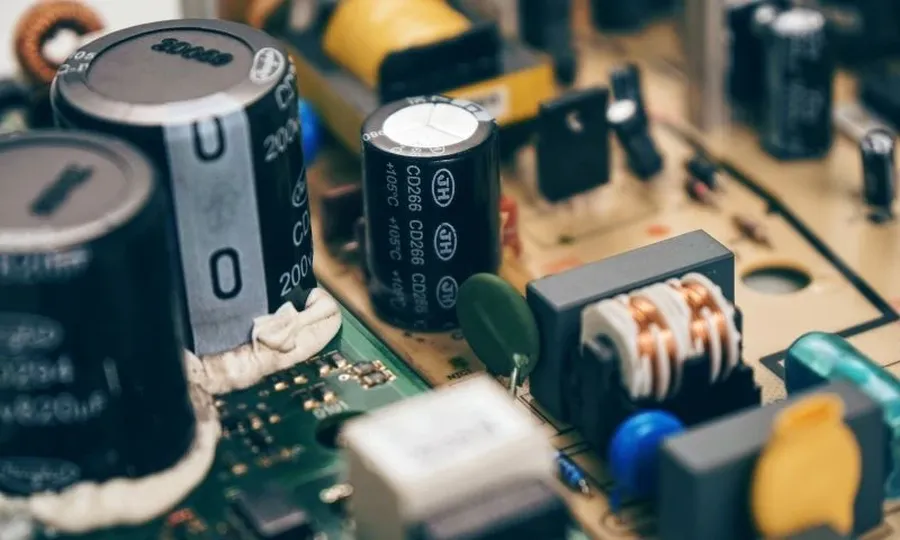
Capacitor on Circuit Board
10 microfarad capacitors are essential components across a wide spectrum of electronic devices, performing crucial functions in various circuits. Their ability to store and release electrical energy makes them indispensable for applications ranging from power management to signal processing. They are employed in power supplies for voltage smoothing, in audio circuits for signal manipulation, in motor circuits for operation, and in timing circuits for precise control, amongst other functions.
Power Supply Filtering In power supplies, 10µF capacitors filter out unwanted AC ripple from rectified DC voltage, ensuring a clean and stable power source for sensitive electronic circuits. They work by storing energy during voltage peaks and releasing it during dips, effectively smoothing the voltage waveform. This reduces noise and ensures consistent performance of downstream devices.
Audio Signal Coupling and Filtering 10µF capacitors play a crucial role in audio circuits for coupling and filtering signals. They are used to block DC components from audio signals, allowing only the AC audio signal to pass through. This prevents DC offset, ensuring the proper functioning of subsequent amplifier stages. Furthermore, they are used in filter circuits for shaping and modifying audio frequencies by controlling the signal transmission characteristics, allowing specific frequencies to pass while attenuating others.
Motor Starting and Running 10µF capacitors are often utilized in single-phase AC motor circuits, aiding in both the starting and running processes. They create the phase shift required to generate a rotating magnetic field in the stator, enabling the motor to start. Additionally, they are employed in running circuits to improve the motor's torque and energy efficiency.
Timing Circuits 10µF capacitors are fundamental in various timing circuits. Their controlled charging and discharging characteristics enable precise timing for various functions, such as setting pulse widths and generating specific frequencies for astable multivibrators or oscillators, and are also found in time-delay circuits for specific control or activation.
Decoupling Applications In decoupling applications, 10µF capacitors are used to minimize noise and unwanted voltage spikes in circuits. Placed close to active components, they provide a local reservoir of charge. This prevents fluctuations and maintains a stable voltage supply, ensuring proper operation of the circuits. They filter high-frequency noise that could be coupled through the power supply lines.
Selecting the Right 10 Microfarad Capacitor
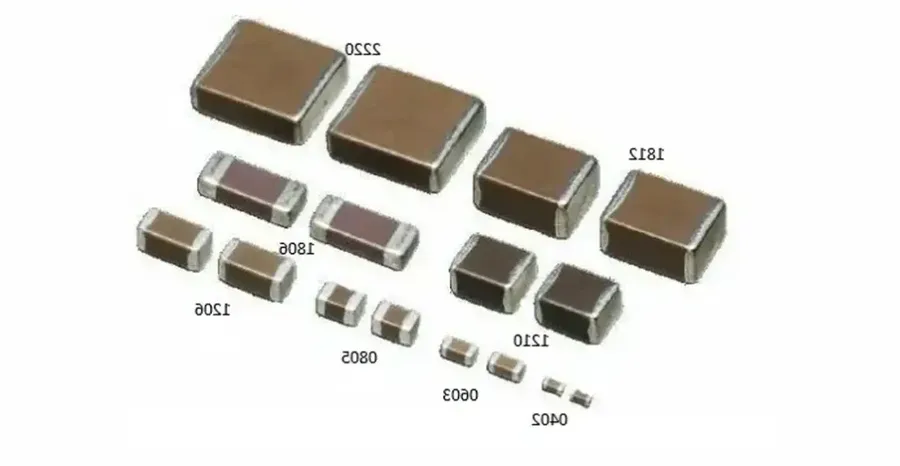
Various Capacitor Packages
Selecting the correct 10 microfarad capacitor is crucial for optimal circuit performance and reliability. Several key parameters must be carefully considered to ensure the chosen capacitor meets the application's specific demands. These factors include voltage rating, capacitance tolerance, temperature coefficient, physical size, and the intended application. A mismatch between these parameters and the circuit requirements can lead to component failure or degraded performance.
Parameter
Description
Importance
Voltage Rating
The maximum voltage the capacitor can safely withstand.
Must exceed the maximum voltage the capacitor will be exposed to in the circuit to avoid damage.
Capacitance Tolerance
The acceptable range of variation in capacitance from the stated 10 μF.
Important in applications requiring precise timing or filtering, as deviations affect circuit performance. Common tolerances are ±5%, ±10%, or ±20%.
Temperature Coefficient
How much the capacitance changes with temperature.
Crucial in environments with varying temperatures as capacitance drift affects circuit stability.
Physical Size
Dimensions of the capacitor, typically dependent on the capacitor's type and package.
Essential to ensure the capacitor fits physically within the available space in the design.
Application Requirements
Specific parameters such as ESR, ESL, or polarity, depending on the application.
Ensures that the selected capacitor is suitable for the required function, whether it be power filtering, signal coupling, or timing.
10 Microfarad Capacitor Equivalents and Replacements
Capacitor Leads
Replacing a 10 microfarad capacitor requires careful consideration of its electrical parameters to maintain circuit integrity. While an exact replacement is ideal, understanding acceptable variations and capacitor markings is crucial for successful substitution. This section provides guidance on finding suitable replacements, emphasizing voltage, temperature ratings, and capacitance tolerances.
Ideal Replacement The ideal replacement is a capacitor with the same capacitance (10 μF) and equal or higher voltage and temperature ratings.
Capacitance Variations Slight variations in capacitance might be acceptable in certain applications, but the closer the value to 10 μF, the better.
Voltage Rating Crucially, the replacement capacitor's voltage rating must equal or exceed that of the original to prevent failure or damage in the circuit.
Temperature Rating Ensure the replacement capacitor's operating temperature range meets or exceeds the original's requirements, especially in high-temperature environments.
Physical Size Consider the physical dimensions of the replacement, particularly in densely populated circuit boards. A significantly larger capacitor might not fit.
Capacitor Codes Familiarize yourself with capacitor codes to decipher capacitance, voltage ratings, and other characteristics when the values aren't directly printed.
10 Microfarad Capacitor: Troubleshooting and Common Issues
10 microfarad capacitors, while generally reliable, can exhibit certain failure modes and issues over time or under stress. Understanding these common problems and how to troubleshoot them is crucial for maintaining the performance and reliability of electronic circuits. Typical failure modes include capacitance drift, open circuits, and shorts.
Capacitance Drift Capacitance drift refers to the change in the actual capacitance value of the capacitor over time, temperature fluctuations, or operating conditions. This can lead to a deviation from the intended 10 microfarad value, affecting circuit performance. Using a multimeter capable of measuring capacitance can help to check for this issue. A capacitor with significant drift should be replaced.
Open Circuits (Capacitor Failure) An open circuit indicates a complete failure of the capacitor where it no longer conducts electricity. This occurs when the internal connections of the capacitor break down due to age, physical damage or excessive voltage/current. Measuring continuity with a multimeter will confirm an open circuit. The faulty capacitor will require replacement.
Shorts A short circuit occurs when the internal layers of a capacitor come into contact, providing a low-resistance path for current. This results in the capacitor no longer functioning as an energy storage device. A short can be detected by measuring resistance with a multimeter which should be very low or zero ohms, indicating a shorted condition and a need for replacement.
Troubleshooting with a Multimeter A multimeter is an essential tool for diagnosing capacitor issues. To check for continuity, set the multimeter to the continuity mode, if no sound, the capacitor is open circuit. To measure capacitance, use the dedicated setting on the multimeter, confirming the actual microfarad value. Also, inspect the physical condition of the capacitor looking for signs of bulging, discoloration, or leaks as it can indicate failure.
Voltage and Temperature Stress Operating capacitors beyond their rated voltage or temperature limits can drastically reduce their lifespan and lead to premature failure. The voltage rating of the replacement capacitor must be equal to or greater than the original, and the operational temperature must be within the design limits of the capacitor.
Excessive Heat Excessive heat can degrade the internal components of a capacitor, leading to various failure modes. If the capacitor is operating in a thermally stressed condition, ensure there are adequate measures for heat dissipation. If the capacitor is in close proximity to other heat-producing components, then a heat shield can be helpful.
Frequently Asked Questions About 10 Microfarad Capacitors
This section addresses common queries about 10 microfarad capacitors, providing concise answers to help clarify their use, application, and replacement scenarios.
What are the primary applications of a 10 microfarad capacitor? 10 microfarad capacitors are broadly used for filtering and smoothing in power supplies, signal coupling and filtering in audio circuits, motor starting and running, and in timing circuits. They also play a key role in decoupling to reduce noise within electronic circuits.
Can a 10 microfarad capacitor replace an 8 microfarad capacitor? While not ideal, replacing an 8 microfarad capacitor with a 10 microfarad capacitor might be acceptable in certain applications. However, it is critical to evaluate the specific circuit requirements and ensure the voltage and temperature ratings of the 10 microfarad capacitor are equal to or greater than those of the original 8 microfarad capacitor. A slight increase in capacitance, like this, may affect the circuit's operation, so check your application's tolerance first.
What does the value '10 microfarad' signify for a capacitor? A 10 microfarad designation refers to the capacitor's capacity to store electrical charge. It indicates that the capacitor can store a specific amount of charge at a given voltage. This is a measure of its capacitance. The higher the capacitance value, the greater the amount of charge it can store at a particular voltage.
Is it appropriate to substitute a 4.7 microfarad capacitor with a 10 microfarad capacitor? Replacing a 4.7 microfarad capacitor with a 10 microfarad capacitor is generally not advisable without a thorough analysis of the circuit requirements. The significantly higher capacitance may alter the circuit's behavior, especially in timing and filtering applications. The change might negatively affect the stability or performance of the electronic circuit so checking the tolerance of your application and the effect of the difference between these values is vital.
How do capacitor voltage ratings relate to their usage in circuits? The voltage rating of a capacitor specifies the maximum voltage it can withstand without risking damage or failure. Always choose a capacitor with a voltage rating that exceeds the maximum voltage expected in the circuit. Operating a capacitor above its voltage rating risks performance degradation or permanent damage.
What are the typical failure modes for a 10 microfarad capacitor? Common failure modes include capacitance drift, open circuits (where the capacitor no longer conducts), and shorts (where the capacitor conducts directly, bypassing its storage capacity). Exposure to excessive heat or voltage beyond their specified rating often leads to these failures. Testing is best done with a multimeter capable of measuring capacitance and resistance.
What are the key parameters to consider when selecting a 10 microfarad capacitor? Crucial factors include the voltage rating (must exceed the circuit's maximum voltage), tolerance (acceptable variation in capacitance), temperature coefficient (how performance varies with temperature), physical dimensions and case size, and the specific application requirements. The capacitor type (ceramic, electrolytic, film, or tantalum) must be suitable for the particular application.
Comparing Different 10 Microfarad Capacitor Types
Selecting the appropriate 10 microfarad capacitor involves considering several factors, including the capacitor's type, each with its own performance characteristics. Understanding the distinctions between ceramic, electrolytic, and film capacitors is crucial for effective circuit design and implementation. This section provides a comparative analysis of these three common types of 10 microfarad capacitors.
Capacitor Type
Advantages
Disadvantages
Common Applications
Ceramic
High frequency, Non-polarized, Small size
Low capacitance, Capacitance varies with temperature and voltage
Bypass capacitors, high speed circuits, decoupling applications
Electrolytic
High capacitance, low cost
Polarized, higher ESR (Equivalent Series Resistance), shorter lifespan compared to other types, sensitive to temperature variations
Power supply filtering, decoupling, energy storage
Film
High precision, low ESR, stable performance, high insulation resistance
Larger size, more expensive than other types
Audio circuits, precision timing, high voltage applications
The 10 microfarad capacitor, though small, is a cornerstone of modern electronics. Understanding its diverse types, specific applications, and correct selection methods can vastly improve your approach to circuit design and repair. From everyday devices to complex industrial systems, a 10 microfarad capacitor plays an essential role. Just as a well-tuned instrument enriches music, the correct application of a 10 microfarad capacitor ensures the smooth and reliable performance of electronic circuits. This knowledge will help you choose the appropriate component, thereby improving the function and reliability of your projects.