Capacitors are fundamental components in virtually every electronic device, storing electrical energy and releasing it as needed. From the simplest circuits to complex power systems, their role is undeniable. Whether you're building a custom audio amplifier, repairing a household appliance, or designing a cutting-edge gadget, understanding the types and availability of capacitors for sale is crucial. This guide dives deep into the world of capacitors, providing you with the knowledge to make informed purchasing decisions and where to find the right components for your project. Let's explore!
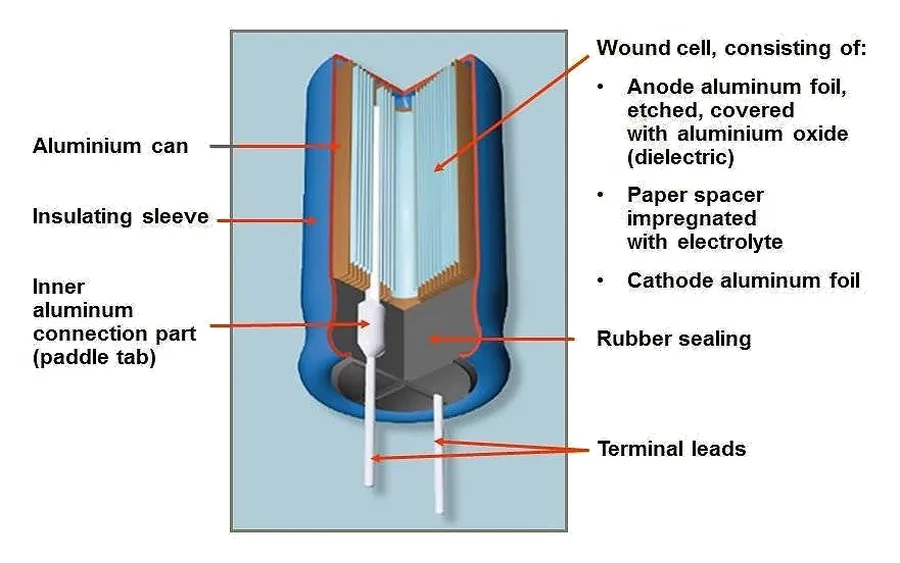
Capacitors are fundamental passive electronic components that store energy electrostatically in an electric field. They are essential in virtually all electronic circuits, playing a critical role in various functions from energy storage to signal processing. Understanding their basic characteristics, such as capacitance and voltage ratings, is crucial for effective circuit design and component selection.
The fundamental operation of a capacitor involves accumulating electrical charge on two conductive plates separated by an insulator, known as the dielectric. When a voltage is applied across the capacitor, an electric field forms within the dielectric, causing positive charge to accumulate on one plate and negative charge on the other. This charge separation stores electrical energy. The ability to store charge is quantified by capacitance, measured in farads (F). A higher capacitance means the capacitor can store more charge at a given voltage. The relationship between charge (Q), capacitance (C), and voltage (V) is Q = CV. The voltage rating of a capacitor indicates the maximum voltage it can withstand without experiencing damage or dielectric breakdown. Exceeding this rating can result in permanent failure. Other key parameters include tolerance, which defines the accuracy of the capacitance value, and temperature coefficient, which describes how the capacitance changes with temperature. Capacitors function in electronic circuits in a variety of ways including storing energy for backup power, filtering out noise from signals, coupling or decoupling circuit stages, timing circuit applications such as oscillators, and in energy conversion applications. Their versatility makes them indispensable in a wide array of electronic devices.
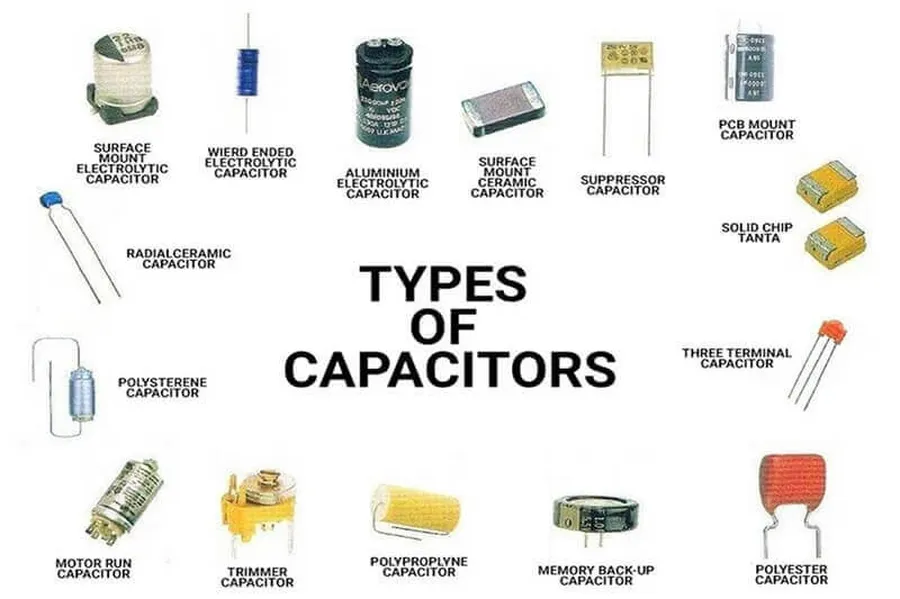
Capacitors are essential components in electronic circuits, and their diverse types cater to a wide array of applications. Each type possesses unique characteristics, advantages, and limitations, making the selection process critical for optimal circuit performance. This section provides a detailed overview of common capacitor types, including ceramic, electrolytic, tantalum, film, and supercapacitors, highlighting their distinct properties and uses.
| Capacitor Type | Key Characteristics | Typical Applications | Advantages | Disadvantages |
|---|---|---|---|---|
| Ceramic Capacitors | Small size, low cost, wide range of capacitance and voltage ratings, good temperature stability. | Bypass, coupling, decoupling, and filtering in various electronic circuits. | Low cost, small size, widely available, good stability. | Capacitance can vary with temperature and voltage, limited capacitance range, can be fragile. |
| Electrolytic Capacitors | High capacitance, polarized (except for some aluminum polymer types), relatively large size. | Power supplies, energy storage, smoothing and filtering in low-frequency applications. | High capacitance values, cost-effective for high capacitance. | Polarized, lower tolerance and accuracy, limited lifespan, ESR can be high. |
| Tantalum Capacitors | High capacitance per volume, good temperature stability, polarized. | Mobile devices, high-reliability applications, decoupling and filtering. | High capacitance density, stable performance. | Polarized, sensitive to overvoltage and reverse polarity, more expensive than ceramic capacitors. |
| Film Capacitors | High precision, low losses, stable performance, various dielectrics (e.g., polyester, polypropylene). | Audio circuits, high-frequency filtering, resonant circuits, and precision timing. | High precision, low losses, excellent stability. | Larger size compared to ceramic capacitors, may have higher cost. |
| Supercapacitors | Very high capacitance, high energy density (compared to conventional capacitors), long cycle life. | Energy storage, backup power, regenerative braking, and high-power applications. | Very high capacitance, long cycle life. | Relatively low voltage rating, higher ESR compared to some other capacitors. |
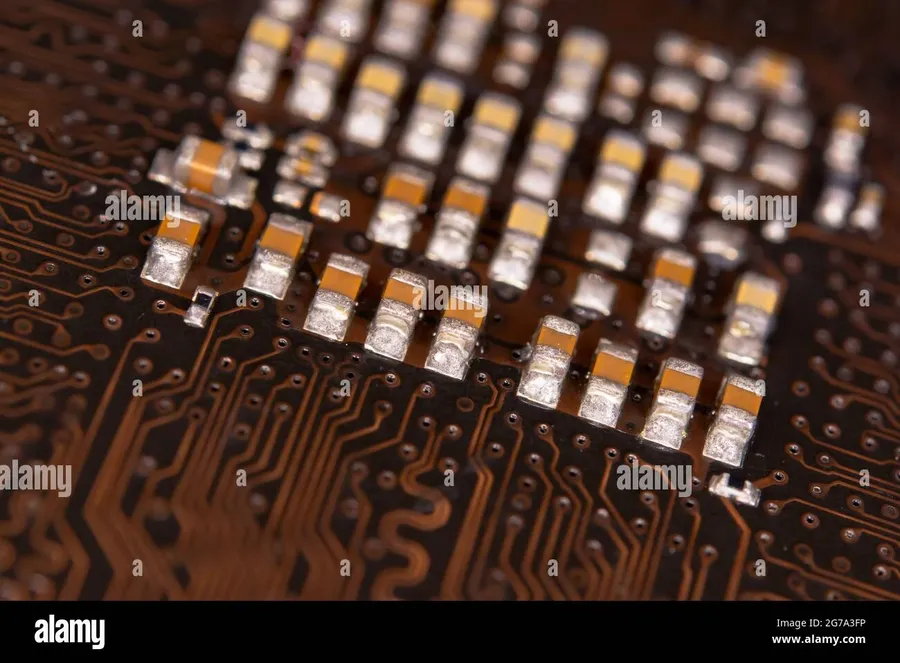
Ceramic capacitors are a ubiquitous component in electronics, prized for their small size, cost-effectiveness, and wide range of capacitance values. They are constructed using a ceramic dielectric material, which determines their key electrical characteristics and performance in various applications. Understanding the different classes of ceramic capacitors is essential for selecting the correct component for your design.
| Class | Dielectric Material | Temperature Coefficient | Capacitance Stability | Typical Applications |
|---|---|---|---|---|
| Class 1 | Paralectric | Highly Linear, Low Temp Coefficient | Extremely stable, low loss | Precision timing circuits, filters, oscillators |
| Class 2 | Ferroelectric | Nonlinear, Moderate Temp Coefficient | Less stable, medium loss | General coupling, decoupling, and bypass applications |
| Class 3 | Barrier Layer Ferroelectric | Highly Nonlinear, High Temp Coefficient | Least stable, high loss | General-purpose applications where stability is not critical |
Class 1 ceramic capacitors, made with paraelectric ceramics, exhibit exceptional stability and low losses, making them ideal for precision applications like timing circuits and filters. In contrast, Class 2 capacitors utilize ferroelectric ceramics, offering higher capacitance values but with less stability and higher losses. These are typically used for decoupling and bypass applications. Class 3 capacitors, known for their very high capacitance in small packages, are suitable for general-purpose uses where stability is not paramount.
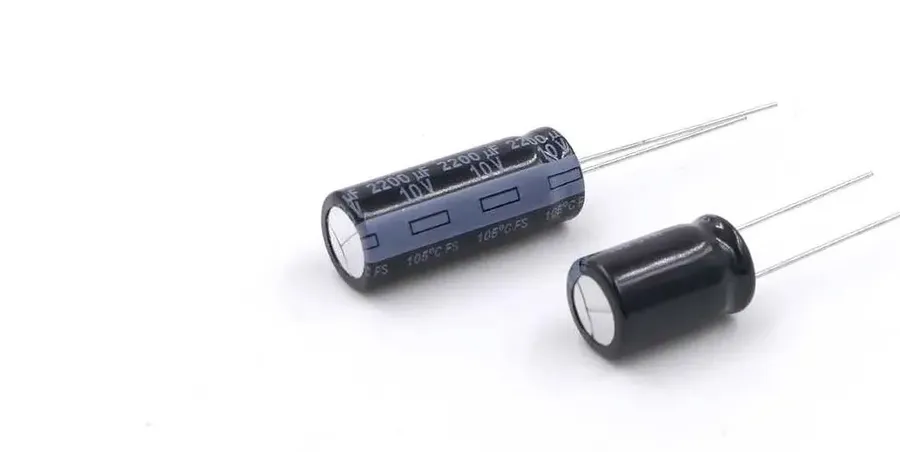
Electrolytic capacitors, particularly aluminum and tantalum types, are distinguished by their exceptionally high capacitance values, making them ideal for power supply applications and energy storage. These capacitors leverage an electrolyte to achieve significantly larger capacitance within a compact size compared to other capacitor types. They play a crucial role in smoothing out voltage fluctuations and ensuring stable power delivery.
| Feature | Aluminum Electrolytic | Tantalum Electrolytic |
|---|---|---|
| Capacitance Range | High (µF to mF) | Moderate to High (µF) |
| Voltage Range | Moderate (Few V to hundreds V) | Low to Moderate (Few V to ~50V) |
| Polarity | Polarized | Polarized |
| ESR (Equivalent Series Resistance) | Moderate | Low |
| Temperature Stability | Moderate | Good |
| Lifespan | Moderate | Longer |
| Cost | Low | Moderate to High |
| Common Applications | Power supplies, decoupling | Portable devices, high-reliability circuits |
The polarized nature of electrolytic capacitors means they must be installed with the correct polarity orientation, otherwise, damage or failure can occur. Specifically, the positive terminal of the capacitor must be connected to a more positive voltage than the negative terminal to function correctly. Aluminum electrolytic capacitors often have a marked stripe on the casing near the negative lead to show polarity. Incorrect polarity can lead to overheating, electrolyte leakage, and even explosion.
Electrolytic capacitors are widely employed in power supplies, filtering circuits, and decoupling applications. Aluminum electrolytic capacitors, due to their higher capacitance and lower cost, are common in consumer electronics and industrial power supplies. Tantalum capacitors, with their better temperature and frequency performance, are typically found in portable devices and high-reliability applications like medical and aerospace equipment where size and performance is critical.
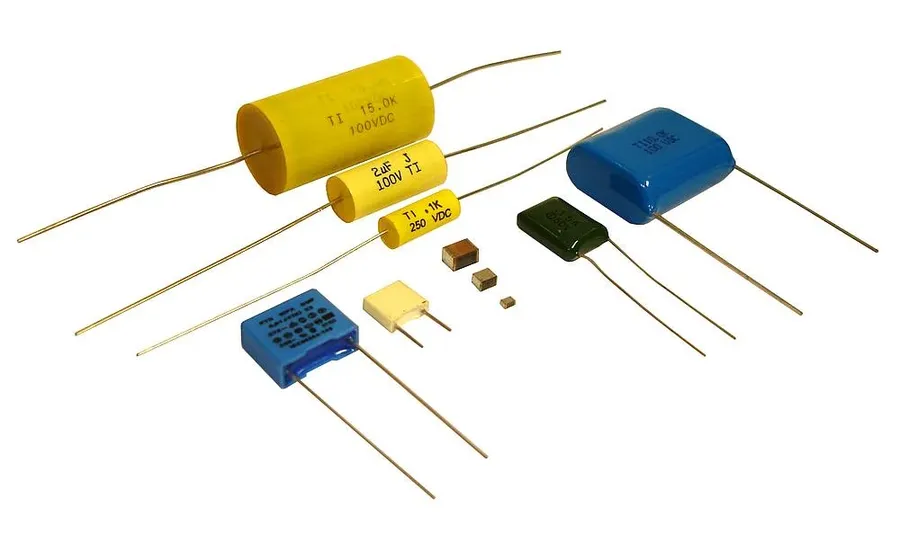
Film capacitors are characterized by their exceptional precision, low loss, and stability, making them indispensable in applications demanding high performance, especially within audio circuits and sensitive electronic systems. Their construction involves thin layers of dielectric film, typically polymer, sandwiched between metal electrodes, giving them a distinct set of electrical characteristics.
| Characteristic | Description |
|---|---|
| Dielectric Material | Typically polymer films such as polyester (PET), polypropylene (PP), or polyethylene naphthalate (PEN). |
| Precision | Offers tight tolerances and stable capacitance values over time and temperature. |
| Losses (ESR) | Exhibits very low equivalent series resistance (ESR), reducing energy dissipation. |
| Temperature Stability | Maintains consistent performance across a wide range of operating temperatures, though variations exist among different film types. |
| Voltage Rating | Available in a wide array of voltage ratings, suitable for various applications. |
| Applications | Commonly used in audio equipment, power supplies, high-frequency circuits, and timing circuits |
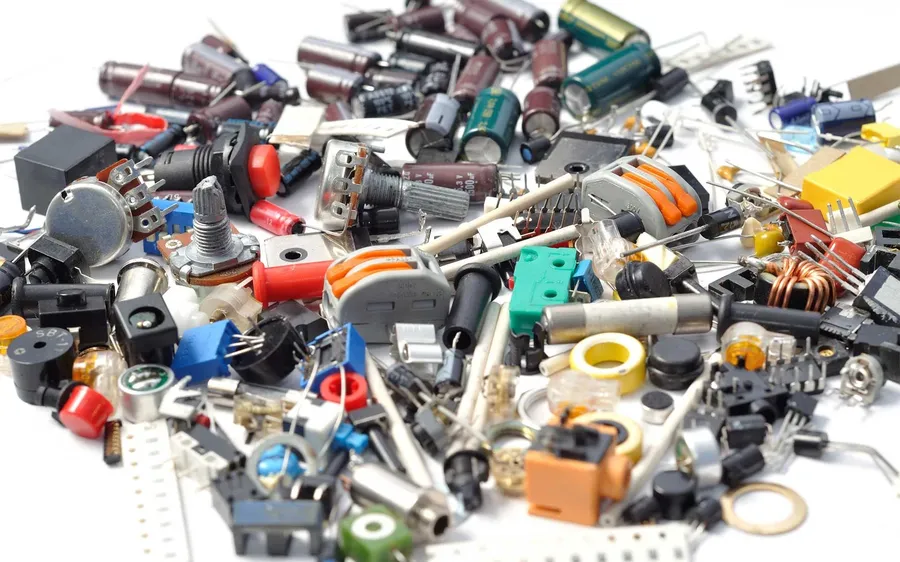
Sourcing capacitors effectively requires considering both online and local options, each offering distinct advantages and disadvantages. The optimal choice depends on factors such as project urgency, required quantities, budget constraints, and the specific types of capacitors needed. Understanding these trade-offs is crucial for making informed purchasing decisions.
| Factor | Online Distributors | Local Electronics Stores |
|---|---|---|
| Selection | Extensive variety of types and brands. | Limited selection, often focused on common components. |
| Pricing | Generally more competitive due to lower overhead. | Potentially higher prices due to higher operating costs and lower volume discounts. |
| Convenience | 24/7 availability, convenient ordering from anywhere. | Limited operating hours, requires travel. |
| Lead Time | Shipping may take several days, expedited options available at a premium. | Immediate availability, no waiting for shipping. |
| Expertise | Often lacks direct sales assistance. | Potential for in-person consultation and advice. |
| Minimum Quantities | May offer both single-unit and bulk purchasing. | May have limited stock and less variety in pack size. |
| Returns | Often have return policies but require shipping. | Potentially easier in-person returns, depending on store policy. |
Major online distributors like Mouser, Digikey, and Arrow Electronics, offer vast inventories and datasheets to match. Conversely, local stores provide immediate access, which is crucial for time sensitive projects, and can offer face-to-face assistance. Consider the benefits of both options when making your purchasing decision.
Selecting the correct capacitor for a project is critical to ensure circuit performance, reliability, and longevity. The optimal choice hinges on a variety of parameters, including capacitance, voltage rating, temperature characteristics, and tolerance. A failure to account for these factors can lead to component failure, reduced circuit efficiency, or even safety hazards.
| Parameter | Description | Implications of Incorrect Selection |
|---|---|---|
| Capacitance | The amount of charge a capacitor can store (measured in Farads) | Insufficient capacitance can lead to improper filtering or timing issues; excessive capacitance can cause circuit instability or slow response times. |
| Voltage Rating | The maximum voltage a capacitor can withstand without damage | Using a capacitor with a lower voltage rating than required can cause catastrophic failure, potentially damaging other components or creating a safety hazard. |
| Temperature Coefficient | How much the capacitance changes with temperature variations | Significant variations in capacitance can cause circuit drift or inaccurate timing. Operating outside the temperature range may result in premature component failure. |
| Tolerance | The allowable deviation of the actual capacitance value from its nominal value | Excessive capacitance deviations can cause circuit function to be out of spec or unstable. |
| Physical Size and Type | The capacitor's physical dimensions and construction type (e.g., SMD, radial) | Using the wrong size or type can make physical component mounting or replacement difficult. |
For example, in a high-frequency switching power supply, low equivalent series resistance (ESR) and low equivalent series inductance (ESL) is essential, implying that ceramic or film capacitors would be preferred. Meanwhile, for bulk energy storage, electrolytic capacitors are often used, but it is necessary to ensure that the voltage rating of the chosen capacitor is substantially higher than the expected operating voltage to account for voltage surges and transient events.
To make an informed selection, project requirements should be clearly defined, including operational voltage, desired frequency response, temperature variations, the required level of precision, and the physical constraints. Always consult the datasheet for a detailed specification and to check it against the project requirements.
This section addresses common questions related to capacitors, ranging from their fundamental differences to practical usage and purchasing considerations. Understanding these FAQs is crucial for selecting and utilizing capacitors effectively in electronic projects.
Selecting the correct capacitor for a given application is crucial for the proper functioning and reliability of electronic circuits. This section provides practical advice on choosing capacitors, emphasizing key parameters like voltage, capacitance, tolerance, and safety practices.
Selecting the right capacitors for your project is crucial for ensuring optimal performance and reliability. Understanding the diverse types of capacitors for sale, their unique properties, and the best sources to buy them from is key. Whether you are an electronics hobbyist, a seasoned engineer, or someone working on a DIY project, this guide will provide you with the essential knowledge and resources to make informed decisions when purchasing capacitors. Remember to consider your project's specific needs, compare different capacitor types, and choose reliable suppliers to ensure your components contribute positively to your project. You can explore our selection of capacitors for sale today and find the perfect fit for your needs.

