In the ever-evolving landscape of electronics, the humble capacitor plays a vital role. Among the giants of capacitor manufacturing, Nichicon stands tall, renowned for its quality and reliability. From smartphones to industrial machinery, Nichicon capacitors are the unsung heroes powering countless devices. This guide delves into the intricacies of Nichicon capacitors, providing a detailed understanding of their types, applications, and selection criteria, ensuring you're equipped with the knowledge to make informed decisions for your electronic endeavors.
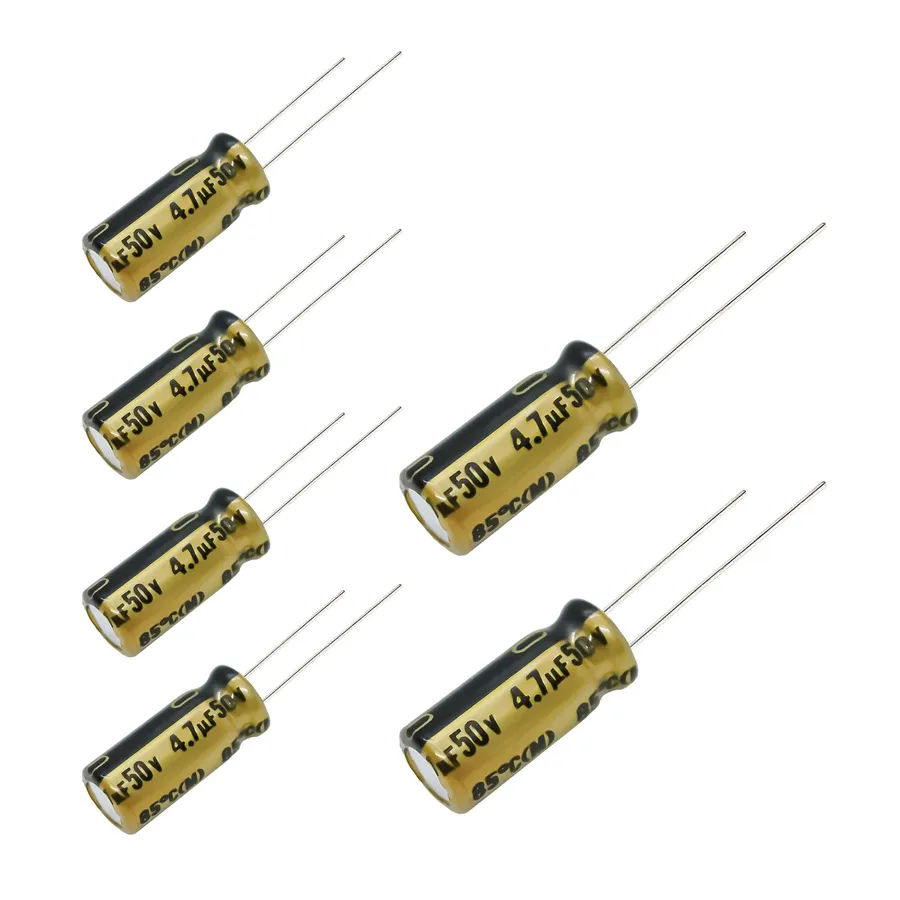
Nichicon is a renowned manufacturer offering a diverse portfolio of capacitors, each engineered for specific applications. Their product range includes aluminum electrolytic capacitors, known for high capacitance values; film capacitors, offering excellent stability and low losses; and polymer capacitors, characterized by low ESR and high-frequency performance. This variety allows engineers to select components optimally matched to their design needs.
| Capacitor Type | Key Characteristics | Typical Applications |
|---|---|---|
| Aluminum Electrolytic | High capacitance, polarized, cost-effective | Power supplies, smoothing, decoupling |
| Film | Low loss, stable, non-polarized | Audio equipment, high-frequency circuits, precision timing |
| Polymer | Low ESR, high ripple current, long life | High-performance power circuits, digital electronics |
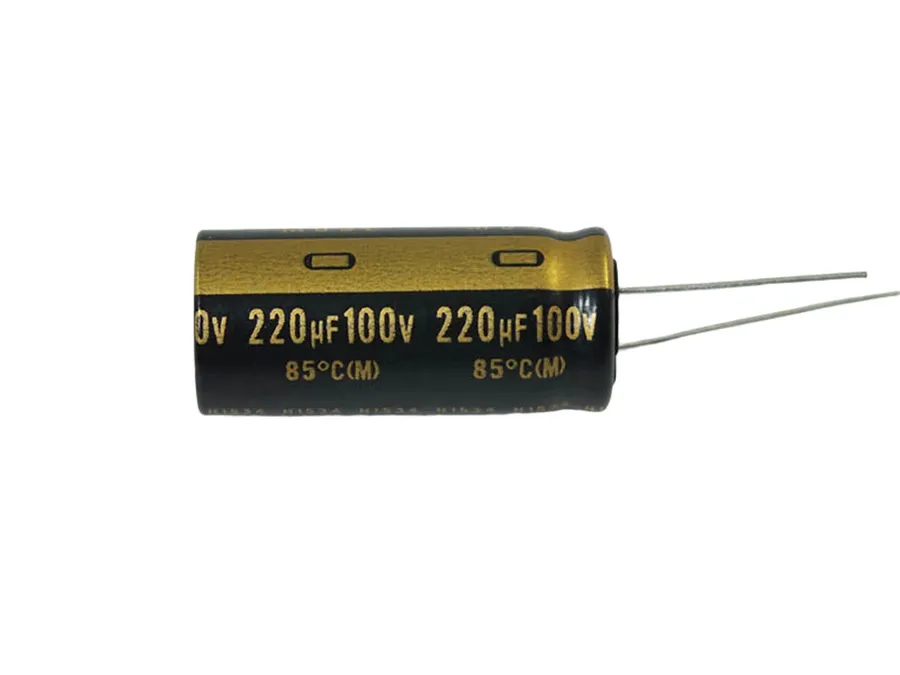
Nichicon electrolytic capacitors are a cornerstone of modern electronics, distinguished by their diverse applications and specialized designs. These capacitors utilize an electrolyte to achieve high capacitance within a compact form factor, making them essential for power supplies, audio equipment, and various industrial systems. Their construction, performance characteristics, and series variations merit detailed examination to ensure proper application and performance.
The core of an electrolytic capacitor is its structure which primarily consists of: the anode, usually an aluminum foil that is electrochemically etched to increase the surface area, coated with an oxide layer which acts as a dielectric; the electrolyte which is a conductive medium, can be liquid or solid, ensuring ionic conduction, and the cathode which is another conducting material to complete the circuit. The unique properties of each component significantly influence the performance characteristics such as capacitance, ESR, and lifespan of the capacitor.
| Feature | Aluminum Electrolytic Capacitor (Liquid) | Aluminum Electrolytic Capacitor (Solid) | Polymer Electrolytic Capacitor |
|---|---|---|---|
| Electrolyte | Liquid or semi-liquid | Solid conductive polymer | Solid conductive polymer |
| ESR | Moderate to High | Low to Moderate | Very Low |
| Temperature Stability | Good | Better | Excellent |
| Lifespan | Moderate | Long | Very Long |
| Applications | General-purpose, Power supplies, Audio | High-performance power supplies, Computer motherboards | High-frequency applications, portable devices |
| Cost | Moderate | Moderate to High | High |
Nichicon offers a range of electrolytic capacitor series each tailored for specific applications. For instance, the audio series are designed to minimize distortion and noise in audio signals, while power series capacitors are constructed for high-ripple current and high-temperature operation. Industrial series capacitors are often robust and designed for long service life under harsh conditions.
Selecting the correct capacitor for an application hinges on understanding its key specifications. Nichicon capacitors, like all capacitors, are defined by parameters such as capacitance, voltage rating, temperature range, and Equivalent Series Resistance (ESR). These specifications dictate how a capacitor will perform in a circuit and are crucial for ensuring both functionality and reliability.
| Specification | Description | Importance |
|---|---|---|
| Capacitance (Farads) | The amount of charge a capacitor can store at a given voltage. | Determines the capacitor's ability to store energy; affects frequency response in circuits. |
| Voltage Rating (Volts) | The maximum voltage that can be safely applied across the capacitor without risk of damage. | Critical for preventing capacitor failure and ensuring circuit reliability. Operating voltage must be less than the rated voltage. |
| Temperature Range (°C) | The range of ambient temperatures over which the capacitor is designed to operate within specifications. | Ensures stable and reliable performance within the intended operational environment. Operating outside the range may lead to performance degradation or failure. |
| Equivalent Series Resistance (ESR) (Ohms) | The effective resistance within the capacitor. Includes losses from the dielectric, electrodes, and contacts. | Affects the capacitor's ability to handle current. Lower ESR leads to better performance, especially at high frequencies and in high-current applications. |
| Tolerance (%) | The permissible variation in the actual capacitance value from its nominal value. | Important for circuits requiring precise capacitance values. Tighter tolerances result in more accurate circuit behavior. |
| Leakage Current (µA) | The small amount of current that flows through the dielectric when a voltage is applied. | Indicates the capacitor's ability to retain its charge. Lower leakage currents are desirable in most applications, especially for battery-powered circuits. |
| Lifespan (Hours) | The expected operational life of the capacitor, often specified at a particular temperature. | Impacts the reliability and maintenance schedule of the overall system. |
Selecting the appropriate Nichicon capacitor for a specific application is crucial for ensuring optimal circuit performance, reliability, and longevity. This process involves careful consideration of several key factors, including the operating frequency of the circuit, the environmental conditions in which the capacitor will operate, and the desired lifespan of the component. A systematic approach to selection will prevent premature failure and ensure stable operation.
The selection process should begin with understanding the fundamental requirements of your circuit. Start by identifying the necessary capacitance and voltage rating. Then, consider the operating frequency, which significantly impacts the capacitor's impedance characteristics, and the temperature range of the application, which will dictate whether to select components rated for general purpose or higher temperature operation. Finally, carefully evaluate lifespan expectations, choosing a capacitor with a rated lifetime that matches or exceeds the application’s requirements. Neglecting any of these parameters can compromise circuit performance and reliability. Let's delve into a detailed examination of these considerations
| Parameter | Description | Impact on Selection |
|---|---|---|
| Capacitance | The capacitor's ability to store an electrical charge, measured in Farads (F). | Determines the amount of energy the capacitor can store and its effect on circuit timing and filtering. |
| Voltage Rating | The maximum DC voltage the capacitor can withstand without damage, measured in Volts (V). | Must exceed the maximum voltage present in the circuit to prevent capacitor failure. |
| Operating Temperature Range | The allowable temperature range for proper operation, in degrees Celsius (°C). | Determines the environmental compatibility, selecting appropriate series such as general-purpose or high-temperature rated capacitors. |
| Equivalent Series Resistance (ESR) | Internal resistance of the capacitor, measured in Ohms (Ω). | Affects ripple handling and the capacitor's ability to manage high-frequency AC signals and heat dissipation. Lower ESR is better for many applications. |
| Operating Frequency | The frequency of the signal the capacitor is exposed to, measured in Hertz (Hz). | Influences capacitor impedance. Higher frequencies require capacitors with lower inductance. |
| Lifespan | The expected operational lifetime of the capacitor under specified conditions, measured in hours. | Critical for ensuring long-term reliability, especially in mission-critical and high-cost applications |
In addition to the above, consider the capacitor's construction type (aluminum electrolytic, film, polymer). Each construction type offers different performance characteristics. Aluminum electrolytic capacitors are cost-effective with high capacitance, while film capacitors offer greater precision and stability, and polymer capacitors exhibit low ESR and excellent high-frequency characteristics. The choice of the capacitor type also affects its size and physical form factor, which will also need consideration, particularly in space-constrained applications.
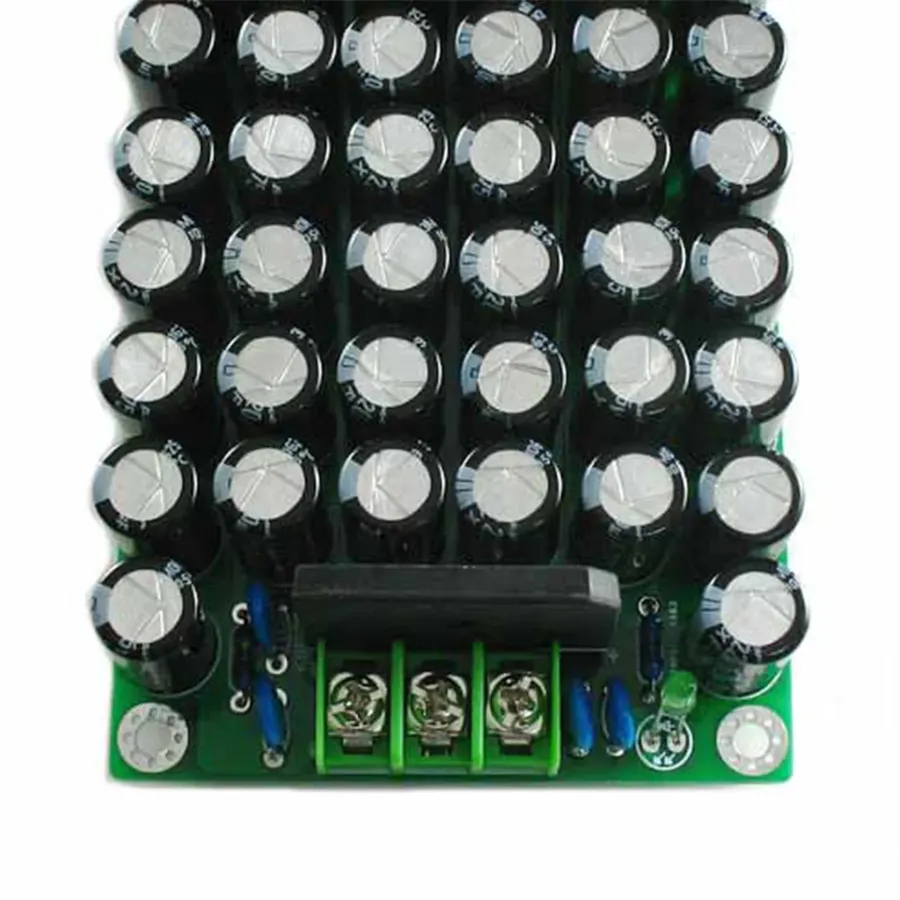
Nichicon's commitment to quality and performance extends significantly into the realm of audio applications, where the accurate reproduction of sound is paramount. Their audio-grade capacitors are meticulously engineered to minimize signal distortion and noise, contributing to a cleaner, more detailed, and immersive listening experience. These capacitors are designed with specific materials and constructions to optimize performance in audio circuits.
| Nichicon Series | Typical Application | Key Characteristics |
|---|---|---|
| Muse KZ | High-end audio, preamplifiers | Rich, full-bodied sound, very low distortion |
| Muse FG | General audio circuits, power supplies | Balanced sound, good overall performance |
| Muse ES | Audio coupling, signal path | Clear, detailed sound, good transparency |
| KG | Power supply filter for audio amplifiers | Large capacitance, good ripple current handling |
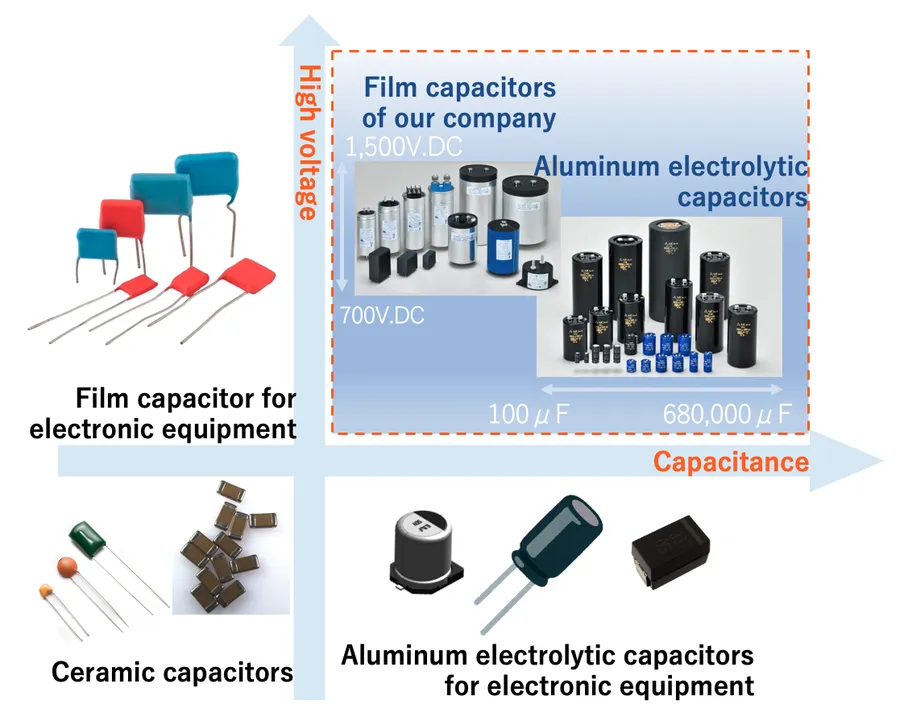
When selecting capacitors for electronic applications, comparing different brands is crucial to ensuring optimal performance and reliability. Nichicon, a well-regarded manufacturer, often competes with other industry leaders. This section delves into a comparative analysis of Nichicon capacitors against these brands, evaluating their strengths and weaknesses across essential parameters and various applications.
| Parameter | Nichicon | Panasonic | Murata | TDK | Rubycon |
|---|---|---|---|---|---|
| Reputation | High; known for reliability and audio-grade caps | High; broad range of capacitors for varied applications | High; strong in ceramic multilayer capacitors | High; established brand, known for wide variety of components | High; specializes in high-performance electrolytic capacitors |
| Product Range | Extensive; including electrolytic, film, and polymer types | Very broad; covering almost all capacitor types | Extensive; particularly in multilayer ceramic capacitors (MLCCs) | Wide; focus on ceramic, electrolytic, film, and power capacitors | Moderate; primarily focuses on aluminum electrolytic capacitors |
| Performance (ESR) | Generally Low; especially in high-grade series | Low to moderate; varies by series and application | Very Low; ceramic MLCC's in particular offer very low ESR | Low to moderate; depends on the type and series | Low; Especially in their high-end series |
| Performance (Lifespan) | Long; designed for extended operational life | Long; with options for high-reliability applications | Extremely Long; ceramic capacitors are generally very robust | Long; dependent on the application and specification | Long; Designed with long lifespan in mind |
| Temperature Range | Wide; suitable for various operating environments | Wide; with specific series designed for extreme conditions | Wide; ceramic MLCCs have excellent thermal stability | Wide; products available for broad temperature specifications | Wide; varies by series |
| Target Applications | Audio, power electronics, industrial equipment | Consumer electronics, industrial, automotive, and energy | Mobile devices, automotive, aerospace, medical | Automotive, industrial, communications, power conversion | Industrial, medical, automotive, power supplies |
| Cost | Mid-range to high, depends on grade and specifications | Mid-range to high, competitive in most markets | Mid-range, competitive in many markets, high in performance-oriented MLCCs | Varies widely by component type | Mid to high, focus is on quality and high-end applications |
This section addresses common inquiries regarding Nichicon capacitors, providing clarity on their applications, manufacturing origin, and methods for identifying faulty units. These questions are crucial for both novice and experienced users to make informed decisions when selecting and using Nichicon capacitors.
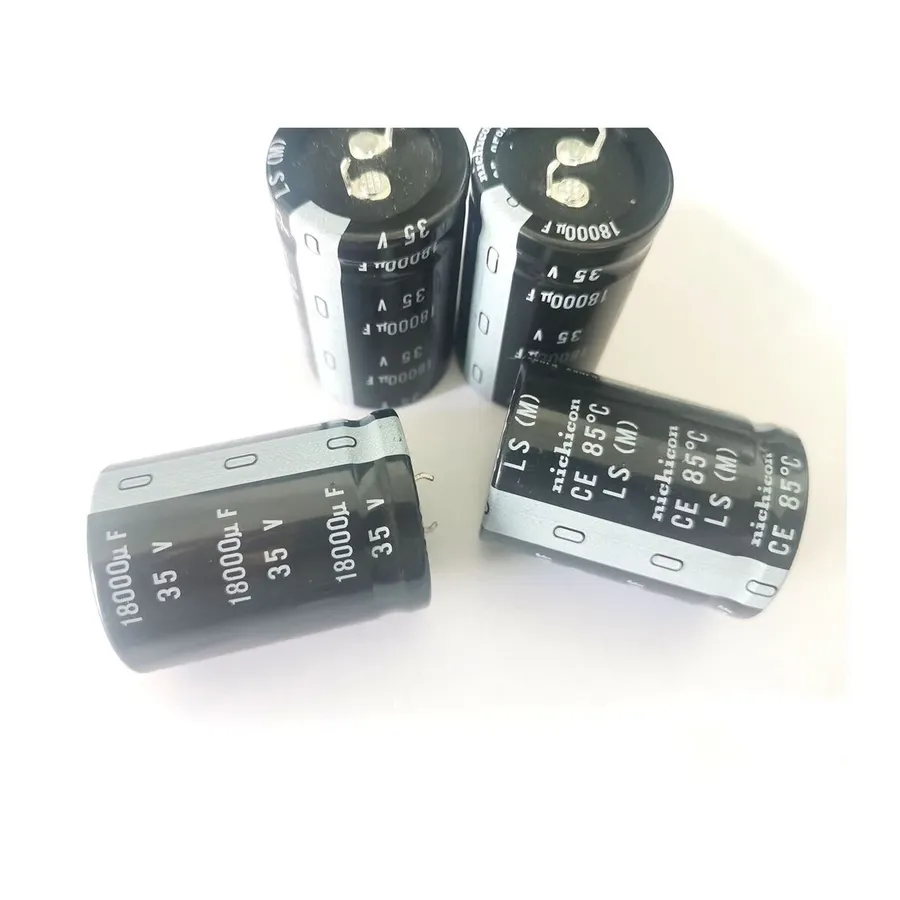
Acquiring genuine Nichicon capacitors is crucial for ensuring the reliability and performance of electronic circuits. Counterfeit components can exhibit substandard characteristics, leading to circuit malfunction or premature failure. Therefore, purchasing from authorized distributors is paramount.
Proper troubleshooting and replacement of Nichicon capacitors are essential skills for maintaining and repairing electronic devices. This section provides a practical guide on identifying faulty capacitors, safely replacing them, and observing crucial precautions when handling electronic components.
Nichicon capacitors, with their wide array of types and applications, are indeed a cornerstone of modern electronics. Their reliability and performance make them a top choice for engineers and hobbyists alike. By carefully considering the specifications and the needs of your application, you can harness the power of Nichicon capacitors to ensure the longevity and effectiveness of your projects. Whether you're building a complex audio system or repairing a simple circuit, understanding Nichicon capacitors will undoubtedly elevate your electronic endeavors.

