In the realm of electronics, a 270 ohm resistor, seemingly a tiny component, plays a critical role in controlling the flow of electricity, much like traffic signals guide cars. This little workhorse is used everywhere, from simple LED circuits to complex audio equipment and robotics. Like a well-placed speed bump slowing down a car, a 270 ohm resistor helps to regulate electrical currents, ensuring that our devices operate safely and efficiently. This article will guide you through the essential details of this fundamental component, including its various types, how to identify one by its color bands, and practical applications in our everyday world.
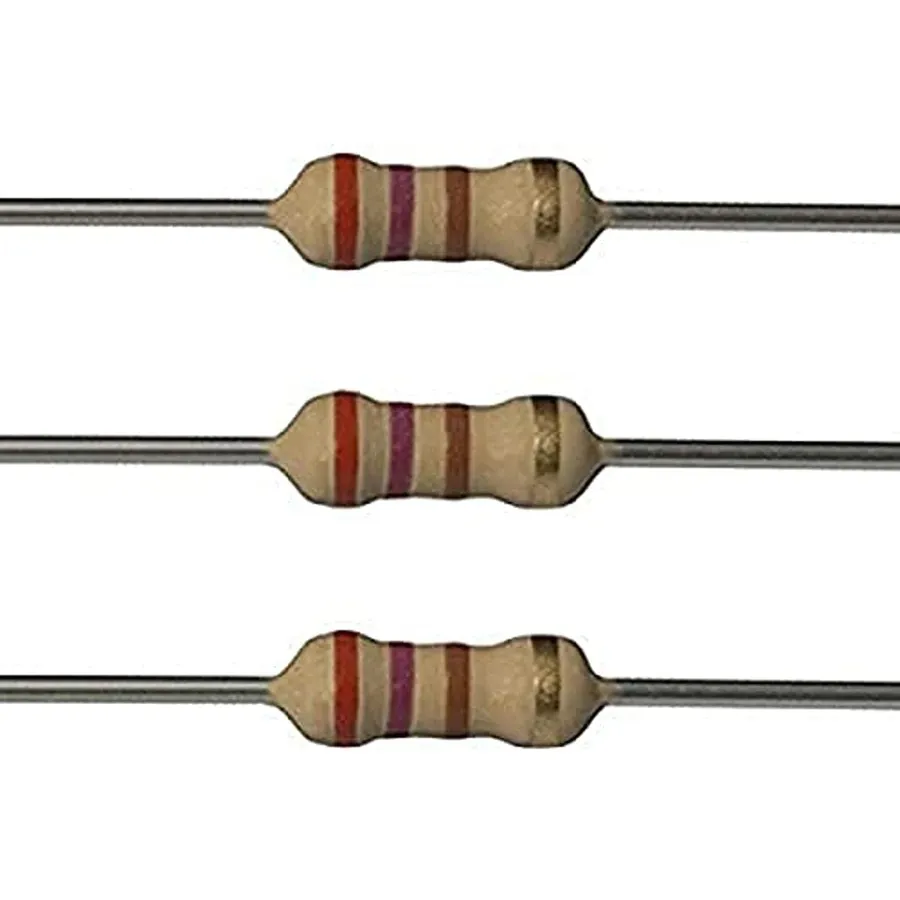
A 270 ohm resistor is a fundamental passive electronic component designed to impede the flow of electrical current, presenting a specific resistance of 270 ohms. This resistance, a property of the material, limits the current flow and converts electrical energy into heat as electrons move through the resistor. This conversion follows Joule's first law. The precise 270 ohm value makes these resistors crucial in a wide range of applications where specific current or voltage levels are necessary. In practical terms, a 270-ohm resistor functions as a controlled impediment in an electrical pathway, crucial for maintaining circuit integrity and functionality.
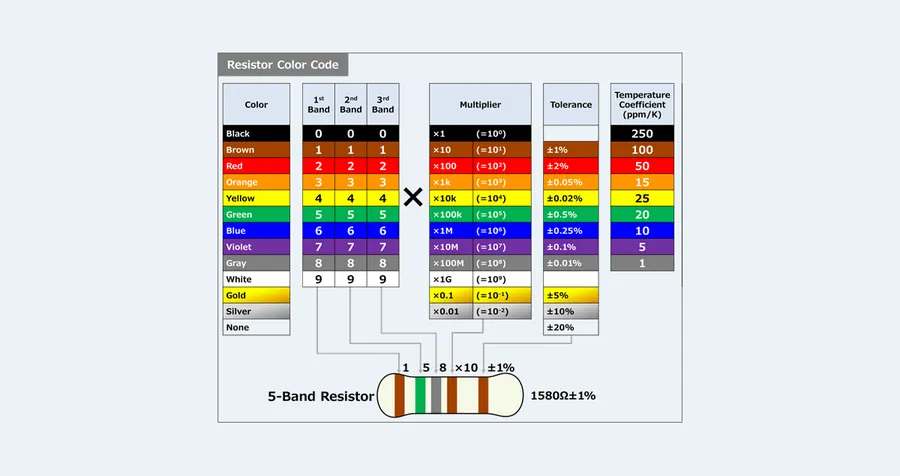
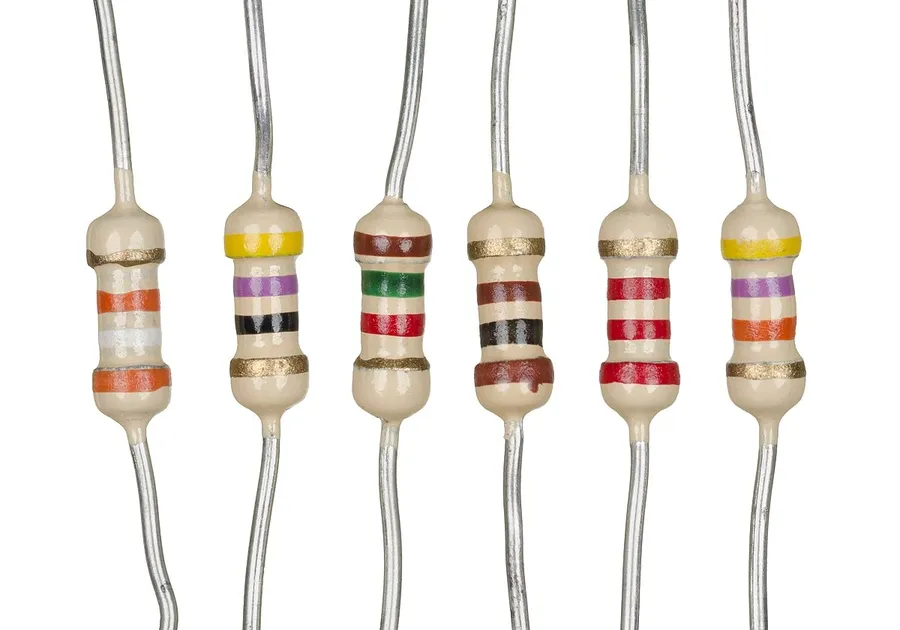
The color code on a 270 ohm resistor is a standardized system that allows for quick identification of its resistance value and tolerance. This is crucial for circuit design and troubleshooting. The color bands are read from left to right, with each color corresponding to a specific numerical value.
For a standard 4-band 270 ohm resistor, the color bands are typically: Red, Violet, Brown, and Gold. Here's a breakdown of what each color means:
When these colors are combined, the calculation is performed as follows: (27 * 10^1) ohms ±5%, which gives us 270 ohms with a 5% tolerance.
For a 5-band 270 ohm resistor, the color bands would be: Red, Violet, Black, Black, and Brown. Here's how the 5-band code works:
The calculation is then: 270 * 10^0 ohms ±1%, which is again 270 ohms but with a tighter tolerance of ±1%.
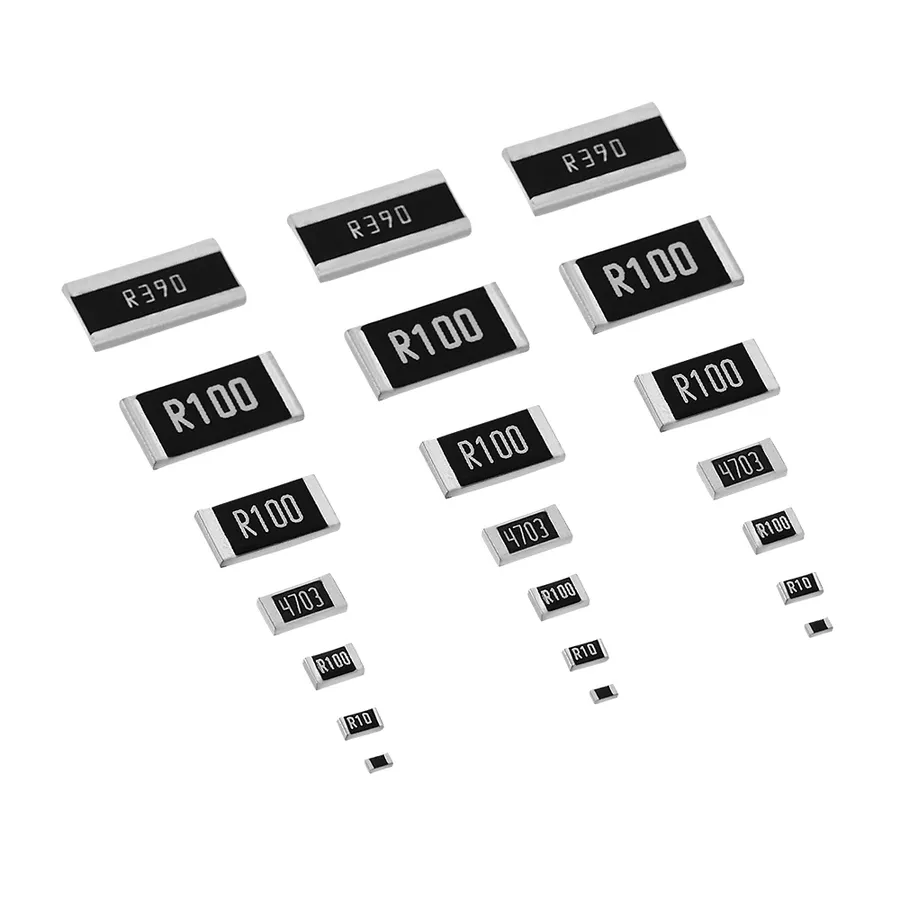
270 Ohm resistors are manufactured in various types, each with unique characteristics that make them suitable for different applications. These types primarily differ in the materials used for their resistive element, which significantly impacts their performance characteristics like power rating, accuracy, temperature stability, and cost. Common types include carbon film, metal film, wirewound, and surface mount (SMD) resistors.
| Resistor Type | Material | Power Rating | Accuracy | Temperature Coefficient | Cost | Typical Applications |
|---|---|---|---|---|---|---|
| Carbon Film | Carbon composition | Low to Medium | Moderate | High | Low | General-purpose, low-cost applications |
| Metal Film | Metal alloy | Low to Medium | High | Low | Medium | Precision circuits, stable performance |
| Wirewound | Metallic wire | High | Moderate | Moderate | High | High-power applications, current sensing |
| Surface Mount (SMD) | Thick/thin film | Low | Moderate to High | Moderate | Low to Medium | Automated PCB assembly, compact designs |
Understanding the nuances of each resistor type allows engineers and hobbyists to select the most appropriate component for a specific design, ensuring optimal performance, reliability, and cost-effectiveness.

270 ohm resistors are fundamental components in a wide array of electronic circuits, serving diverse roles from simple current limitation to intricate signal conditioning. Their specific resistance value makes them suitable for applications where a moderate level of current restriction is needed, balancing performance and efficiency.
Selecting the correct 270 ohm resistor for a specific application is crucial to ensure circuit performance and reliability. Several key factors must be taken into account, including power rating, tolerance, temperature coefficient, physical size, and mounting style. Each parameter plays a vital role in the function of the resistor.
| Factor | Description | Importance |
|---|---|---|
| Power Rating (Wattage) | The maximum power the resistor can dissipate without overheating or damage. | Ensures the resistor can handle the expected power load; using one with insufficient wattage can lead to failure. |
| Tolerance | The permissible variation in the actual resistance value from the nominal (270 ohms) value. | Impacts the precision of the circuit; tighter tolerance is needed for more sensitive applications. |
| Temperature Coefficient | Indicates how much the resistance changes with temperature. | Crucial in environments with temperature fluctuations; a lower coefficient provides more stable performance. |
| Physical Size | The physical dimensions of the resistor. | Important for PCB layout and assembly, surface mount device (SMD) is ideal for compact designs and automated assembly. |
| Mounting Type | How the resistor is attached to the circuit board (e.g., through-hole, SMD). | Impacts the assembly process; SMD for automated assembly, through-hole for manual soldering. |
For example, in high-temperature environments, choosing a metal film resistor with a low-temperature coefficient is vital to ensure stable performance. In contrast, a carbon film resistor, although economical, might exhibit significant changes in resistance under similar conditions. Careful consideration of all these factors is essential for selecting the right 270 ohm resistor.
Working with 270 ohm resistors, like any electronic component, requires attention to detail to ensure their longevity and proper function within a circuit. This section provides practical advice on handling, measurement, and storage.
This section addresses common inquiries regarding 270 ohm resistors, aiming to provide clarity on their characteristics, applications, and related concepts.
When designing electronic circuits, selecting the correct resistor value is crucial for optimal performance. While a 270 ohm resistor serves specific needs, understanding its behavior in relation to adjacent values, such as 220 ohm and 330 ohm resistors, is essential. These slight differences in resistance have an impact on voltage, current, and circuit behavior.
| Characteristic | 220 Ohm Resistor | 270 Ohm Resistor | 330 Ohm Resistor |
|---|---|---|---|
| Resistance (Ω) | 220 | 270 | 330 |
| Current (for a given voltage) | Higher Current | Medium Current | Lower Current |
| Voltage Drop (for a given current) | Lower Voltage Drop | Medium Voltage Drop | Higher Voltage Drop |
| LED Brightness (as current limiter) | Brighter (potentially damaging) | Optimal Brightness | Dimmer |
| Use case Examples | Some LED circuits, current sensing applications | Most common LED circuits, sensor circuits | Less common LED circuits, higher voltage circuits |
| Effect on circuit | May cause excess current, overheating, reduced component life | Provides optimal current and voltage regulation | May result in lower current/voltage, affecting component performance |
Sourcing 270 ohm resistors requires consideration of factors beyond just price. Availability, reliability, and delivery times also significantly influence the purchasing decision. Reputable vendors, whether online or local, offer components that adhere to specified tolerances, ensuring proper circuit functionality.
In conclusion, the humble 270 ohm resistor is an indispensable element in modern electronics. It’s important to understand the types, color codes, and key characteristics to select the right resistor for any project. Its ability to precisely control electrical current, like regulating water flow in a pipe, makes it critical in the function of numerous devices we use every day. By mastering the basics of the 270 ohm resistor, from its color bands to its role in various circuits, you will be able to tackle a wide array of electronic challenges with confidence and precision. Whether you are a beginner or an experienced electronics hobbyist, the 270 ohm resistor is a core component in your toolbox. Understanding its operation is key to mastering electronic design.

