In the world of electronics, just like how the E12 series of preferred numbers are foundational to resistor values, they play a vital role in everyday technology, from simple circuits to complex devices. Understanding how these resistors work is like understanding the basic building blocks of our technological society. This article breaks down the E12 series, exploring its values, tolerance, and real-world applications, making it easy to understand for anyone interested in electronics. Let's dive in and discover how these small components power our world.
E-series preferred numbers are standardized systems that define the available values for electronic components like resistors and capacitors. These series, such as the E12 series, are crucial for simplifying component selection and ensuring that a wide range of desired resistances can be achieved with a minimal set of standard values. This standardization is vital in electronics manufacturing and design, enabling efficient production and effective circuit design.
The E12 series is a fundamental set of resistor values, crucial for electronic circuit design. It provides 12 logarithmically spaced values within each decade, offering a balance between cost and acceptable precision. This series is widely adopted due to its ubiquity and suitability for a broad range of applications.
Specifically, the E12 series divides each decade (e.g., 1-10 ohms, 10-100 ohms, 100-1000 ohms) into twelve distinct values. Each of these values is approximately 10% greater than the preceding value. The logarithmic spacing ensures that the percentage difference between adjacent values remains constant, thus covering the entire resistance range effectively.
| Characteristic | Description |
|---|---|
| Number of Values per Decade | 12 |
| Spacing | Logarithmically spaced |
| Approximate Percentage Difference | ~10% between values |
| Tolerance | Typically 10% (can vary) |
| Common Use Cases | General-purpose electronics, educational kits, hobbyist projects |
The selection of 12 values per decade in the E12 series is a practical compromise, allowing for a reasonable selection of resistance values without requiring an excessive inventory of different resistors. This balance is critical for cost-effectiveness and easy accessibility.
The 10% tolerance of E12 resistors is sufficient for a wide variety of non-critical applications. For projects that demand higher precision, series like E24, E48, or E96 may be better suited, which offer tighter tolerances and more values per decade.
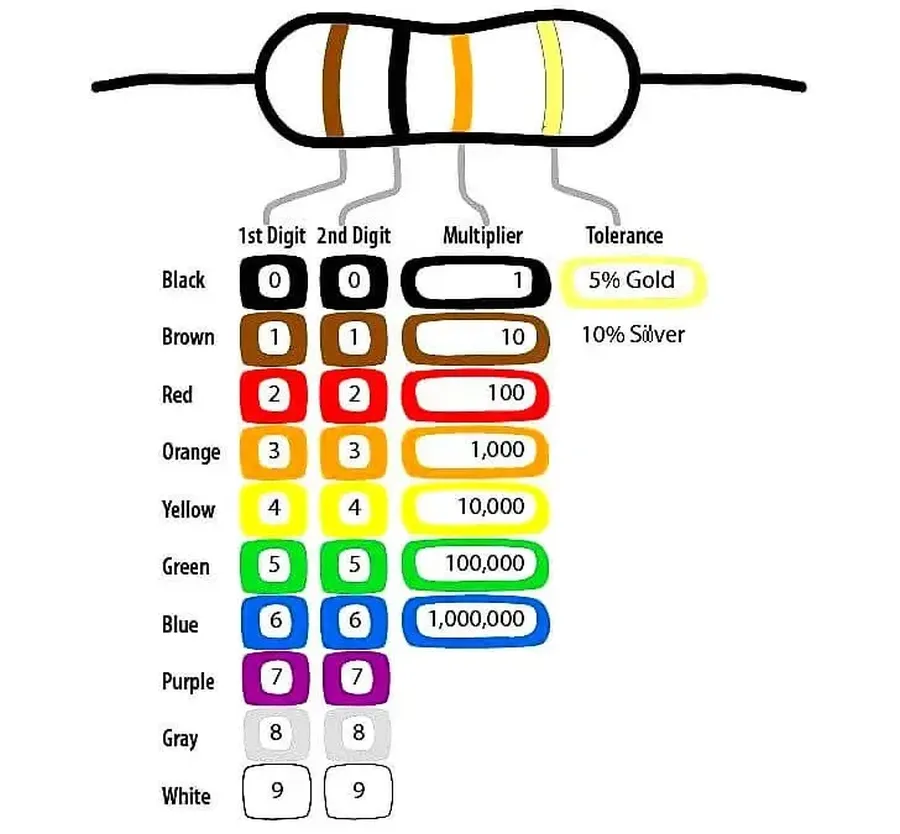
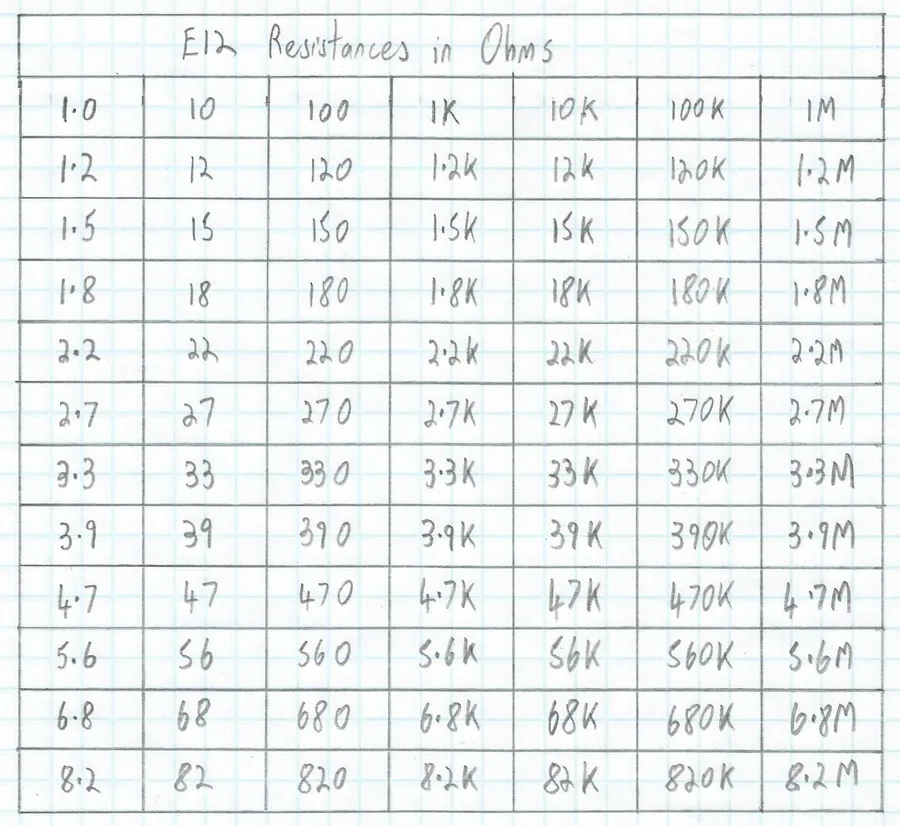
The E12 series comprises a set of 12 preferred resistance values within each decade, specifically designed to provide a practical range for electronic circuit design and manufacturing. These values, when multiplied by powers of ten, cover a comprehensive spectrum of resistances. This structured approach ensures that commonly needed resistances are readily available, simplifying the selection and procurement process for electronic components.
| E12 Standard Value | Approximate Percentage Difference |
|---|---|
| 1.0 | N/A |
| 1.2 | 20% |
| 1.5 | 25% |
| 1.8 | 20% |
| 2.2 | 22.2% |
| 2.7 | 22.7% |
| 3.3 | 22.2% |
| 3.9 | 18.2% |
| 4.7 | 20.5% |
| 5.6 | 19.1% |
| 6.8 | 21.4% |
| 8.2 | 20.6% |
The core values of the E12 series—1.0, 1.2, 1.5, 1.8, 2.2, 2.7, 3.3, 3.9, 4.7, 5.6, 6.8, and 8.2—are the basis for obtaining a wide range of resistance values. For example, starting with 1.0 ohms, the practical range of resistance in the E12 series would include values such as 1 ohm, 10 ohms, 100 ohms, 1 kohms, 10 kohms and so on. Each of the values follows this pattern. This is accomplished by multiplying these core values by factors of ten. This logarithmic spacing ensures that a broad spectrum of resistance values is available while minimizing the number of unique values required. This characteristic is crucial in circuit design to ensure that the needed component values are covered effectively within the 10% tolerance.
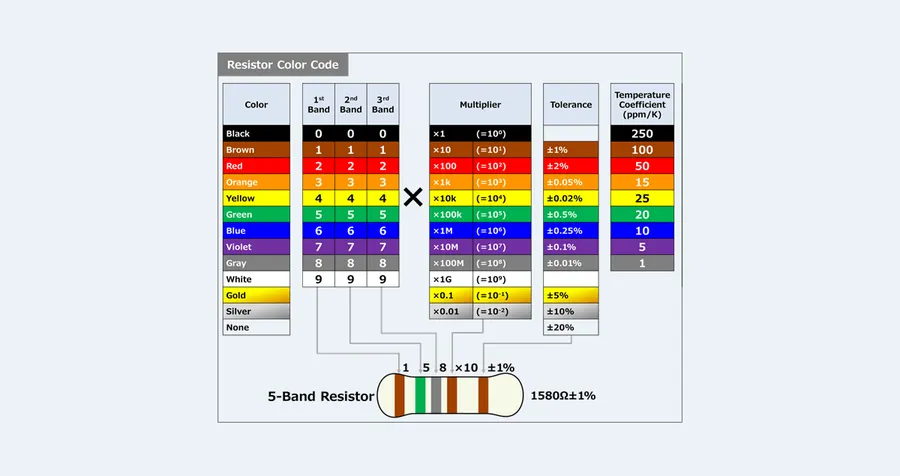
E12 series resistors utilize a color-band system to denote their resistance value and tolerance, a crucial skill for electronics work. These color codes provide a standardized, visual way to quickly identify resistor specifications, eliminating the need for cumbersome measurements in many situations.
Typically, E12 resistors use four or five color bands. The first two or three bands represent the significant digits of the resistance value. The next band acts as a multiplier, and the last band indicates the tolerance of the resistor.
| Color | Digit | Multiplier | Tolerance |
|---|---|---|---|
| Black | 0 | 1 | ±20% |
| Brown | 1 | 10 | ±1% |
| Red | 2 | 100 | ±2% |
| Orange | 3 | 1,000 | ±0.05% |
| Yellow | 4 | 10,000 | ±0.02% |
| Green | 5 | 100,000 | ±0.5% |
| Blue | 6 | 1,000,000 | ±0.25% |
| Violet | 7 | 10,000,000 | ±0.1% |
| Gray | 8 | 100,000,000 | ±0.01% |
| White | 9 | 1,000,000,000 | - |
| Gold | - | 0.1 | ±5% |
| Silver | - | 0.01 | ±10% |
| None | - | - | ±20% |
For example, a resistor with color bands of Brown, Black, Red, and Gold would have a resistance of 10 * 100 = 1000 ohms with a 5% tolerance. A five-band resistor with bands of Brown, Black, Black, Brown, Gold will be 100 * 10 = 1000 ohms with 5% tolerance
The E12 series is a part of a larger family of preferred number series used to standardize component values, primarily for resistors and capacitors. These series, including E6, E24, E48, E96, and E192, offer different levels of precision and a varying number of values within each decade. The choice among them depends mainly on the specific application's required accuracy and budget constraints. Understanding the distinctions between these series is crucial for making informed design choices.
| E-Series | Values per Decade | Standard Tolerance | Typical Applications | Cost Considerations |
|---|---|---|---|---|
| E6 | 6 | 20% | General purpose, low-precision applications | Lowest cost |
| E12 | 12 | 10% | Common applications requiring moderate precision | Low cost |
| E24 | 24 | 5% | Applications needing better precision than E12 | Moderate cost |
| E48 | 48 | 2% | Precision applications where tighter tolerance is needed | Medium cost |
| E96 | 96 | 1% | High-precision applications | High cost |
| E192 | 192 | 0.5% or 0.25% | Extremely high-precision applications, calibration, and metrology | Highest cost |
This section addresses common questions about E12 series resistors, providing clarity on their characteristics, applications, and distinctions from other resistor types. We aim to resolve typical points of confusion for electronics enthusiasts and professionals alike.
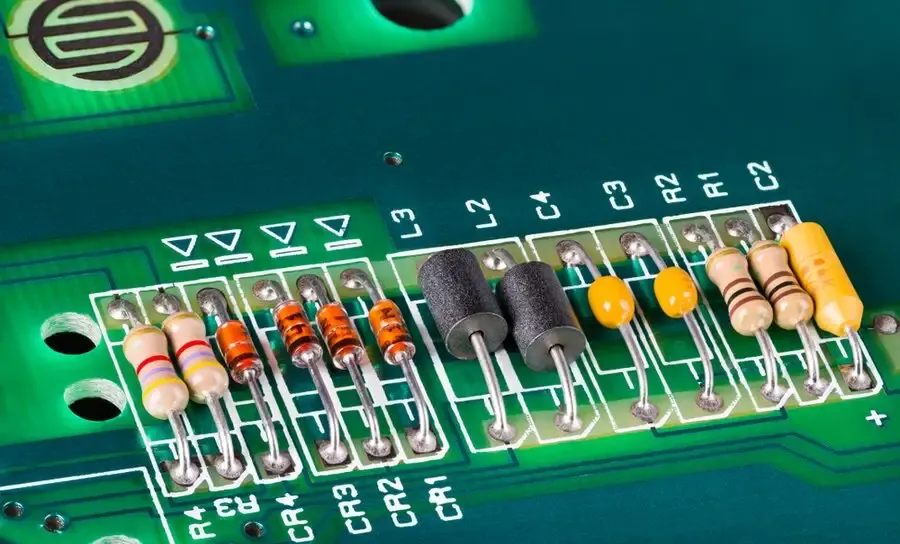
E12 series resistors are fundamental components in a wide range of electronic applications due to their balance of cost and acceptable tolerance. Their common presence in both simple and moderately complex circuits highlights their versatility and practical value.
Selecting the appropriate resistor for a circuit design is crucial, involving a balance of tolerance, power rating, and precision. While the E12 series is widely used due to its affordability and availability, it may not always be the ideal choice. This section will guide you through key considerations for choosing the right resistor, using the E12 series as a practical example to demonstrate the decision-making process.
When choosing a resistor, consider these factors:
Using the E12 series as a baseline, consider this:
In summary, selecting the correct resistor series is crucial for effective circuit design. Start by identifying the tolerance, power requirements, and application needs. Although the E12 series offers an inexpensive and widely available solution, applications requiring better precision will benefit from higher-grade resistors like those in the E24, E96 or higher series. The final decision should balance performance with budget constraints and availability. Always remember to check datasheets to confirm the specifications of the chosen resistor.
Understanding the E12 series of resistors is essential for anyone working with electronics. They provide the fundamental building blocks for a wide range of circuits and understanding their values, color codes, and applications empowers you to create and design more effectively. While they provide a solid middle ground for many common electronics projects, it is important to understand how they compare to other E-series resistors. As technology develops, so do the ways these foundational pieces are used, making them a cornerstone of innovation for years to come. By understanding the basics of components like these, you will have a greater handle on our ever evolving electronic world.

