Understanding MKP Capacitors: Applications, Benefits, and More
2025.02.09
In our increasingly electronic world, capacitors are a fundamental element. Among them, the Metallized Polypropylene (MKP) capacitor stands out for its performance and reliability. This article delves into the intricacies of MKP capacitors, explaining their function, applications, and advantages, offering a clear understanding for both enthusiasts and professionals alike.
What is an MKP Capacitor?
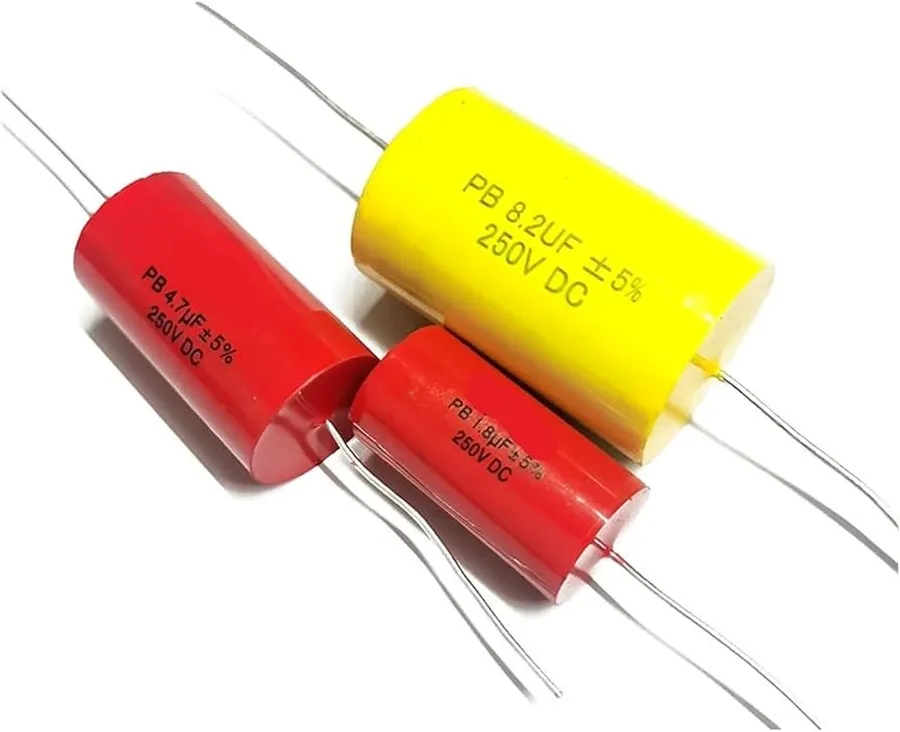
MKP Capacitor
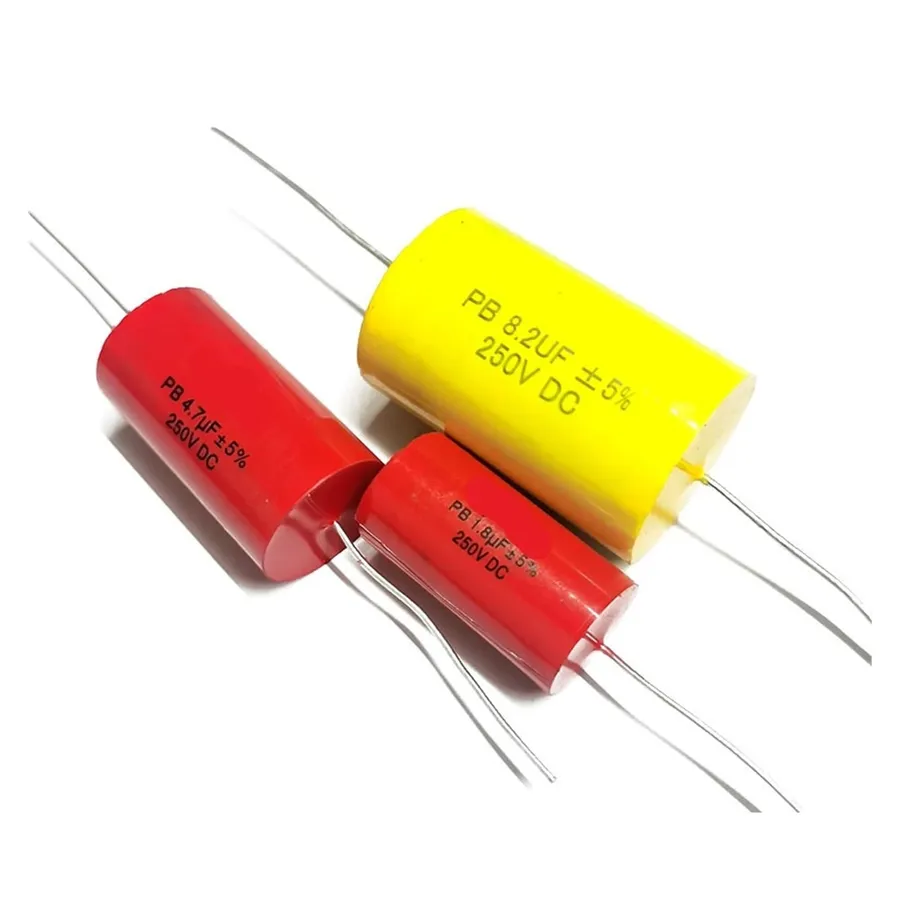
MKP capacitors, short for Metallized Polypropylene Capacitors, are a type of film capacitor renowned for their stability, low loss, and high pulse strength. The 'MKP' designation itself indicates the construction: 'M' signifies metallized electrodes, 'K' represents a plastic film dielectric, and 'P' denotes polypropylene as the specific plastic film material. These capacitors are fundamentally composed of thin layers of polypropylene film, onto which a thin metal layer (typically aluminum) is deposited. This metallized film is then wound into a cylindrical or flattened shape, electrodes are attached, and the assembly is encased in a protective housing.
Key Characteristics of MKP Capacitors
MKP Internal Structure
MKP capacitors, distinguished by their metallized polypropylene film dielectric, exhibit a range of key characteristics that make them suitable for diverse applications. Understanding these properties—capacitance range, voltage ratings, temperature stability, and loss factors—is crucial for proper component selection in electronic circuit design.
Characteristic
Typical Range/Value
Significance
Capacitance Range
Few pF to several µF
Determines the amount of charge the capacitor can store; selects use cases, like energy storage or filtering
Voltage Ratings
50V to several kV
The maximum voltage the capacitor can withstand without failure. Should be selected significantly above the maximum circuit voltage
Temperature Stability
Usually stable from -55°C to 105°C (with some variations)
Indicates how much the capacitance value changes with temperature, crucial for performance across operating environment
Loss Factor (tan δ)
Typically very low, < 0.001 at 1kHz
The amount of energy lost as heat by the capacitor during operation. Lower is better, particularly in high frequency applications
Self-Healing Properties
Excellent
Ability to recover from small dielectric breakdowns, preventing catastrophic failures.
Equivalent Series Resistance (ESR)
Very low, typically < 1 Ohm
Resistance associated with the capacitor's internal structure. Low ESR is crucial for high current applications
MKP Capacitors vs. Other Types
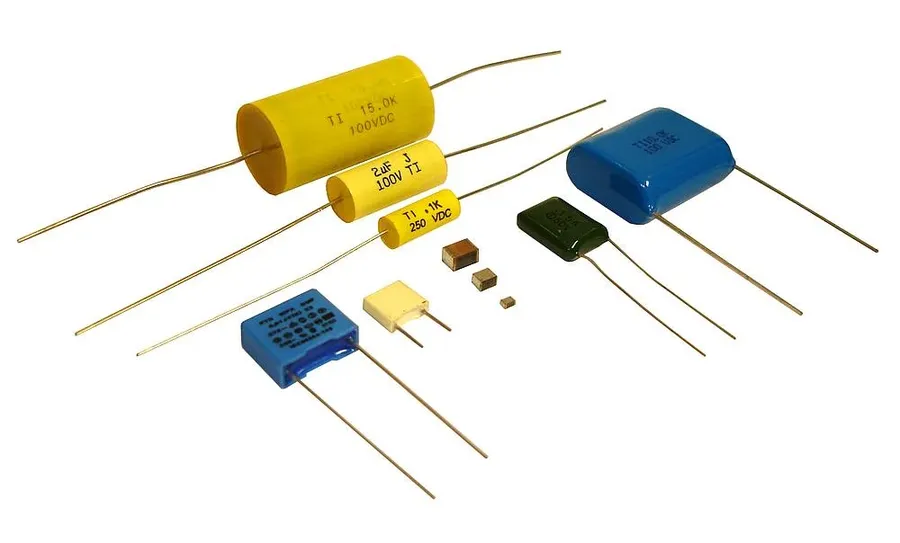
Various Film Capacitors
While MKP (Metallized Polypropylene) capacitors offer unique advantages, understanding their differences from other capacitor types such as MKT (Metallized Polyester) and MPP (Metallized Polypropylene) is crucial for optimal application selection. This comparison focuses on key performance characteristics and application suitability.
Characteristic
MKP (Metallized Polypropylene)
MKT (Metallized Polyester)
MPP (Metallized Polypropylene)
Dielectric Material
Polypropylene
Polyester
Polypropylene
Temperature Stability
Excellent
Good
Excellent
Loss Factor (Tan δ)
Very Low
Low to Moderate
Low
Operating Temperature Range
Wider (-55°C to +105°C typical)
Narrower (-55°C to +85°C typical)
Wider (-55°C to +105°C typical)
Frequency Performance
Excellent, suitable for high-frequency applications
Good for general-purpose applications
Excellent, similar to MKP
Self-Healing Capability
Excellent
Good
Excellent
Cost
Generally Higher
Lower
Mid-Range
Typical Applications
Audio, high-frequency power supplies, precision circuits
General-purpose coupling, decoupling, filtering
High-power applications, pulse circuits
Key Distinctions: MKP capacitors stand out for their superior temperature stability and low loss factor, making them ideal for high-frequency applications where performance consistency is paramount. While both MKP and MPP capacitors utilize polypropylene as a dielectric, MPP capacitors are often used in high-power applications, while MKP are used in low power, higher precision applications. MKT capacitors, though more economical, have a lower temperature tolerance and are more suitable for less demanding applications. The choice between these types depends heavily on the specific electrical and environmental requirements of the intended use case.
Applications of MKP Capacitors
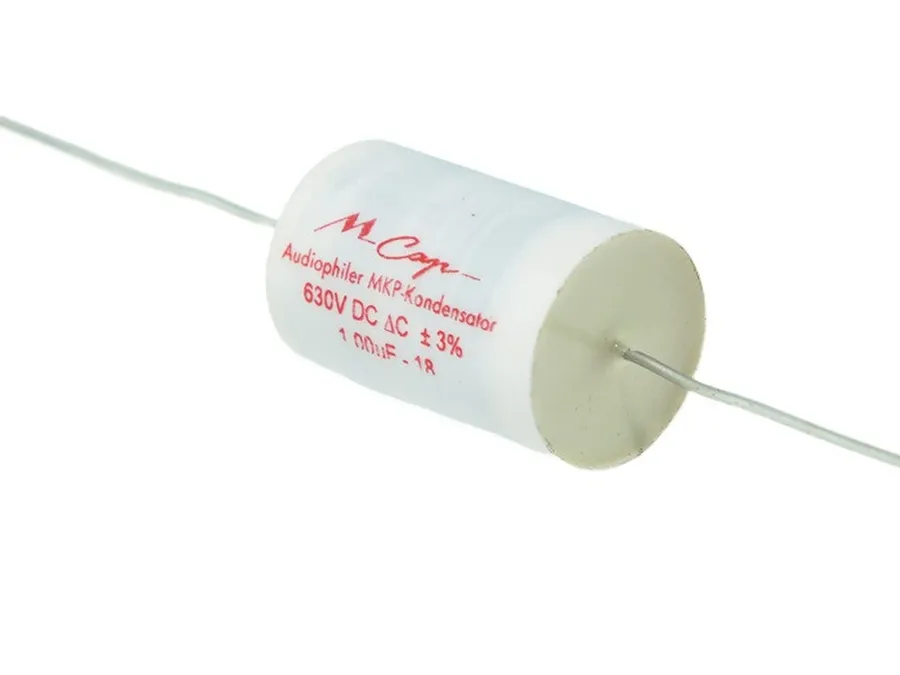
Audio Application
MKP capacitors, owing to their superior electrical characteristics, find widespread use in diverse applications ranging from audio equipment to industrial power systems. Their robust construction and stability make them suitable for demanding electronic circuits.
Audio Circuits MKP capacitors are frequently used in high-fidelity audio equipment for coupling, decoupling, and filtering. Their low distortion and high precision are crucial for preserving signal integrity in audio pathways.
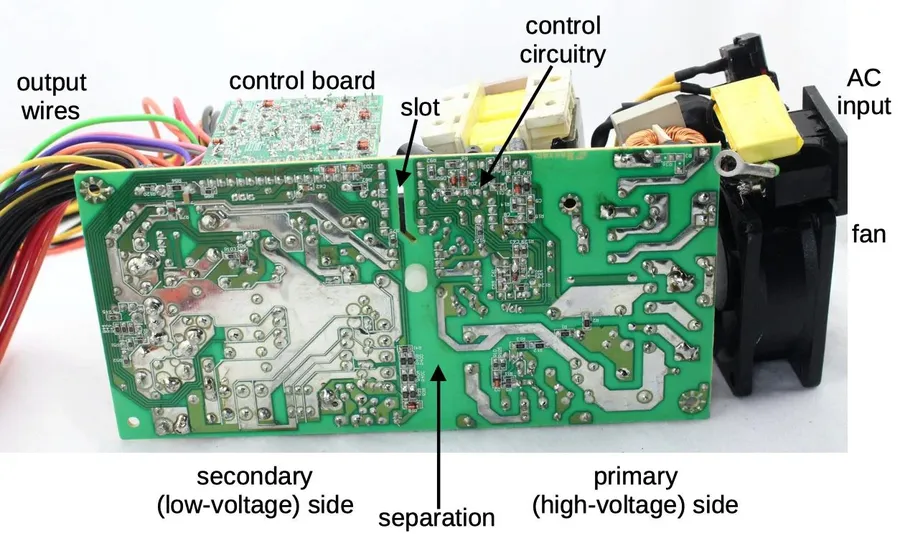
Switch-Mode Power Supplies (SMPS) In SMPS, MKP capacitors are utilized for smoothing and filtering purposes due to their capability to handle high ripple currents and voltages efficiently, thereby ensuring stable power delivery.
Motor Control Circuits MKP capacitors play a key role in motor control applications, providing essential support for starting and running motors effectively by managing reactive power and smoothing out voltage transients.
EMI Filtering Due to their low loss and ability to operate at high frequencies, MKP capacitors are employed in EMI (Electromagnetic Interference) filters to suppress unwanted noise and interference in electronic systems.
Loudspeaker Crossover Networks MKP capacitors are highly favored in passive loudspeaker crossover networks, ensuring accurate frequency response due to their high precision and minimal signal loss. This results in optimal performance and the highest audio quality.
Application
Key Function
Advantages
Audio Circuits
Coupling, decoupling, filtering
Low distortion, high precision, signal integrity
Switch-Mode Power Supplies (SMPS)
Smoothing, filtering
High ripple current handling, voltage stability
Motor Control Circuits
Starting and running motors
Reactive power management, voltage transient smoothing
EMI Filtering
Suppression of electromagnetic interference
Low loss, high frequency operation
Loudspeaker Crossover Networks
Frequency division
High precision, minimal signal loss, high audio quality
Advantages of Using MKP Capacitors
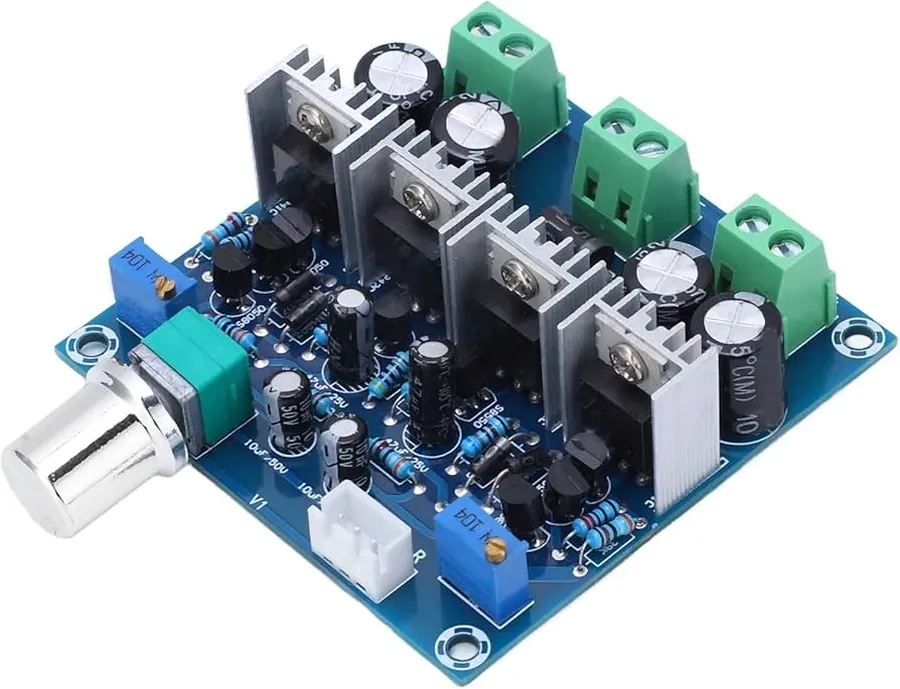
Power Supply Application
MKP capacitors offer several key advantages that make them suitable for a wide array of applications. These benefits stem from their construction using metallized polypropylene film, providing robust performance and reliability. High pulse strength, excellent self-healing capabilities, and low equivalent series resistance (ESR) are among the primary advantages.
High Pulse Strength MKP capacitors can withstand high current surges, making them ideal for applications with significant power fluctuations such as power electronics and motor control circuits. Their robust construction ensures stable performance under such demanding conditions.
Excellent Self-Healing Properties The metallized film in MKP capacitors has the ability to self-heal minor insulation failures. This occurs when a small arc vaporizes the metallization around the defect, restoring the capacitor's insulation and preventing catastrophic failure, thus increasing the component's lifespan and reliability.
Low Equivalent Series Resistance (ESR) MKP capacitors exhibit very low ESR, which means minimal energy loss as heat. This characteristic is crucial in high-frequency applications and power circuits, improving energy efficiency and reducing thermal stress on surrounding components.
High Insulation Resistance MKP capacitors have high insulation resistance, which results in very low leakage current. This allows them to maintain charge for extended periods, which makes them suitable for use in timing and sample and hold circuits. Their capability to retain charge also helps reduce the unwanted flow of current to other parts of the circuit.
High Reliability and Long Lifespan The robust construction and self-healing mechanism of MKP capacitors result in high reliability and a long service life, even under demanding conditions.
Low Dissipation Factor MKP capacitors have a low dissipation factor (tan δ), meaning they have minimal energy loss during charge and discharge cycles. This property is particularly important for high-frequency AC applications, ensuring efficient energy transfer.
How to Select the Right MKP Capacitor
Selecting the correct MKP capacitor for a specific application requires careful consideration of several key parameters to ensure optimal performance and reliability. This section provides practical guidance on how to choose the most suitable MKP capacitor based on your specific needs, focusing on critical factors such as voltage, capacitance, and environmental conditions.
Capacitance: The capacitance value, measured in Farads (F), must match the requirements of the application. MKP capacitors are available in a wide range of values, from picofarads (pF) to microfarads (µF). Ensure that the chosen capacitor has a capacitance value within the required tolerance for circuit stability and accuracy.
Voltage Rating: The voltage rating, specified in volts (V), indicates the maximum voltage that the capacitor can safely withstand. It's crucial to select a capacitor with a voltage rating that exceeds the maximum voltage expected in the application by a safe margin (typically 20-50%) to account for transients and ensure reliability. Under-rated capacitors can fail catastrophically.
Operating Temperature: Consider the temperature range of the application. MKP capacitors have a specified operating temperature range, and exceeding this range can result in performance degradation or failure. Choose a capacitor with a temperature rating that is suitable for the environmental conditions it will encounter.
Tolerance: Capacitance tolerance indicates the acceptable deviation from the stated capacitance value. Common tolerances include ±5%, ±10%, and ±20%. Select a tolerance that is appropriate for the application's accuracy requirements. High-precision applications may require tighter tolerances.
ESR (Equivalent Series Resistance): ESR represents the internal resistance of the capacitor. Low ESR is generally desirable, especially in high-frequency applications. High ESR can cause power losses, reduced efficiency, and increased operating temperatures. Consult the capacitor datasheet for ESR values at the relevant operating frequency.
Physical Size and Dimensions: The physical size of the capacitor is also important. Select a size that is compatible with the space available on the circuit board and any mounting requirements. Ensure that the capacitor's lead spacing is compatible with the circuit board layout.
Application-Specific Requirements: Consider the unique demands of the application. For example, high-pulse applications may require MKP capacitors specifically designed for pulse handling. Audio applications may require capacitors with low distortion. Choose a capacitor that fulfills these specific requirements.
Frequently Asked Questions About MKP Capacitors
This section addresses common questions regarding MKP (Metallized Polypropylene) capacitors, providing clarity on their properties, applications, and usage. These FAQs aim to resolve typical user queries and misconceptions about MKP capacitors.
What exactly is an MKP capacitor? An MKP capacitor is a type of film capacitor that uses metallized polypropylene as its dielectric material. The 'M' signifies 'metallized,' and 'KP' denotes 'polypropylene.' This construction offers a combination of high performance and reliability.
Are MKP capacitors polarized? No, MKP capacitors are non-polarized. This means they do not have a positive or negative terminal and can be connected either way in a circuit. This simplifies their application in AC circuits.
What is the difference between MKT and MKP capacitors? MKT capacitors use metallized polyester as the dielectric, while MKP capacitors use metallized polypropylene. MKP capacitors typically exhibit lower loss factors, better high-frequency performance, and greater temperature stability compared to MKT capacitors, making them suitable for more demanding applications.
How do MKP capacitors compare to MPP capacitors? Both MPP and MKP capacitors use polypropylene as their dielectric. However, MPP capacitors employ a metallized film, whereas MKP capacitors employ a metallized layer directly on a polypropylene film. MKP are generally considered to have superior self-healing properties and can handle higher pulse currents, while MPP may be more cost-effective for some applications.
What does 'MKP capacitor audio' mean? 'MKP capacitor audio' refers to the application of MKP capacitors in audio circuits due to their low distortion and high stability. They are often used in speaker crossover networks, amplifiers, and other audio equipment to maintain signal fidelity and minimize unwanted noise.
How do I interpret an MKP capacitor datasheet? An MKP capacitor datasheet contains key parameters like capacitance value, voltage rating, tolerance, operating temperature range, and dissipation factor. These parameters must be carefully reviewed to ensure the capacitor meets the application's requirements and environmental conditions.
What are some typical applications for MKP capacitors? MKP capacitors are widely used in a variety of applications, including audio equipment, power supplies, motor control circuits, lighting ballasts, and high-frequency circuits. Their robust performance makes them suitable for circuits requiring reliability and low loss.
MKP Capacitor Datasheets and Key Parameters
Understanding MKP capacitor datasheets is crucial for selecting the appropriate component for a given application. These documents detail essential electrical and physical characteristics, enabling engineers to ensure optimal performance and reliability. Key parameters include capacitance, tolerance, voltage rating, operating temperature range, and equivalent series resistance (ESR).
Parameter
Description
Importance
Capacitance
The amount of electrical charge the capacitor can store, measured in Farads (F). MKP capacitors are often in the microfarad (µF) or nanofarad (nF) range.
Determines circuit behavior; must match design requirements. Affects resonant frequency and time constants.
Capacitance Tolerance
The allowable deviation from the nominal capacitance value, often expressed as a percentage (e.g., ±5%, ±10%).
Impacts circuit accuracy, especially in precision applications. A tighter tolerance is needed for critical timing and filtering applications.
Voltage Rating
The maximum DC or AC voltage the capacitor can withstand without dielectric breakdown.
Must exceed the maximum operating voltage in the circuit to prevent failure. The voltage rating is a critical safety consideration.
Operating Temperature Range
The temperature range within which the capacitor is guaranteed to perform within specified parameters.
Ensures reliability in various operating environments. Consider maximum and minimum ambient temperatures.
Equivalent Series Resistance (ESR)
The internal resistance of the capacitor, which causes energy loss (heat) when AC current flows through it. Measured in ohms (Ω).
Low ESR is essential for high-frequency applications and minimizing heat generation. High ESR can cause performance issues.
Dissipation Factor (DF)
Ratio of the energy lost to the energy stored per cycle (closely related to ESR), expressed as a percentage or tangent of the loss angle.
Indicates the capacitor's efficiency in energy storage and loss. It is related to ESR; lower values are preferred.
Insulation Resistance (IR)
The resistance of the dielectric material of the capacitor, usually a very high value measured in ohms (Ω) or megaohms (MΩ).
Indicates the quality of the dielectric material and how well it can retain charge. High IR is required for long-term charge storage.
Pulse Handling Capability (dv/dt)
The maximum rate of voltage change (voltage slew rate) the capacitor can withstand without degradation or failure, measured in V/µs.
Crucial for power circuits and high frequency applications. High values indicate a robust capacitor
Practical Examples and Case Studies
MKP Project Case
MKP capacitors, owing to their superior electrical characteristics, find applications in diverse real-world scenarios. Their high pulse strength, low loss factor and excellent self-healing properties make them ideal for demanding applications. These case studies highlight their effectiveness in practical contexts.
Audio Amplifiers: In high-fidelity audio amplifiers, MKP capacitors are frequently used in the signal path and power supply decoupling stages. They are preferred for their ability to maintain signal integrity with minimal distortion, resulting in clearer and more accurate sound reproduction. Case studies show a significant reduction in total harmonic distortion (THD) when using MKP capacitors in comparison to other types like ceramic capacitors.
Switch Mode Power Supplies (SMPS): MKP capacitors are crucial in SMPS circuits for filtering and energy storage. Their ability to handle high ripple currents and voltages without significant degradation is essential for the stable operation of these power supplies. Case studies show their long-term reliability in harsh operating conditions, such as high temperature and high voltage swings.
Motor Control Systems: In variable frequency drive (VFD) systems, MKP capacitors are used to smooth the DC bus voltage and handle high transient currents generated by the switching power devices. Their low ESR and high current carrying capacity are essential for controlling motor speed efficiently while protecting switching elements from damage. Field tests have demonstrated the durability of MKP capacitors in demanding industrial motor control systems.
EMI Filtering: MKP capacitors are widely employed in EMI (Electromagnetic Interference) filtering applications, in line filter or signal line filtering applications. Their ability to suppress high-frequency noise is vital for meeting electromagnetic compatibility (EMC) standards. Case studies have shown that MKP capacitors are effective in filtering out unwanted EMI radiation by more than 90%.
Loudspeaker Crossover Networks: In loudspeaker crossover networks, MKP capacitors are commonly utilized for their ability to perform with minimal loss, preserving signal integrity and preventing phase distortion. Their excellent performance across a range of frequencies enables them to improve the audio quality of the system. Bench tests highlight that the signal output with MKP capacitors are closer to the original audio signal compared to other types of capacitors in crossover networks.
In summary, MKP capacitors offer a versatile and reliable solution for a wide range of applications, owing to their unique properties. Whether it's fine-tuning audio quality or ensuring stable power delivery, MKP capacitors play a crucial role in modern electronics. As technology advances, their importance will only grow, making a solid understanding of these components invaluable for anyone involved in the field. From advanced electronics to everyday audio equipment, the humble MKP capacitor continues to empower our technological world.