Understanding Polyester Capacitors: Properties, Applications, and More
2025.01.29
In our technologically driven world, capacitors are indispensable components, quietly working behind the scenes in countless electronic devices. Among these, the polyester capacitor stands out for its reliable performance and versatility. From the simplest circuits to complex industrial machinery, these capacitors play a vital role in storing and releasing electrical energy, influencing everything from how our smartphones function to the efficiency of power grids. This article will delve into the intricate details of polyester capacitors, exploring their properties, applications, and comparisons with other types, providing you with a comprehensive understanding of this fundamental electronic component.
What is a Polyester Capacitor?
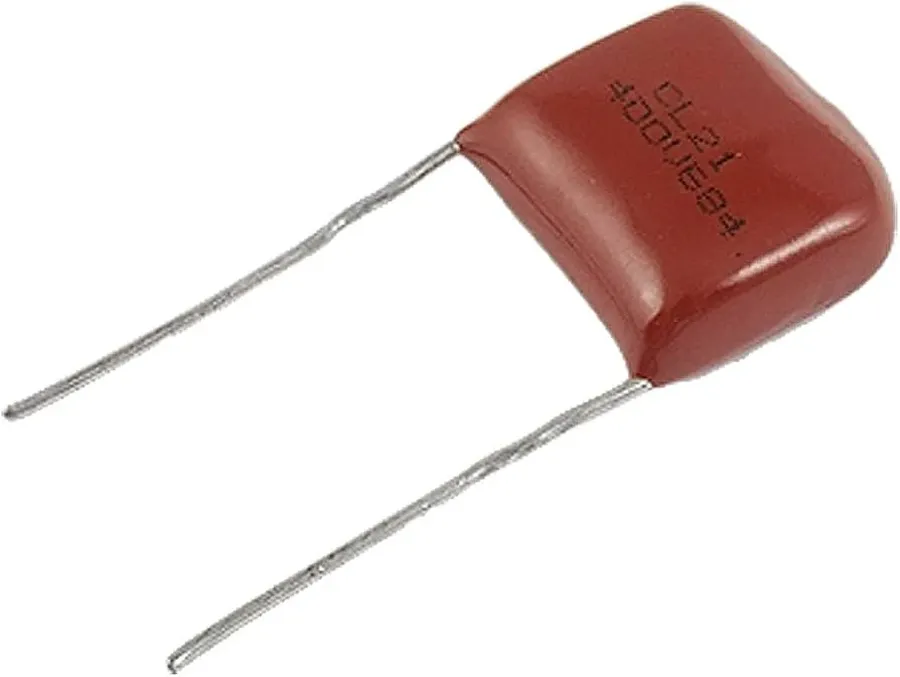
Polyester Capacitors
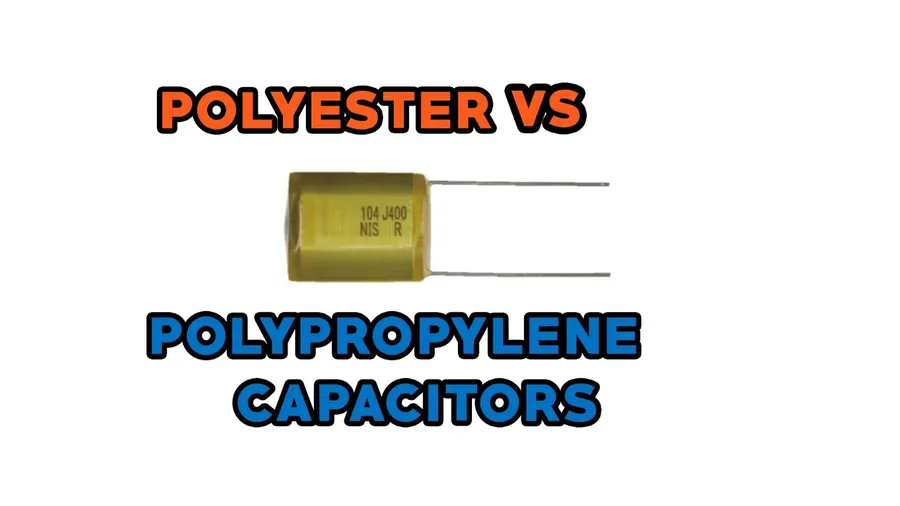
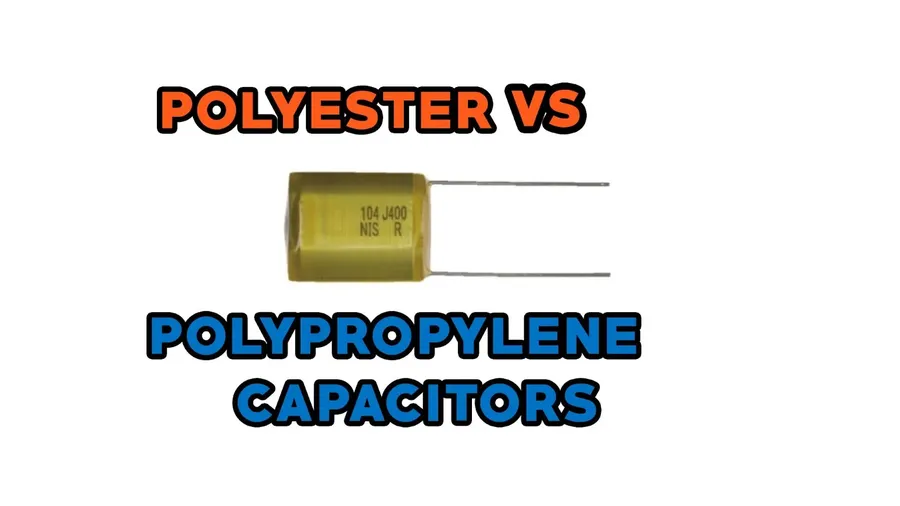
A polyester capacitor, also known as a Mylar capacitor, is a type of film capacitor that uses a polyester film as its dielectric material. This film is positioned between two conductive electrodes, typically made of metal plates or a thin metallized film, forming a structure capable of storing electrical energy. The selection of polyester as the dielectric provides a balance of cost-effectiveness, reliable performance, and acceptable temperature stability, making them a common choice for various electronic applications.
The construction of a polyester capacitor involves the following fundamental components:
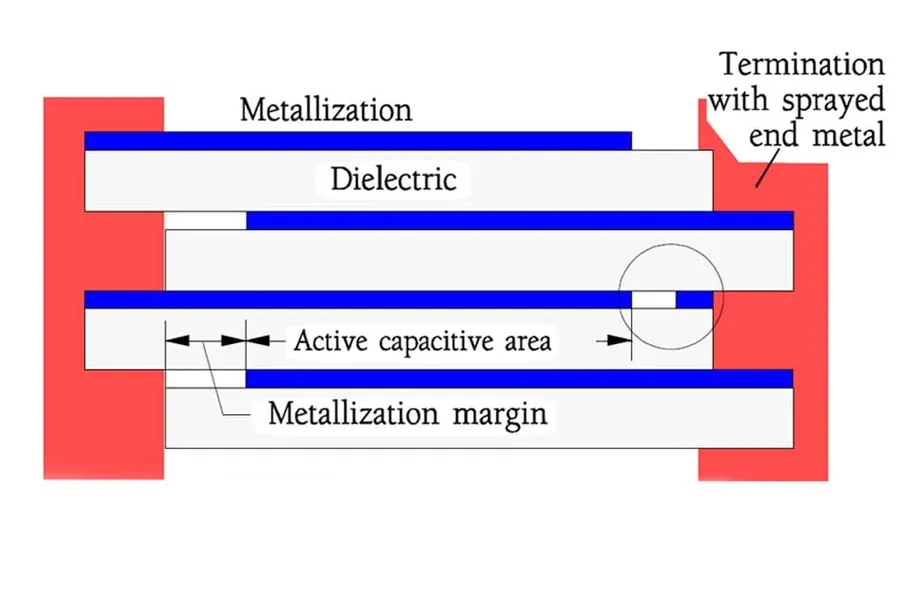
Polyester Film Dielectric: A thin polyester film, such as polyethylene terephthalate (PET), acts as the insulating layer between the electrodes. This material is chosen for its dielectric properties, mechanical strength, and thermal stability.
Electrodes: The electrodes are conductive plates or metallized layers that store the electrical charge. These electrodes can be metal foils or a metallized film, typically aluminum, which is deposited onto the polyester film.
Encapsulation: The entire capacitor assembly is typically encapsulated in a protective coating or epoxy resin. This encapsulant safeguards the capacitor against moisture, physical damage, and environmental factors.
Key Properties of Polyester Capacitors
Polyester Capacitor Internal View
Polyester capacitors are characterized by their stable electrical properties, stemming from the use of polyester film as the dielectric material. These properties, which include capacitance range, voltage ratings, temperature coefficients, and dielectric losses, determine their suitability for a wide array of applications. A notable feature of these capacitors is their low dielectric loss and high stability over a broad range of operating conditions.
Property
Typical Value/Range
Description
Capacitance Range
1 pF to 10 µF
The range of capacitance values that polyester capacitors can offer, typically in pico farads (pF) to microfarads (µF).
Voltage Ratings
50V to 630V DC
The maximum voltage that the capacitor can withstand without failure, suitable for a variety of low to medium power applications.
Temperature Coefficient
± 100 to ± 400 ppm/°C
The change in capacitance value with respect to temperature changes, a relatively stable figure for many circuit requirements.
Dielectric Loss (tan δ)
0.005 to 0.01
Measures the energy loss in the capacitor's dielectric, polyester capacitors are characterized by their low dielectric loss.
Insulation Resistance
>10,000 MΩ
A high insulation resistance means very little current leaks through the capacitor, especially important in high impedance circuits.
Stability
Good
Polyester capacitors exhibit good stability over wide temperature and frequency ranges compared to some alternatives.
Advantages of Using Polyester Capacitors
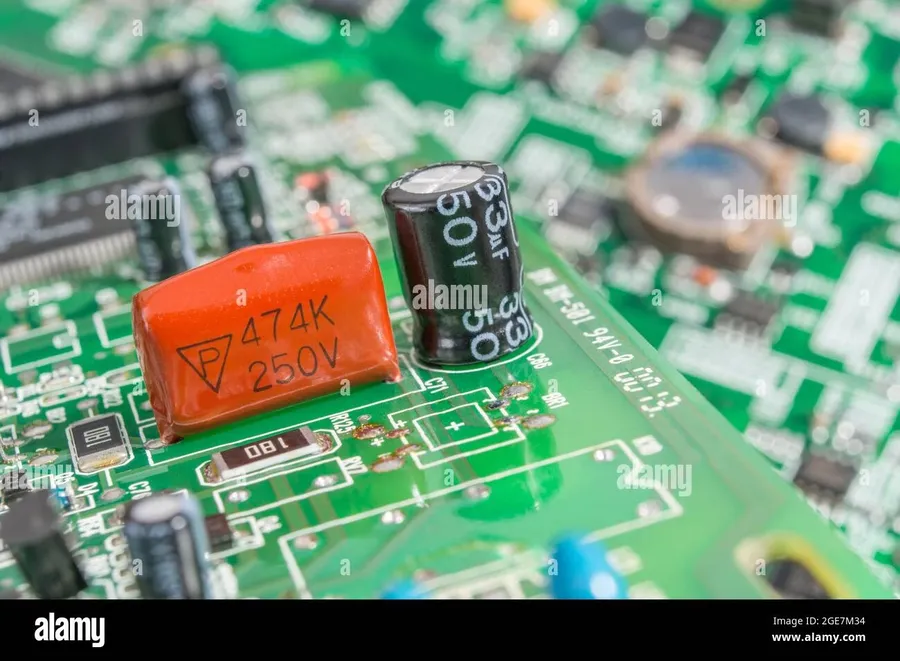
Circuit Board with Polyester Capacitors
Polyester capacitors offer a compelling combination of desirable characteristics, making them a versatile choice for a wide array of electronic applications. Their key strengths lie in their stability, cost-effectiveness, and robustness, ensuring reliable performance across diverse operating conditions.
Good Temperature Stability Polyester capacitors exhibit relatively stable capacitance values over a wide temperature range. This stability is crucial in applications where temperature fluctuations are expected, as it minimizes variations in circuit performance. The temperature coefficient is typically around ±100 to ±400 ppm/°C, offering stable operation compared to some other capacitor types.
Low Cost Compared to other film capacitor types like polypropylene or polystyrene, polyester capacitors are generally more economical to manufacture. This lower cost makes them an attractive option for cost-sensitive applications, particularly in mass-produced electronics, without compromising performance to a large degree.
Moisture Resistance Polyester film exhibits good resistance to moisture absorption, which is a significant advantage in humid environments. This resistance to moisture helps maintain the capacitor's electrical characteristics over time and prevents degradation due to humidity, prolonging the component's lifespan.
High Reliability Polyester capacitors are known for their robust construction and reliable performance. They can withstand various operating stresses such as mechanical shock and vibration, making them suitable for applications that require a durable and consistent performance. This reliability is crucial for ensuring long-term stability of circuits and devices.
Wide Availability Due to their widespread usage and mature manufacturing processes, polyester capacitors are readily available in a variety of sizes, voltage ratings, and capacitance values. This broad availability and low price makes them a convenient option for designers.
Advantage
Description
Impact on Application
Temperature Stability
Stable capacitance over wide temperature range.
Consistent circuit performance in varying environments.
Low Cost
Economical manufacturing process.
Cost-effective solutions for mass production.
Moisture Resistance
Resistant to water absorption.
Reliable performance in humid conditions.
High Reliability
Robust construction and performance.
Long-term stability and durability in devices.
Wide Availability
Readily available in various values and sizes.
Easy integration and quick availability for design needs.
Disadvantages and Limitations of Polyester Capacitors
While polyester capacitors offer numerous advantages, they also exhibit certain limitations that must be considered when selecting components for electronic circuits. These drawbacks primarily relate to their physical size, high-frequency performance, and comparative characteristics with other capacitor types.
Size Constraints Polyester capacitors tend to be larger in size compared to ceramic capacitors for the same capacitance and voltage ratings. This can be a significant disadvantage in applications where space is a critical concern.
High-Frequency Limitations The performance of polyester capacitors degrades at very high frequencies due to their internal construction and dielectric material characteristics. Their equivalent series inductance (ESL) and equivalent series resistance (ESR) can increase at higher frequencies, which makes them unsuitable for certain high-frequency applications.
Temperature Sensitivity Although they possess good temperature stability compared to some other capacitor types, polyester capacitors are not completely immune to temperature variations. Extreme temperatures can affect their capacitance values and electrical characteristics, albeit to a lesser extent compared to some alternatives. This must be considered for designs that operate in environments with significant temperature fluctuations.
Voltage Limitations Polyester capacitors have defined voltage ratings which, if exceeded, could lead to dielectric breakdown and capacitor failure. It is important to select a capacitor with the appropriate voltage rating to ensure circuit reliability. Furthermore, the capacitance value can vary depending on the applied voltage, a phenomenon known as voltage coefficient. While this effect is not usually extreme, it should be considered in critical applications
Moisture Sensitivity While polyester capacitors are generally moisture resistant, prolonged exposure to high humidity can lead to degradation. The protective encapsulation can prevent this to a certain extent, but under extreme conditions, the ingress of moisture can lead to changes in electrical characteristics or potential capacitor failure.
Parameter
Polyester Capacitor
Ceramic Capacitor
Electrolytic Capacitor
Size
Moderate
Small
Moderate to Large
High-Frequency Performance
Limited
Good to Excellent
Poor
Temperature Sensitivity
Moderate
Low to Moderate
High
Cost
Low to Moderate
Low
Low
Common Applications of Polyester Capacitors
Capacitors in Audio Device
Polyester capacitors, owing to their favorable combination of electrical characteristics and cost-effectiveness, find widespread use across a multitude of electronic applications. Their stability and reliability make them suitable for both general-purpose and more specialized circuit designs, particularly where consistent performance over a broad temperature range is crucial.
Filtering Circuits Polyester capacitors are frequently employed in filter circuits to smooth out voltage fluctuations or remove unwanted signal frequencies, thereby ensuring the stability and integrity of electronic signals. Their low dielectric losses make them particularly effective for this purpose.
DC Blocking In DC blocking applications, polyester capacitors are essential for preventing direct current from flowing between different parts of a circuit while allowing alternating current to pass freely. This capability is crucial in many amplifier and signal processing designs.
Coupling Circuits Polyester capacitors facilitate the transfer of AC signals between different stages of an electronic circuit while blocking DC components. This is a critical function in audio circuits and other signal amplification systems where the preservation of signal integrity is paramount.
Timing Circuits Their predictable behavior across a range of temperatures makes polyester capacitors appropriate for use in timing circuits. They can set precise time delays or control the frequency of oscillators, with their stable characteristics leading to accurate and reliable performance. For example, they are often found in circuits responsible for generating clock signals and pulse generation.
Audio Equipment Due to their ability to maintain signal fidelity with minimal distortion, polyester capacitors are frequently used in audio equipment, including amplifiers, mixers, and other audio processing devices. They contribute to producing clearer audio signals.
Power Supply Circuits In power supply circuits, polyester capacitors play a crucial role in smoothing the rectified DC output, removing noise and ripple, and thereby ensuring stable and clean power for electronic components.
Polyester Capacitor vs. Ceramic Capacitors
Ceramic vs Polyester Capacitor
Polyester and ceramic capacitors are two common types of capacitors, each possessing distinct characteristics that make them suitable for different applications. This section provides a detailed comparison of these two types, focusing on their performance, temperature stability, size, cost, and typical use cases.
Characteristic
Polyester Capacitor
Ceramic Capacitor
Dielectric Material
Polyester film
Ceramic materials (e.g., barium titanate)
Capacitance Range
Medium (pF to μF)
Low to Medium (pF to low μF)
Temperature Stability
Good, Relatively stable capacitance over a range of temperatures.
Varies widely depending on ceramic type. Some types have excellent stability while others exhibit significant change in capacitance with temperature
Size
Generally larger for same capacitance and voltage rating.
Compact, smaller physical size for same capacitance and voltage rating.
Cost
Low to moderate
Generally lower, especially for smaller values
Frequency Performance
Good for general applications, not ideal for very high frequencies
Bypassing, high-frequency coupling, resonance, and filtering.
In summary, polyester capacitors are preferred for their stability and performance in general-purpose applications, while ceramic capacitors are favored for their compact size, cost-effectiveness, and high-frequency performance. The choice between them depends largely on the specific requirements of the circuit, including size constraints, thermal behavior, and frequency.
Polyester Capacitor vs. Electrolytic Capacitors
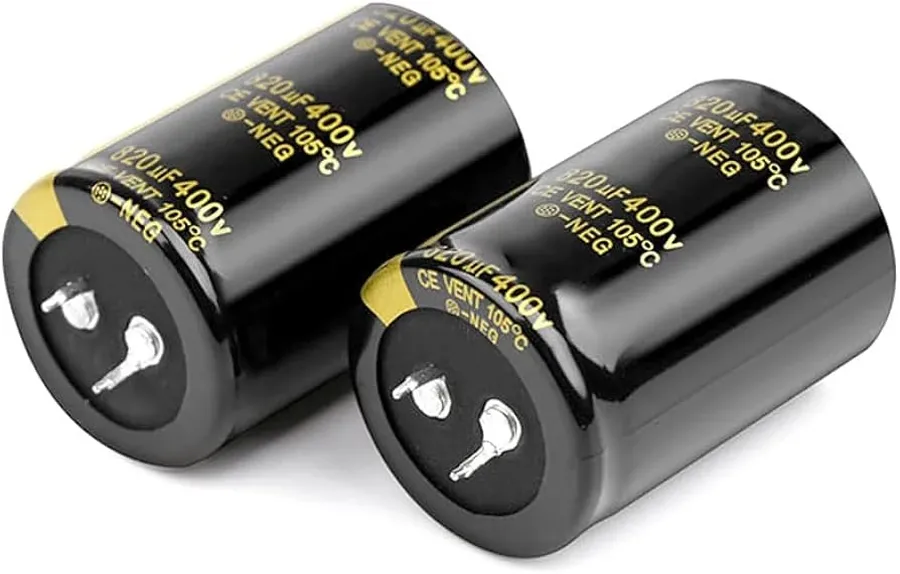
Electrolytic vs Polyester Capacitor
Polyester and electrolytic capacitors serve distinct roles in electronic circuits, primarily due to their contrasting characteristics in capacitance range, voltage handling, lifespan, and typical applications. Understanding these differences is crucial for selecting the appropriate capacitor for specific design requirements.
Characteristic
Polyester Capacitor
Electrolytic Capacitor
Capacitance Range
Typically low to medium (pF to few μF)
Typically medium to high (μF to mF)
Voltage Rating
Moderate to high (50V - 1000V or higher)
Low to medium (few volts to hundreds of volts)
Polarity
Non-Polarized
Polarized (Must be connected correctly)
Temperature Stability
Good, relatively stable over a broad temperature range.
Moderate, performance degrades at very low and very high temperatures
Frequency Response
Good performance at higher frequencies, suitable for AC applications
Limited by high ESR; less suitable for high frequency circuits
Lifespan
Long, with minimal degradation over time
Shorter, prone to drying out and degradation over time especially at higher temperatures
Size
Larger for equivalent capacitance than ceramic but smaller than electrolytic.
Larger, often bulky for higher capacitance values.
Cost
Generally higher than ceramic but lower than some specialized capacitors.
Generally lower cost per capacitance
Typical Applications
Filtering, coupling, timing, audio circuits where stability is essential.
Power supply filtering, energy storage, decoupling applications
Frequently Asked Questions About Polyester Capacitors
This section addresses common questions regarding polyester capacitors, providing concise answers to enhance understanding of their characteristics, applications, and limitations.
What exactly is a polyester capacitor? A polyester capacitor is a type of capacitor that uses a thin polyester film as its dielectric material. This film is placed between two conductive electrodes, typically metal plates or a metallized film, and then encapsulated. Its key features are stability, temperature resistance, and relatively low cost.
What are the primary applications of polyester capacitors? Polyester capacitors are widely used in a variety of electronic circuits for filtering, DC blocking, coupling, and timing applications. They are often found in audio circuits, power supplies, and general-purpose electronics due to their stability and reliability. Their relatively low cost also makes them a good choice for mass production.
What are the main drawbacks or limitations of using polyester capacitors? While offering good stability, polyester capacitors are generally larger in size compared to ceramic capacitors for the same capacitance values. They also tend to perform less optimally at very high frequencies. Their temperature coefficient, though stable within their working range, can be a limitation in extreme temperature conditions, and they are not suitable for high-temperature applications.
Do polyester capacitors have a polarity? No, polyester capacitors are non-polarized. This means they can be connected in a circuit in either direction without affecting their functionality or performance. This simplifies their usage in circuits and reduces design constraints.
How do polyester capacitors compare to ceramic capacitors? Polyester capacitors typically offer higher capacitance values and better temperature stability compared to ceramic capacitors, but they are generally larger and more expensive. Ceramic capacitors, on the other hand, excel in high-frequency applications due to their lower parasitic inductance and smaller size, and are often cheaper. The choice between the two often depends on specific circuit requirements like desired performance, space constraints, and cost.
How do polyester capacitors compare to electrolytic capacitors? Polyester capacitors are preferred over electrolytic capacitors when stable capacitance and low losses are required, despite the limited capacitance range. Electrolytic capacitors, conversely, offer very high capacitance values, but suffer from higher losses, limited lifespan, and are polarized. Thus, electrolytic capacitors are often more suitable for filtering or decoupling applications in power circuits.
What is the typical capacitance range of polyester capacitors? Polyester capacitors typically have capacitance values ranging from a few picofarads (pF) to several microfarads (µF). Their capacitance values tend to be more stable over time and temperature compared to some other capacitor types, making them reliable for precise applications within their design range.
Selecting the Right Polyester Capacitor
Selecting the appropriate polyester capacitor for a given application requires careful consideration of several key parameters to ensure optimal performance and reliability. This section provides guidance on how to choose the right capacitor based on your specific needs, focusing on capacitance, voltage rating, tolerance, size, and other practical considerations.
Capacitance Value Capacitance is the fundamental characteristic of a capacitor, determining its ability to store electrical charge. It's measured in Farads (F), but for polyester capacitors, typical values are in microfarads (μF) or nanofarads (nF). The required capacitance is dictated by the application. For instance, higher capacitance is needed for energy storage or low-frequency filtering, while lower values might be sufficient for high-frequency coupling or timing circuits. Consider the circuit's operating frequency and time constants when determining the correct capacitance.
Voltage Rating The voltage rating of a capacitor specifies the maximum voltage that can be safely applied across its terminals without risking dielectric breakdown. Always choose a capacitor with a voltage rating that exceeds the maximum voltage expected in your circuit, including any transient voltages. Operating a capacitor beyond its rated voltage can lead to premature failure and potentially damage other components. A good rule of thumb is to select a capacitor with a voltage rating that is at least 20% higher than the maximum expected operating voltage.
Tolerance Tolerance defines the permissible deviation of the actual capacitance value from its nominal value, usually expressed as a percentage (e.g., ±5%, ±10%). The required tolerance depends on the precision demands of the application. For general-purpose applications, tolerances of ±10% or ±20% may suffice, whereas more precise applications, such as precision timing or filter circuits, may require tolerances of ±5% or better. Tighter tolerances generally mean higher costs.
Size and Form Factor Polyester capacitors come in various shapes and sizes. The physical size of the capacitor is often influenced by its capacitance and voltage rating, especially the larger capacitance and higher voltage rating means larger sizes. The physical size of the capacitor must be suitable for the space available on the circuit board or within the device. This aspect often requires balancing with performance requirements, as smaller capacitors often have lower ratings.
Environmental Factors Consider the operating temperature range and humidity conditions when selecting a polyester capacitor. Polyester capacitors have good temperature stability, but it is important to verify that the chosen capacitor is within the working environmental conditions of the device. In addition, if the device needs to work under special conditions, such as high humidity or other special environments, consider choosing capacitors with special protection characteristics.
In summary, selecting the correct polyester capacitor involves carefully considering the key electrical parameters (capacitance, voltage, tolerance) and the physical constraints (size, mounting style) of the application. By thoroughly assessing these requirements, engineers and hobbyists can ensure that their circuits perform reliably and efficiently. Always refer to the manufacturer's datasheet for precise specifications and recommendations.
Future Trends in Polyester Capacitor Technology
The landscape of polyester capacitor technology is continuously evolving, driven by the demand for smaller, more efficient, and more versatile electronic components. Current trends indicate a focus on miniaturization, performance enhancement, and the exploration of novel applications for these reliable and cost-effective capacitors.
Miniaturization The push for smaller electronic devices necessitates the development of polyester capacitors with reduced physical dimensions. This involves advancements in thin-film technology and precision manufacturing techniques to maintain performance while shrinking the component size.
Performance Improvements Ongoing research focuses on enhancing the electrical characteristics of polyester capacitors. This includes improving temperature stability, reducing dielectric losses at higher frequencies, and increasing voltage handling capabilities. Innovative material science and manufacturing processes are key to achieving these improvements.
Novel Applications The inherent properties of polyester capacitors, such as their stability and reliability, are prompting exploration into new application domains. This includes specialized uses in high-frequency applications, power electronics, and advanced sensing technologies. Custom designs and fabrication methods are being developed to meet the requirements of these applications.
Environmental Considerations With increasing environmental awareness, efforts are underway to develop more sustainable and eco-friendly manufacturing processes for polyester capacitors. This involves exploring alternative materials and reducing waste during production. Moreover, there's a focus on making these capacitors more easily recyclable.
Integration with other technologies The future may see the seamless integration of polyester capacitors with other electronic components. This includes integration within circuit boards or other components to reduce size and complexity. Advanced packaging techniques will enable a more efficient use of space on electronic devices.
Polyester capacitors, despite their seemingly simple construction, are essential components in modern electronics, offering a balance of reliability, cost-effectiveness, and performance. Understanding their properties and diverse applications allows for more efficient and informed design of electronic systems. While they have their limitations, the role of the polyester capacitor remains pivotal in a broad range of applications, from small personal electronics to sophisticated industrial equipment, continuing to be an indispensable part of our technological landscape. As technology progresses, continued refinement in polyester capacitor design and manufacture will likely extend its application into new and emerging fields, further solidifying their importance.