Understanding the 2200uf 25v Capacitor: Uses, Specs, and Selection
2025.02.10
In the realm of electronics, the 2200uf 25v capacitor is a seemingly small component with a significant impact. Just as a heart pumps life through a body, this capacitor stores and releases energy, smoothing voltage fluctuations and ensuring the reliable operation of electronic devices, from TVs to intricate circuit boards. This article dives deep into the specifics of this essential component, examining its function, characteristics, and selection process. We'll explore how understanding the 2200uf 25v capacitor can empower both hobbyists and engineers in their pursuit of creating robust and reliable electronic solutions.
What is a 2200uf 25v Capacitor?
2200uf 25v capacitor
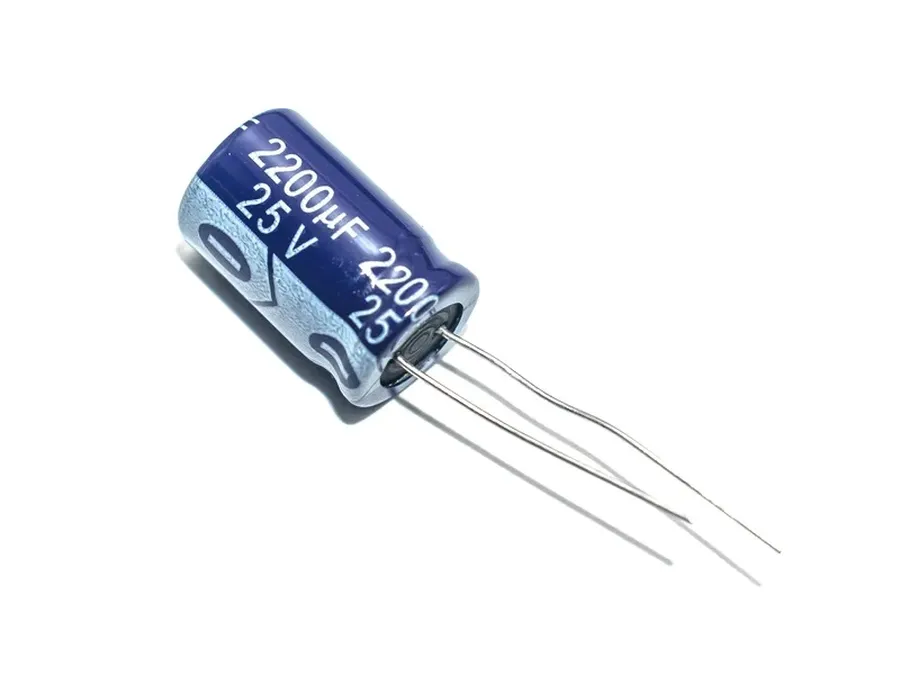
A 2200uF 25V capacitor is a fundamental electronic component characterized by its ability to store electrical energy. The '2200uF' denotes its capacitance, meaning it can store a charge of 2200 microfarads (µF). The '25V' indicates its maximum voltage rating, the highest voltage the capacitor can safely handle without risk of damage or failure. These capacitors are commonly employed in electronic circuits to perform vital functions such as filtering, smoothing, and energy storage.
Key Specifications of a 2200uf 25v Capacitor
Capacitor markings
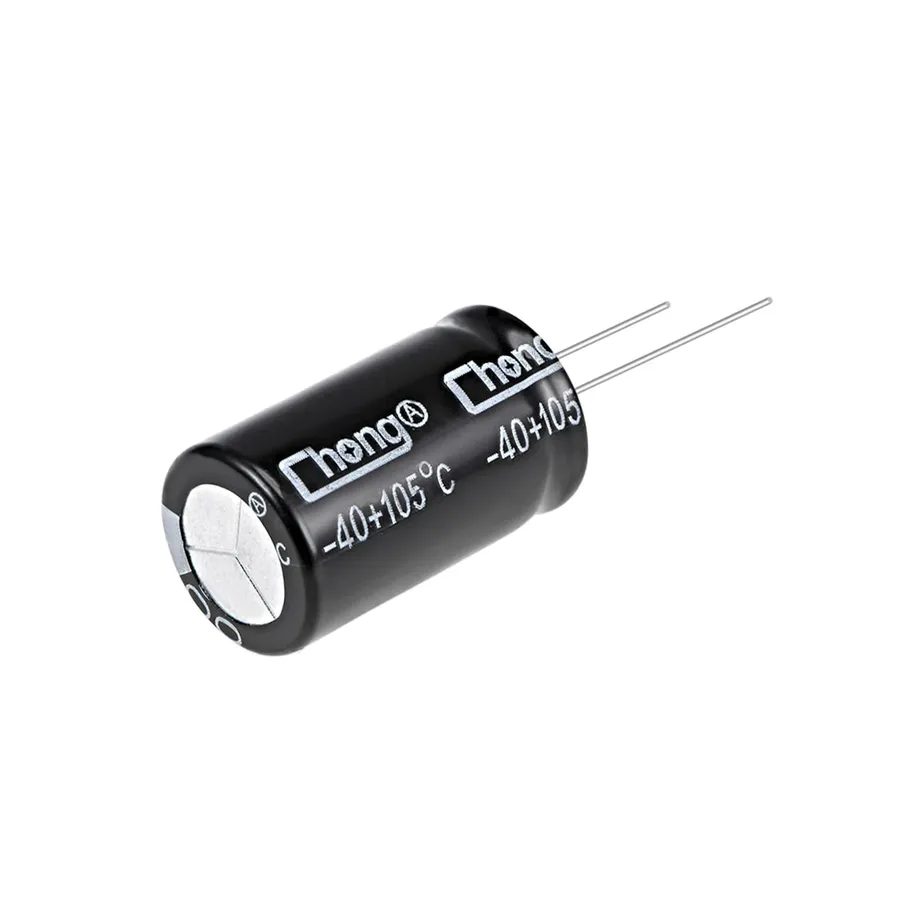
A 2200uF 25V capacitor's performance and suitability for a specific application are defined by several key specifications, extending beyond just its capacitance and voltage rating. These specifications include capacitance tolerance, operating temperature range, physical dimensions, and the materials used in its construction. Understanding these aspects is crucial for effective design and component selection.
Specification
Description
Typical Values
Importance
Capacitance
The nominal charge storage capacity of the capacitor.
The maximum voltage the capacitor can withstand without damage.
25V DC
Critical; exceeding this can lead to failure.
Capacitance Tolerance
Allowable deviation from the nominal capacitance.
±20%
Impacts precision in timing and filtering applications.
Operating Temperature Range
Range within which the capacitor operates reliably.
-40°C to +85°C (typical)
Critical for applications in varying environments; affects life and performance.
Physical Dimensions
Size and shape of the capacitor.
Varies by type, radial or axial
Affects board layout and component fitting.
Equivalent Series Resistance (ESR)
Internal resistance of the capacitor. Important for power supply filtering.
Low for high performance
Affects power efficiency and heat generation.
Leakage Current
Current flowing through the dielectric due to imperfect insulation.
Typically a few microamperes
Affects energy efficiency.
Dielectric Material
The insulating material between the capacitor plates.
Aluminum Electrolytic (common), Other materials available
Determines performance characteristics, such as stability and temperature response
Expected Lifetime
Operational life span, often influenced by temperature and voltage
Several thousand hours or longer
Critical for long-term reliability, especially in industrial and safety applications
Types of 2200uf 25v Capacitors
Aluminum Electrolytic Capacitors
2200uF 25V capacitors, commonly used in various electronic applications, are primarily available in two main structural configurations: radial and axial. These configurations differ primarily in the lead orientation and mounting style, each suited to different board layouts and space constraints. Both types are generally constructed as electrolytic capacitors, meaning they use a liquid electrolyte to achieve high capacitance values within a compact size.
Radial Electrolytic Capacitors Radial capacitors have their leads extending from the same side of the cylindrical body, typically from the bottom. This design facilitates easy mounting onto a printed circuit board (PCB) with through-hole technology, where leads pass through holes in the board. They are widely used in various applications due to their ease of installation and robust connection. Radial capacitors are commonly encased in aluminum with an insulating sleeve.
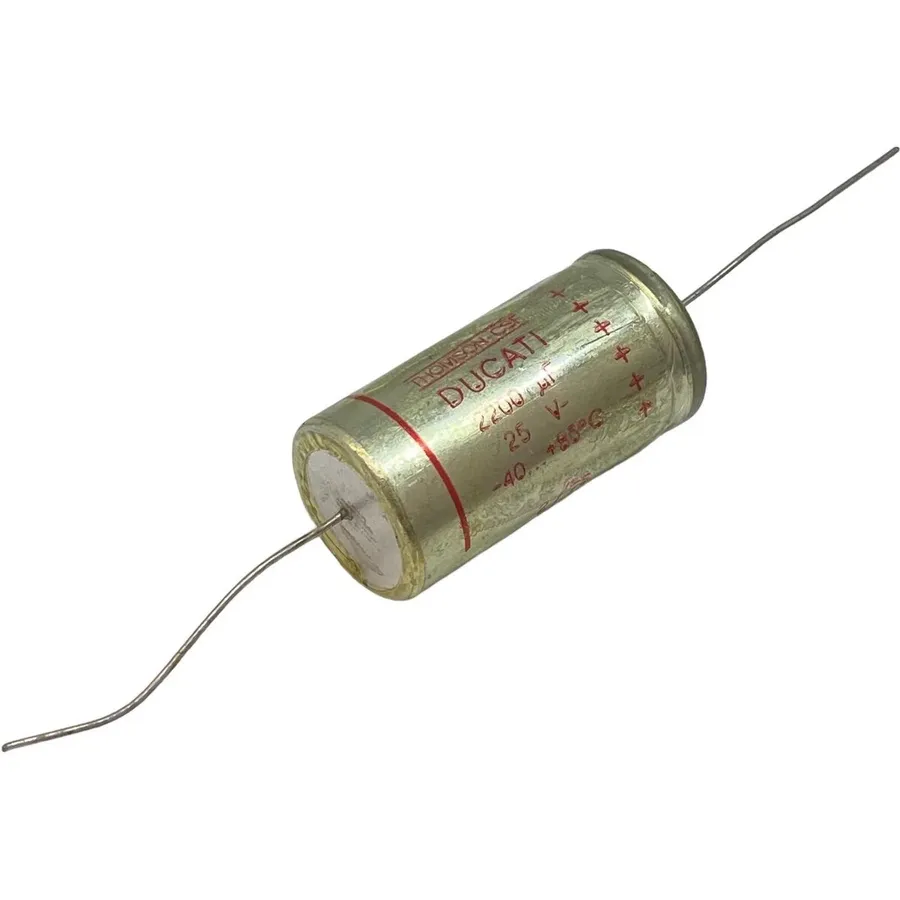
Axial Electrolytic Capacitors Axial capacitors have leads extending from opposite ends of the cylindrical body, which resembles the shape of a resistor. This configuration is less common in modern PCB designs, but they are advantageous in tight spaces or where the capacitor is mounted point-to-point instead of on a PCB. Axial capacitors are often used in older or legacy equipment or in power supplies and other high-reliability applications. The body materials are similar to the radial type, with aluminum being common.
Within both radial and axial types, construction variations exist, which are based on the dielectric material used. For 2200uF 25V capacitors, the electrolytic type using aluminum and a liquid electrolyte is the most common. The choice between radial and axial mainly depends on the physical layout of the target board, with the radial type dominating modern applications due to easier PCB integration. Variations can also include low ESR (Equivalent Series Resistance) variants designed for more demanding power management and high frequency applications.
Common Applications of a 2200uf 25v Capacitor
Capacitor on circuit board
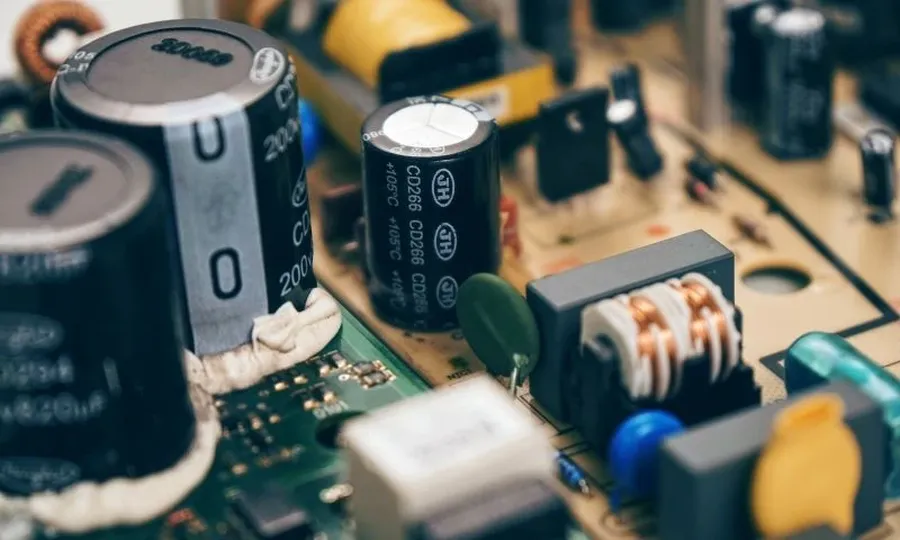
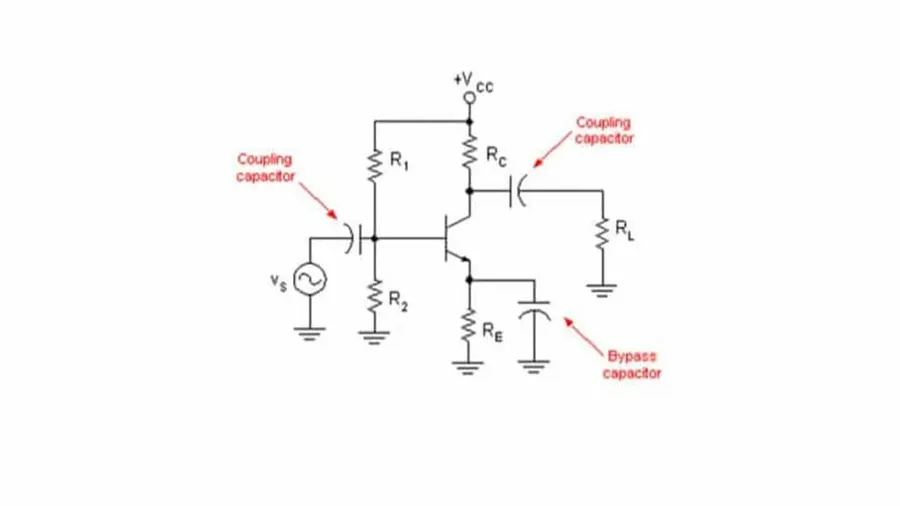
The 2200uF 25V capacitor is a versatile component found in a wide array of electronic devices, primarily due to its ability to store and release electrical energy, making it crucial for various functions such as power smoothing, signal filtering, and energy storage. These capacitors are essential for maintaining stable power delivery and ensuring the correct operation of numerous electronic systems.
Power Supply Smoothing In power supplies, 2200uF 25V capacitors act as filter elements, smoothing out voltage fluctuations and reducing ripple. This ensures a stable DC voltage, which is vital for the proper operation of sensitive electronic components. By storing and releasing charge, these capacitors mitigate voltage variations caused by AC to DC conversion, helping maintain a clean and constant power source.
Signal Filtering These capacitors are used to filter out unwanted noise from electronic signals. In audio circuits, for instance, they help remove high-frequency noise and allow the desired audio signal to pass through clearly, contributing to improved audio fidelity. Similarly, in various other signal processing applications, 2200uF 25V capacitors are employed to achieve the necessary signal quality.
Audio Equipment Within audio devices like amplifiers and receivers, 2200uF 25V capacitors play a vital role in the power filtering and signal coupling stages, contributing to clear sound reproduction by removing DC offsets and filtering out noise. The value of the capacitor is well-suited to many lower frequency audio requirements.
Consumer Electronics The 2200uF 25V capacitor is a frequent component in televisions, radios, and computer peripherals. In these devices, they are used for a range of purposes, such as ensuring stable power to microcontrollers and other sensitive electronic components, preventing system instability or damage and also within display technology.
Motor Control In low voltage motor control circuits, these capacitors help regulate current and ensure smoother operation, providing the consistent power required by the motor and minimizing voltage fluctuations that could damage the motor or associated components.
How to Choose the Right 2200uf 25v Capacitor
Capacitor Selection
Selecting the appropriate 2200uF 25V capacitor requires careful consideration of several factors beyond just the capacitance and voltage ratings. The operational environment, physical constraints of the circuit, and desired performance characteristics all play crucial roles in the selection process.
Key considerations include:
Temperature Rating Capacitors have specified temperature ranges for optimal operation and longevity. Exceeding these limits can lead to performance degradation or failure. Choose a capacitor with a temperature rating that meets or exceeds the expected operating conditions. For example, an 85°C or 105°C rated capacitor is common for general applications, with higher temperature ratings for more demanding environments. The datasheet will specify the capacitor's 'Category Temperature Range'.
Capacitance Tolerance The tolerance indicates the acceptable deviation of the actual capacitance from its nominal value. Common tolerances are ±20%, ±10%, or ±5%. Tighter tolerances may be required for precision circuits such as oscillators or filters. The datasheet will give the tolerance as a percentage of the stated capacitance, e.g., '±20%'.
Equivalent Series Resistance (ESR) ESR is an internal resistance in the capacitor that can cause power loss and heat generation. Lower ESR is desirable for high-frequency circuits and applications where heat dissipation is a concern, such as switching power supplies. Manufacturers often specify the ESR at a particular frequency, e.g., '0.05Ω at 100kHz'.
Physical Dimensions The capacitor's physical size must fit within the available space on the circuit board. Consider both the diameter and height (or length) of the capacitor. Check the capacitor's datasheet for the precise dimensions. For example, a standard radial capacitor may be specified as '10mm dia x 20mm length'.
Type of Capacitor The choice between electrolytic (radial or axial) and other capacitor types (e.g., ceramic or film) depends on the application. Electrolytic capacitors, common for 2200uF values, are polarized, requiring correct polarity placement in the circuit to prevent damage. Reviewing the datasheet will clarify the type of capacitor and its relevant properties.
Brand and Quality Reputable brands such as Nichicon, Vishay, and United Chemi-Con are known for their quality and reliability. While they might be more expensive than generic brands, using higher quality components can significantly enhance the performance and lifespan of electronic devices. High-quality capacitors typically have datasheets specifying performance under various conditions.
Brand
Typical Tolerance
Typical Temperature Rating
Typical ESR
Considerations
Nichicon
±20%
85°C to 105°C
Low to Medium
Known for high reliability and performance.
Vishay
±20%
85°C to 105°C
Low to Medium
Offers a wide range of capacitor options.
United Chemi-Con
±20%
85°C to 105°C
Low to Medium
Strong in power applications and industrial designs.
Replacing a 2200uf 25v Capacitor: Step-by-Step Guide
Capacitor Replacement
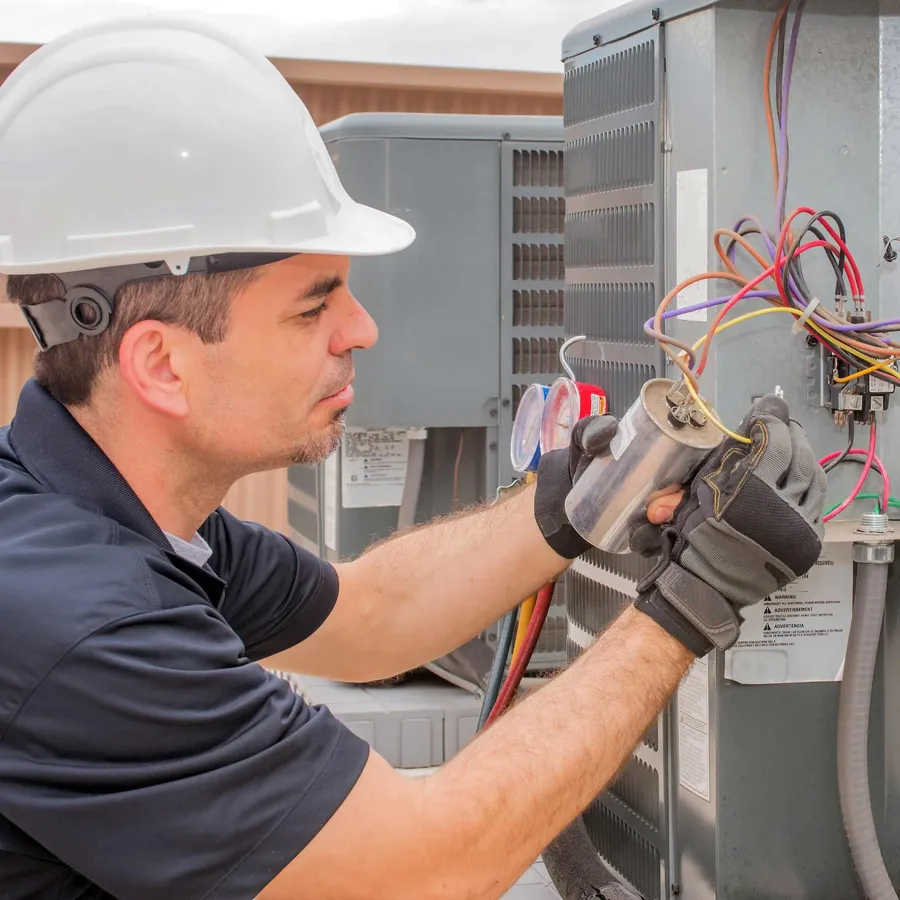
Replacing a 2200uF 25V capacitor, while seemingly straightforward, requires careful attention to detail to ensure both safety and proper functionality of the electronic device. This guide provides a structured approach to safely and effectively replacing a faulty capacitor.
Preparation and Safety Precautions Before beginning, ensure the device is completely powered off and unplugged. Allow sufficient time for any residual charge within the circuit to dissipate. Gather the necessary tools, which typically include a soldering iron, solder, desoldering wick or pump, wire cutters, and safety glasses. It's crucial to work in a well-ventilated area to avoid inhaling solder fumes, and be certain that the replacement capacitor matches the original in both capacitance (2200uF) and voltage rating (25V), and polarity.
Locating the Capacitor Carefully open the device to access the circuit board. The 2200uF 25V capacitor is usually cylindrical in shape and has distinct markings that indicate its capacitance and voltage. Note the capacitor's orientation on the board, particularly the polarity (usually marked with a stripe or negative sign). Taking a photograph before removal is highly recommended for reference.
Desoldering the Old Capacitor Using a soldering iron, gently heat each solder joint connecting the capacitor's leads to the circuit board. Apply desoldering wick or a desoldering pump to remove the molten solder. Avoid excessive heat, as this can damage the circuit board and pads. Once the solder is removed, gently remove the old capacitor from the board.
Preparing the New Capacitor If necessary, trim the leads of the new capacitor to the correct length. Ensure you are inserting the new capacitor into the correct position, referencing the photograph or notes made earlier to match the original polarity.
Soldering the New Capacitor Position the new capacitor on the board, making sure the leads pass through the designated holes. With a soldering iron, apply a small amount of solder to each lead, creating a solid and reliable connection. Avoid bridging solder between any of the leads. Inspect the soldered connections to ensure there are no dry joints or shorts.
Testing and Reassembly Once cooled, visually inspect the board to ensure everything is in its correct position. Before reassembling the device, connect the power and check that the device operates normally. If it works as expected, power it off, disconnect the power, reassemble it, and then test again after reassembly to be sure that the reassembly process did not cause any issues. If there are operational problems check your solder joints, they are the most likely cause.
Common issues associated with capacitor failure include bulging or leaking electrolytes, which are usually visible signs of damage and may lead to a non-functional or unstable circuit. It is critical to use a replacement capacitor of the same or higher voltage rating, while the capacitance value must match. Ignoring these details can lead to performance degradation or circuit failure, as capacitance dictates the charge storing ability, and voltage rating indicates maximum safe voltage limit of operation. Always adhere to the voltage and capacitance specified for the components of the device.
Frequently Asked Questions About 2200uf 25v Capacitors
This section addresses common queries regarding 2200uF 25V capacitors, providing clear and concise answers to aid understanding and application.
What is the primary function of a 2200uF 25V capacitor? A 2200uF 25V capacitor primarily serves as an energy storage device in electronic circuits. It's commonly used for filtering, smoothing power supply lines, and decoupling to stabilize voltage and current, thus improving the performance of the circuit.
Can I replace a 2200uF 25V capacitor with one that has a higher voltage rating? Yes, you can typically replace a 2200uF 25V capacitor with a capacitor of the same capacitance (2200uF) but a higher voltage rating (e.g., 35V or 50V). The higher voltage rating means the capacitor can withstand greater electrical stress. It's crucial, however, to keep the capacitance the same. Replacing with a different capacitance may result in different circuit behavior and is not recommended unless explicitly specified.
Can I use a capacitor with a higher capacitance value to replace a 2200uF 25V capacitor? While a higher voltage rating is generally acceptable, replacing a capacitor with a significantly higher capacitance can be problematic. The capacitance value is critical for circuit timing and filtering, as it interacts with the resistance to set the RC time constant. Using a higher capacitance may change the timing constants, potentially causing instability or malfunctions within the circuit. It is generally advisable to stick to the original capacitor value, or a value as specified in the device's service manual, unless you are modifying a circuit and understand the ramifications of doing so.
What does 'uF' mean on a capacitor? The symbol 'uF' stands for microfarad, which is the unit of capacitance. Capacitance measures a capacitor's ability to store an electrical charge. One microfarad is equal to one millionth of a farad, the base unit of capacitance in the International System of Units (SI).
If I am replacing a 2200uf 25v capacitor, what common issues should I check on the old capacitor? When replacing a 2200uF 25V capacitor, you should check the old capacitor for signs of physical damage such as bulging, leaks, or cracking. A bulging capacitor is often an indication of internal stress due to overvoltage or excessive heat, which can cause capacitor failure. Also, test the capacitance with a multimeter to check if it is still within acceptable tolerance. If the capacitance is significantly outside of the original value, it should be replaced. Finally, check for any charring or burnt smell on the capacitor or the surrounding components which would indicate a more serious underlying problem.
Can a 2200uF 25V capacitor be used in audio circuits? Yes, 2200uF 25V capacitors are often used in audio circuits, particularly for filtering or decoupling purposes. Their role is to remove unwanted noise or smooth out the DC bias supply. The suitability of a particular capacitor type in an audio circuit depends on its specific construction and design. Electrolytic capacitors are common, but if very high audio fidelity is required, different types with lower equivalent series resistance (ESR), such as solid polymer capacitors, may be used instead of standard electrolytics.
2200uf 25v Capacitor: Comparison Table
Selecting the right 2200uF 25V capacitor requires careful consideration of various factors, including brand-specific performance characteristics. This comparison table provides a structured overview of key differences between capacitors from leading manufacturers, focusing on parameters critical for optimal circuit design and reliability.
Brand
Capacitance Tolerance
Temperature Rating
Expected Lifecycle
ESR (Equivalent Series Resistance)
Typical Application
Nichicon
±20%
-40°C to +105°C
Up to 5000 hours
Low
General purpose, high reliability
Vishay
±20%
-55°C to +105°C
Up to 3000 hours
Moderate
Industrial applications, high temperature
United Chemi-Con
±20%
-40°C to +85°C
Up to 2000 hours
Moderate
Consumer electronics, general use
Panasonic
±10%
-55°C to +105°C
Up to 7000 hours
Low
High-end audio, long lifecycle applications
Rubycon
±20%
-40°C to +105°C
Up to 4000 hours
Moderate
Power supplies, robust performance
The 2200uf 25v capacitor, though small, plays a pivotal role in modern electronics. Understanding its specifications and applications allows for more informed decisions in design and repair. Whether you are a seasoned engineer or a DIY enthusiast, this knowledge empowers you to select and integrate these crucial components for optimal electronic performance. It is just one part of the complex electronic world, a reliable workhorse, which like our hearts, keeps the flow steady. By appreciating such a component we may even glimpse into the complexity of seemingly simple technology.