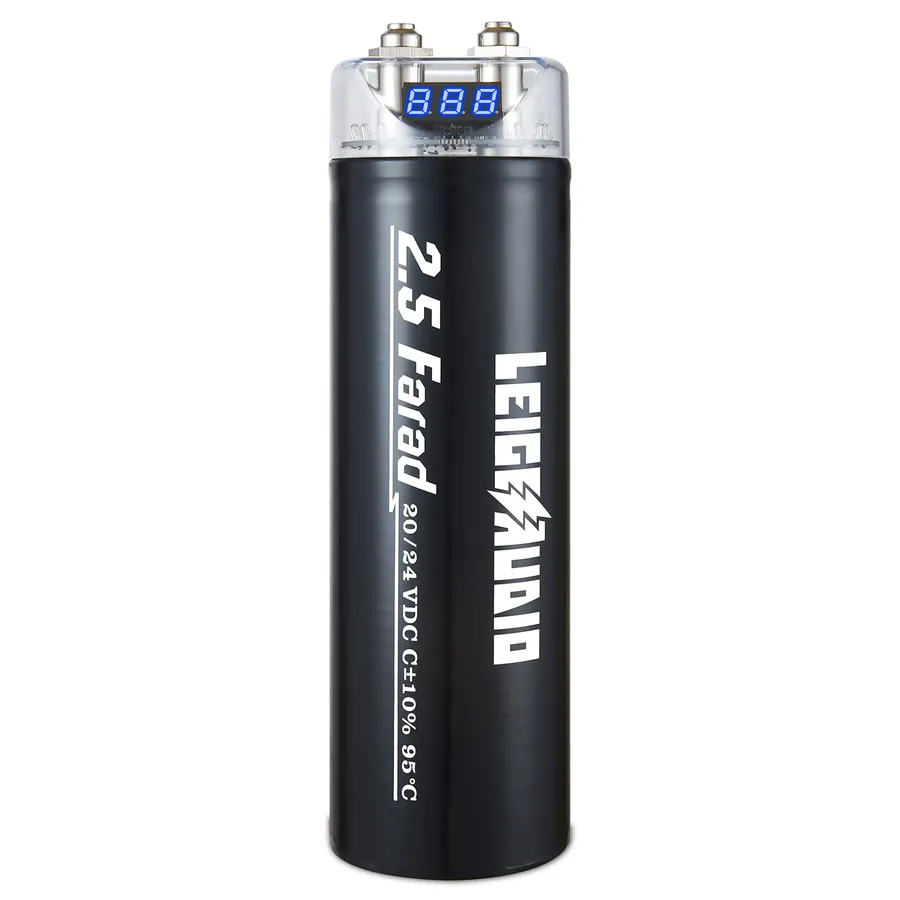
Subwoofer Capacitor: Unleash the Bass & Stabilize Your Car Audio
2025.02.02
Just like a reservoir stores water, a subwoofer capacitor stores electrical energy, ensuring a smooth and powerful flow to your car's amplifier when those bass-heavy tracks hit. This seemingly small component plays a crucial role in preventing power dips that can lead to distorted sound, particularly when your subwoofer demands sudden bursts of power. This article delves into the purpose, benefits, selection, and installation of subwoofer capacitors, helping you achieve the optimal audio experience in your vehicle.
What is a Subwoofer Capacitor and Why is it Needed?
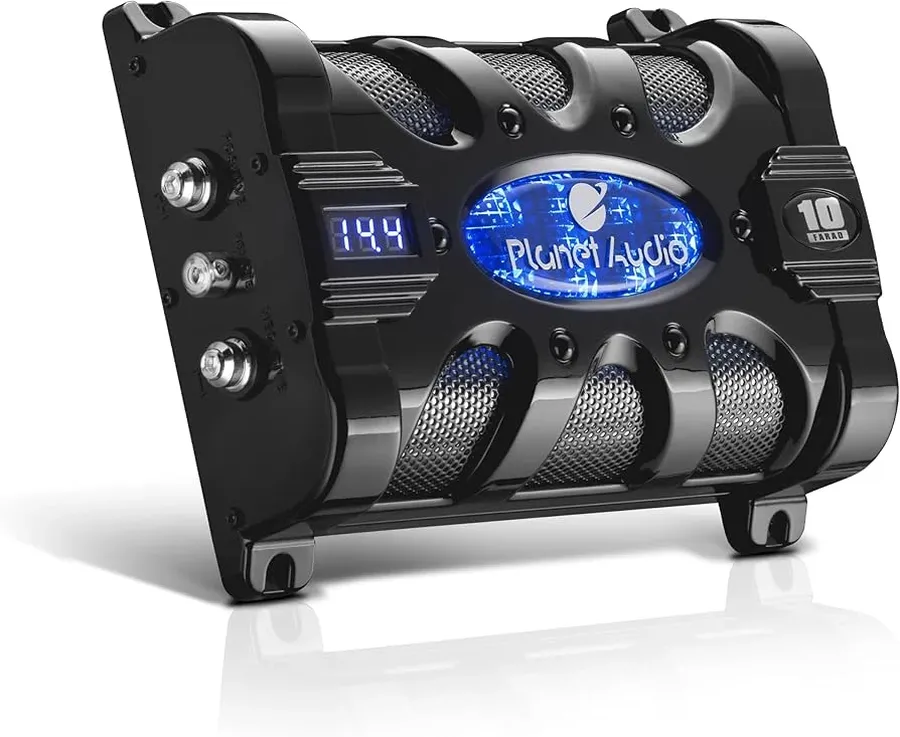
Car Subwoofer Capacitor
A subwoofer capacitor is a crucial component in a car audio system, acting as a localized power reservoir that provides instantaneous bursts of energy to the amplifier during demanding low-frequency audio peaks. This prevents voltage dips, which cause amplifier clipping and audible distortion, ultimately enhancing the quality and clarity of bass reproduction while simultaneously reducing strain on the vehicle's electrical system. By supplying the high-current demands of bass notes, the capacitor shields the car's alternator and battery from sudden load spikes, improving system stability.
Key Benefits of Using a Subwoofer Capacitor
Car Amplifier and Capacitor Setup
A subwoofer capacitor, when integrated into a car audio system, delivers several crucial benefits by acting as a localized power reservoir. This ensures that the amplifier receives the necessary current during demanding bass frequencies, thereby optimizing system performance and protecting electrical components.
Improved Bass Performance By providing rapid bursts of power, the capacitor enables the subwoofer to reproduce deep, low-frequency sounds more effectively and accurately. This results in tighter, more impactful bass notes, free from the muddiness often associated with insufficient power supply.
Reduced Headlight Dimming During peak bass notes, amplifiers demand significant current, which can lead to voltage drops in the car's electrical system. This manifests as noticeable dimming of headlights. A capacitor supplements the car's power, reducing voltage fluctuations and thereby preventing headlight dimming.
Enhanced Amplifier Efficiency When the amplifier receives consistent and adequate power, it operates more efficiently. The capacitor minimizes the strain on the amplifier's power supply section, which improves performance, reduces heat generation and extends the lifespan of the amplifier.
Minimized Distortion Voltage drops cause amplifiers to clip, which introduces unwanted distortion into the audio signal. The capacitor ensures the amplifier is never starved of power, preventing this distortion and thus maintains clarity during heavy bass loads.
Protection of Car's Electrical System By reducing stress on the vehicle's electrical system, the capacitor safeguards against potential damage caused by high current draw. This avoids the possibility of premature wear of the alternator, and protects the car's overall electronics.
Subwoofer Capacitor Sizing: How to Choose the Right Capacity
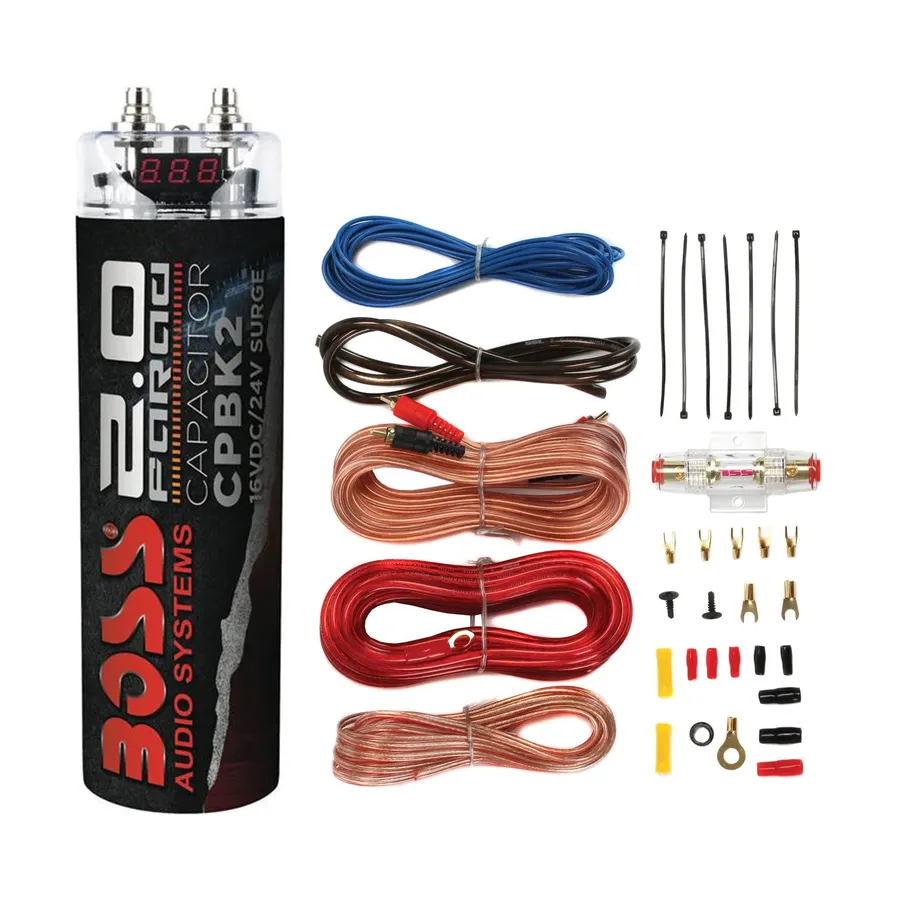
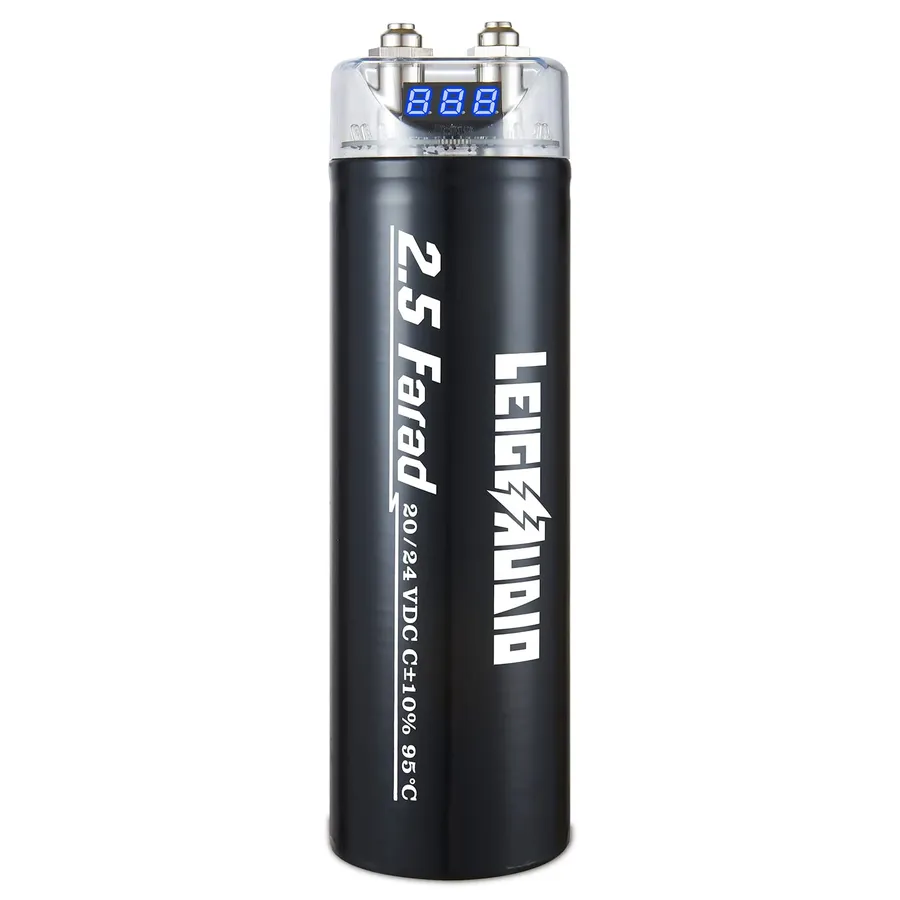
Car Audio Capacitors of Various Sizes
Selecting the correct capacitor size for your subwoofer system is crucial for optimal performance and preventing damage to your amplifier. The primary goal is to provide sufficient instantaneous power to the amplifier during peak bass demands, thereby avoiding voltage drops that lead to distortion and clipping. While there isn't a single perfect size, a generally accepted rule of thumb and understanding of the relationship between amplifier power and capacitance can guide the selection process.
The sizing of a subwoofer capacitor is based primarily on the amplifier's RMS (Root Mean Square) power output, which represents the amplifier's continuous power handling capability, not peak power. It is also important to note that RMS power is an electrical value representing the power of the electrical signal, rather than the acoustic output of the system. Using RMS as a reference, we can determine appropriate capacitance, and this approach offers a practical method for the proper selection of the capacitor for a car audio system. The most common way to size the capacitor is using a farad rating. The farad is the measure of capacitance, where 1 farad is a significant amount of storage. The capacitor size typically used in car audio systems are usually of the order of 1 farad.
Here's a breakdown of the sizing rule-of-thumb:
Amplifier RMS Power
Recommended Capacitor Size
250 Watts
0.25 Farads
500 Watts
0.5 Farads
750 Watts
0.75 Farads
1000 Watts
1 Farad
1500 Watts
1.5 Farads
2000 Watts
2 Farads
While the 1 farad per 1000 watts rule is a useful guideline, other factors can influence the ideal capacitor size for your car audio system, such as the quality of the car's electrical system, the length and quality of the power wiring, and the type of music you generally listen to. When there are additional factors that increase the strain on the electrical system, or with music having strong bass peaks, choosing a slightly higher capacitance can make a noticeable difference.
It is also important to note that the quality of the capacitor can impact its effectiveness. Higher-quality capacitors generally have lower equivalent series resistance (ESR), meaning they can deliver energy more efficiently. It's often a good idea to choose a reputable brand known for high-quality construction and reliable performance, and to verify that the manufacturer has measured and rated the capacitance at the proper test conditions. Many times, the capacitance rating on the label can be significantly different than the true capacitance.
Subwoofer Capacitor Installation: A Step-by-Step Guide
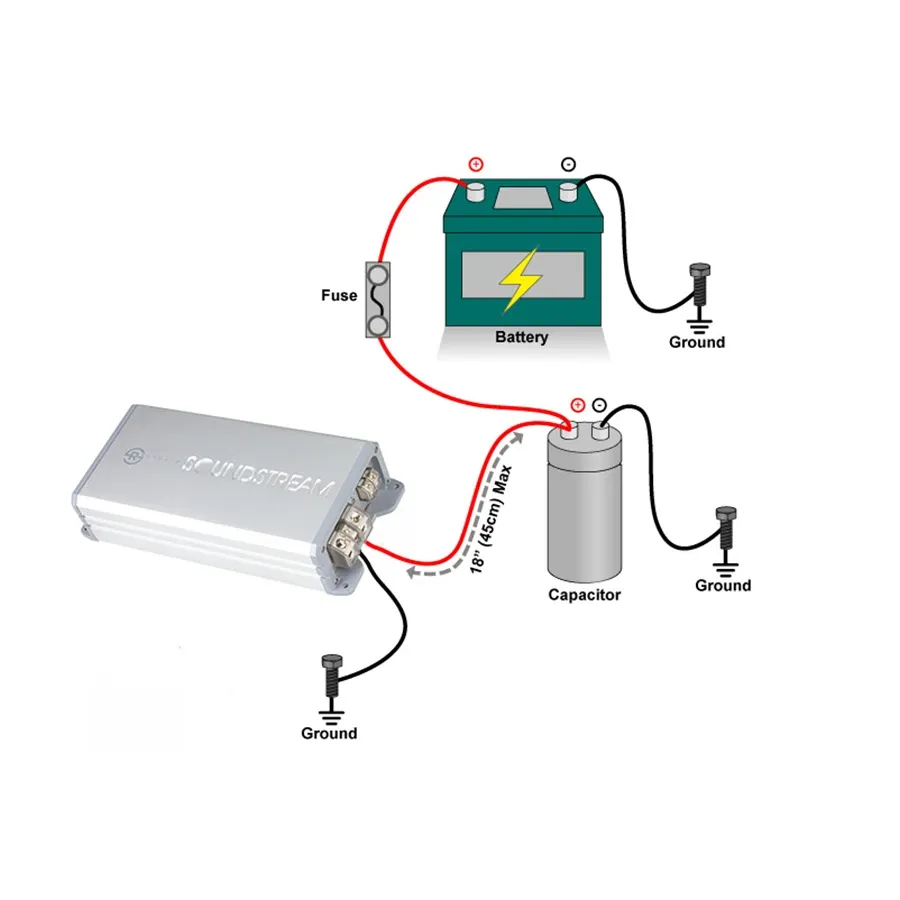
Car Capacitor Wiring Diagram
Installing a subwoofer capacitor correctly is crucial for optimal performance and to prevent damage to your car audio system. This section outlines the essential steps for a safe and effective installation, emphasizing the importance of proper pre-charging, secure mounting, and correct wiring procedures. It is paramount that the capacitor is located as close as physically possible to the amplifier, typically within 12-18 inches, to minimize impedance and ensure efficient current delivery during peak demand.
Gather Necessary Tools and Materials Before starting, ensure you have the appropriate tools, including a wrench set, wire cutters, wire stripper, a digital multimeter, and the necessary gauge power and ground wires with proper terminals. You'll also need a fuse holder, a fuse rated for your system, and the capacitor itself, along with any brackets or fasteners for secure mounting.
Pre-charge the Capacitor Before connecting the capacitor to your system, it must be pre-charged to a safe level. Use the included resistor or a suitable charging circuit with an incandescent bulb to slowly bring the capacitor up to the system's voltage level. This gradual charging process is crucial to prevent damage. Failure to do so may result in arcing or internal damage to the capacitor when fully connected. Monitor the voltage with the multimeter until it matches the vehicle system voltage.
Select a Mounting Location Choose a mounting location as close as possible to the amplifier, ideally within 12 to 18 inches. Select a spot that is stable, secure, away from moving parts, and that offers some degree of protection for the capacitor. Securely mount the capacitor using brackets or clamps, taking care to prevent movement during vehicle operation. Proper mounting prevents vibration which can lead to reduced performance and premature failure.
Connect the Power Wire Connect the positive terminal of the capacitor to the positive power wire leading from the car battery to the amplifier. A fuse rated for the capacitor's specifications should be installed within 18 inches of the battery. Ensure that all connections are tight and secure using crimped terminals.
Connect the Ground Wire Connect the negative terminal of the capacitor to the amplifier's ground point, ensuring that the connection is made to the chassis ground to ensure a solid, low-resistance connection. Any paint or coating at the point of contact should be removed, this provides the lowest impedance ground.
Double-Check Connections Before powering up your system, meticulously inspect all connections to ensure they are tight, secure, and correctly connected. Verify the polarity of all connections, and make sure that the connections are clean, and there are no frayed wires or exposed terminals that might short circuit.
Power On and Test Once all connections are verified, carefully power up your car audio system and test the performance. Monitor the voltage at the amplifier and ensure that the capacitor is functioning as intended, reducing voltage drops during peak bass. Listen for any unwanted noise or distortion and perform necessary adjustments.
Troubleshooting Common Subwoofer Capacitor Issues
Subwoofer capacitors, while relatively robust, can experience issues that affect their performance. Recognizing these problems early is crucial for maintaining optimal car audio quality and preventing potential damage to your amplifier and electrical system. These issues often manifest as a degradation in the capacitor's ability to effectively store and deliver power, leading to audible distortion, reduced bass response, or system instability.
Blown Fuse A blown fuse is a common symptom indicating a surge or overload. This can occur if the capacitor is incorrectly sized for the amplifier, if the wiring is faulty, or if the capacitor itself is failing internally. Check the capacitor's inline fuse first before proceeding to more complex diagnostics.
Leaking Capacitor Physical damage, excessive heat, or age can cause a capacitor to leak electrolyte. This is often visible as a bulging or swollen casing, or a liquid residue near the terminals. A leaking capacitor should be replaced immediately as its functionality is significantly compromised and poses a potential safety risk.
Incorrect Voltage Readings Use a multimeter to measure the capacitor’s voltage. If the reading is significantly lower than the car's charging voltage (typically around 12.6V when off and 13.8V-14.4V when the vehicle is running), the capacitor is not charging properly or is losing charge quickly. This can indicate internal damage, a wiring issue, or a problem with the car's charging system.
Distorted or Weak Bass If the capacitor is unable to supply the instantaneous power needed by the amplifier during bass-heavy sequences, it will likely result in audio distortion, a noticeable loss of bass power, and clipping of the amplifier's output. This could mean the capacitor is failing to function or that the system demands exceed the capacitor's capabilities.
Overheating Excessive heat can damage capacitors. If your capacitor is noticeably hot to the touch, it suggests that the unit is being overworked due to poor connections, overloading or internal failure and needs immediate attention or replacement.
Diagnosing Capacitor Problems
Diagnosing a faulty capacitor requires a systematic approach. Always disconnect the capacitor from the electrical system before attempting any diagnostic procedures. Start by inspecting the physical condition, followed by voltage checks, and ensure all fuse connections and wiring are clean and secure.
Steps for Resolution and Replacement
If a capacitor is found to be faulty, it is typically best to replace it, as internal components are not designed to be repaired. Ensure you select a replacement that matches or exceeds the original specifications. If issues are persistent even after replacement, it may be an indication of an issue with the amplifier or the car's electrical system.
Subwoofer Capacitor vs. Battery Upgrade: Which is Right For You?
Car Capacitor vs Car Battery
When optimizing a car audio system, a common question arises: is a subwoofer capacitor or a high-capacity battery upgrade the better choice? Both aim to improve power delivery to the amplifier but address different needs, making the ideal choice dependent on your specific system requirements and budget. Understanding their core functions allows for informed decision-making.
Feature
Subwoofer Capacitor
High-Capacity Battery
Primary Function
Provides instantaneous power during peak demand
Provides sustained power for overall system operation
Power Delivery
Fast bursts of energy to amplifier during transient bass peaks
Consistent current supply over extended periods.
Impact on Voltage
Minimizes voltage drops during peak bass notes, prevents amplifier clipping
Reduces voltage sag during prolonged periods of high power draw
Installation Complexity
Relatively simple to install near the amplifier
More complex installation, may require vehicle modifications
Cost
Generally less expensive than a battery upgrade
More expensive than a capacitor due to higher capacity and specialized construction
Ideal Use Case
Systems with moderate power needs, aiming for bass responsiveness
High-power systems demanding consistent current and extended operation
A capacitor acts as a localized energy reservoir, quickly discharging to meet the sudden power demands of bass-heavy audio. This is especially useful during the transient peaks in the music. A higher-capacity car battery, on the other hand, offers a more substantial and sustained power supply. It can better support a system that draws a high average current over time. It improves the overall operation of the vehicle's electronics and has a higher power capacity compared to a standard vehicle battery.
Ultimately, the 'better' choice depends on your specific circumstances. For users experiencing transient voltage drops and audio clipping due to peak bass demands, a capacitor is a cost-effective solution. However, if your system is pushing the limits of the vehicle's electrical system, or you are running multiple amplifiers, upgrading to a higher-capacity battery is essential.
Frequently Asked Questions About Subwoofer Capacitors
This section addresses common questions regarding subwoofer capacitors, providing clear and concise answers based on fundamental principles.
What is the primary function of a capacitor in a subwoofer system? A capacitor acts as a localized energy reservoir for the amplifier, especially during periods of high demand, such as when reproducing low-frequency bass notes. It stores electrical charge and provides a rapid surge of power to the amplifier, reducing the load on the vehicle's main electrical system and minimizing voltage drops. This prevents amplifier clipping and audio distortion.
How do I determine the appropriate capacitor size for my subwoofer amplifier? A general guideline for capacitor sizing is 1 Farad of capacitance for every 1000 Watts RMS of amplifier power. For example, a 1000 Watt RMS amplifier typically needs a 1 Farad capacitor. However, it is beneficial to have slightly more capacitance than less as it provides additional headroom, preventing the system from being underpowered during peak power requirements. Always refer to the manufacturer's guidelines as well, as some amplifiers have unique requirements.
What are the common indicators of a failing or faulty audio capacitor? Common signs of a faulty capacitor include a blown fuse, leaking electrolyte, or abnormal voltage readings. Some capacitors might visibly bulge or show signs of physical damage. If the capacitor is not holding a charge as expected (indicated by a rapid voltage drop or an inability to reach the desired voltage), it may be failing. Reduced bass performance or amplifier protection modes being triggered unexpectedly can also be a sign of a problematic capacitor.
Will a capacitor directly improve the sound quality of my subwoofer? A capacitor, by itself, doesn't change the tonal characteristics or the quality of your audio signals. It instead improves sound quality indirectly by providing a stable power supply, minimizing voltage drops to the amplifier during demanding bass notes. This prevents audio clipping or distortion, which results in a clearer, more defined bass. The audible improvement is thus not a change to the audio itself, but rather a reduction of noise by improving power conditions.
Is it necessary to charge a capacitor before using it in my car audio system? Yes, it is imperative to properly charge a capacitor before connecting it to your audio system. Charging involves bringing the capacitor up to the vehicle's system voltage gradually using a charging resistor or a built-in charging circuit. Failing to charge can lead to a very rapid charge which can damage the capacitor due to the uncontrolled current inrush, potentially destroying it and other electrical components.
Where is the best location to mount a capacitor in my vehicle? Capacitors should be mounted as close to the amplifier as possible, ideally within 12 to 18 inches. This minimizes the path for current flow and maximizes the capacitor's effectiveness in providing power to the amplifier. Choose a location that is secure and protected from physical damage and excessive temperatures to ensure longevity and proper operation.
How does a subwoofer capacitor differ from a car battery? While both store electrical energy, a car battery is designed for delivering relatively constant electrical energy over long periods of time and provides the bulk of power, while a capacitor stores and releases energy very quickly for short periods, providing instant energy on demand. A capacitor is used for peak loads of high power, such as instantaneous energy demands from heavy bass notes, whereas the battery provides the overall required power to the system. They are not interchangeable, and serve different purposes in an audio system.
Choosing the Right Subwoofer Capacitor Brand and Features
Different Car Capacitor Brands
Selecting the appropriate subwoofer capacitor involves considering various brands and their specific features. The capacitor's construction, digital display capabilities, and built-in safety mechanisms play a crucial role in its performance and the overall safety of your car audio system. Understanding these factors allows for an informed decision, ensuring optimal power delivery and minimizing potential risks.
Feature
Description
Importance
Brand Reputation
Established brands with proven track records often indicate better quality and reliability.
High
Internal Construction
High-quality capacitors use robust materials and construction techniques to withstand vibrations and extreme temperatures.
High
Farad Rating
The capacity should be appropriately sized for your amplifier's RMS power output, typically around 1 farad per 1000 watts of RMS power.
High
Digital Display
A digital display provides real-time information about the capacitor's voltage level, aiding in monitoring its performance.
Medium
Safety Mechanisms
Built-in protection features such as overvoltage, overcurrent, and reverse polarity protection enhance the safety of the entire system.
High
Terminals
High-quality terminals ensure secure connections with low resistance, which are essential for effective power transfer.
Medium
Case Material
Durable and heat-resistant casing ensures a long lifespan for the capacitor and reliable performance in various conditions.
Medium
Pre-Charging Circuit
A built-in pre-charging circuit prevents damaging current surges during initial connection.
High
When evaluating brands, consider user reviews and independent testing results. Reputable brands often provide detailed specifications and robust warranty options, offering better protection for your investment. Avoid purchasing capacitors from unknown or low-cost manufacturers, as their quality may not be reliable.
Subwoofer Capacitor Maintenance and Longevity
Ensuring the longevity and optimal performance of your subwoofer capacitor requires proactive maintenance and periodic testing. Proper care will not only safeguard your investment but also ensure consistent power delivery to your amplifier, maintaining the quality of your car audio system over time.
The primary factors influencing a capacitor's lifespan are temperature, voltage, and physical condition. High temperatures accelerate the degradation of internal components, while over-voltage can lead to premature failure. Physical damage, such as impacts or punctures, can also compromise its integrity.
Regular Visual Inspection Periodically inspect the capacitor for any physical damage, such as bulging, cracks, or leaks. Check the terminals for corrosion or loose connections. Any of these signs indicates that the capacitor is compromised and could require replacement.
Temperature Management Capacitors should not be exposed to excessive heat, as this can degrade the dielectric material within the capacitor. Ensure that the capacitor is mounted away from sources of extreme heat in the vehicle. Proper ventilation around the capacitor can also help in managing temperature.
Voltage Monitoring The capacitor's voltage should be within its rated specifications. Use a multimeter to verify that the charging voltage is correct and there are no voltage spikes from the car's electrical system. Over-voltage will damage the capacitor, while under-voltage can reduce its effectiveness. The use of a voltmeter can help ensure that the car's electrical system is operating at a safe range.
Proper Connections Ensure all connections are secure and free of corrosion. Loose connections can cause resistance and heat buildup, leading to premature failure. Check the wiring frequently for any fraying or damage.
Capacitor Charging Verify that the capacitor is fully charged and holding a charge by using a voltmeter to test the capacitor terminals. If a capacitor cannot hold a charge, it is often an indicator of a problem or end of life.
Capacitor Functionality Testing Test the capacitor using a capacitor tester or a multimeter set to capacitance mode to measure its actual farad value. Compare this value with the rated capacitance of the capacitor. A significant deviation means the capacitor is no longer functioning optimally and should be replaced.
The subwoofer capacitor is not just an accessory but an essential component for any serious car audio enthusiast seeking deep, powerful, and distortion-free bass. By providing a readily available reservoir of power, it ensures consistent amplifier performance and minimizes strain on the vehicle's electrical system. Whether you're a casual listener or a true audiophile, investing in a quality capacitor paired with the appropriate sizing ensures your system is performing at its peak and will serve as the perfect complement for your car's subwoofer and sound system. Consider the long-term benefits of a stable power supply and the improved audio quality it brings, making a subwoofer capacitor a worthwhile investment for your car audio setup.