In our modern world, where air conditioning and efficient motor operation are critical for comfort and industrial processes, the unsung hero often lies in a small component: the CBB65 capacitor. This seemingly simple device plays a vital role in ensuring motors run smoothly and efficiently. From the compressors in your home's AC unit to the powerful motors in industrial equipment, CBB65 capacitors are essential. This article will explore the world of CBB65 capacitors, demystifying their function and empowering you with the knowledge to choose, install, and troubleshoot them effectively, ensuring optimal operation of your motor-driven systems. Let’s dive into the crucial world of these workhorses!
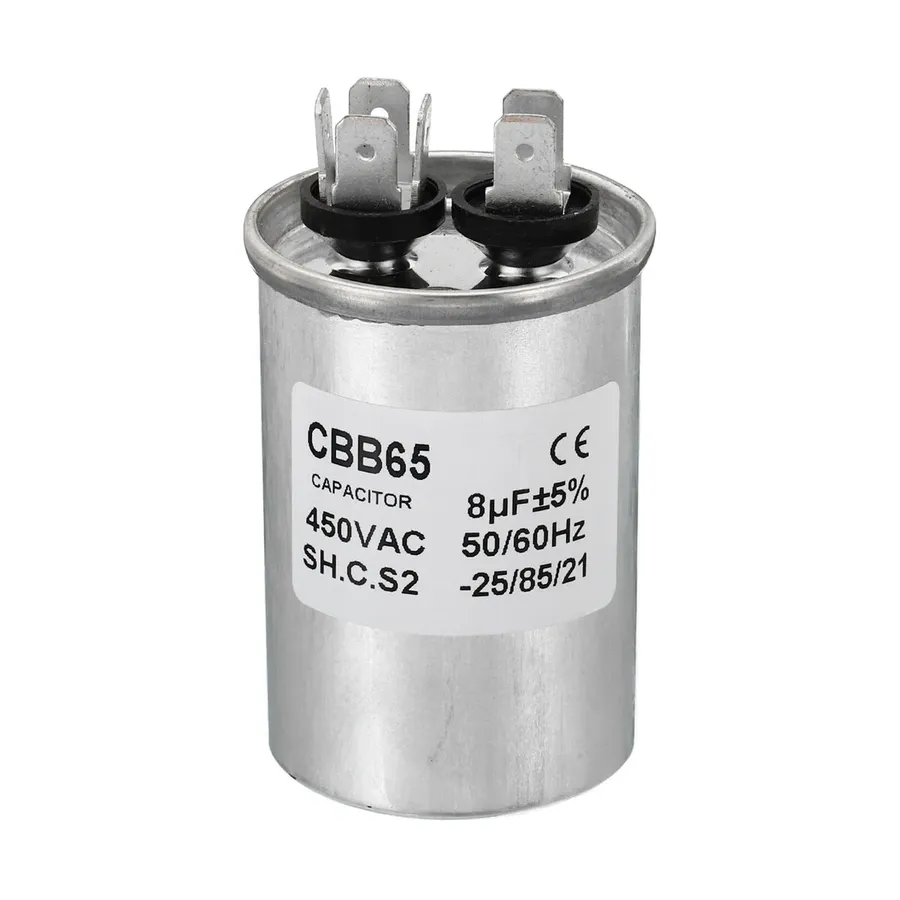
The CBB65 capacitor is a crucial component in AC motor systems, functioning as a motor run capacitor. It's primary role is to introduce a phase shift in the electrical current supplied to the motor, which is essential for initiating and sustaining motor rotation. This phase shift generates the necessary starting torque and ensures efficient, continuous operation of the motor. Without a functioning run capacitor like the CBB65, single-phase AC motors would typically fail to start or would run erratically and inefficiently.
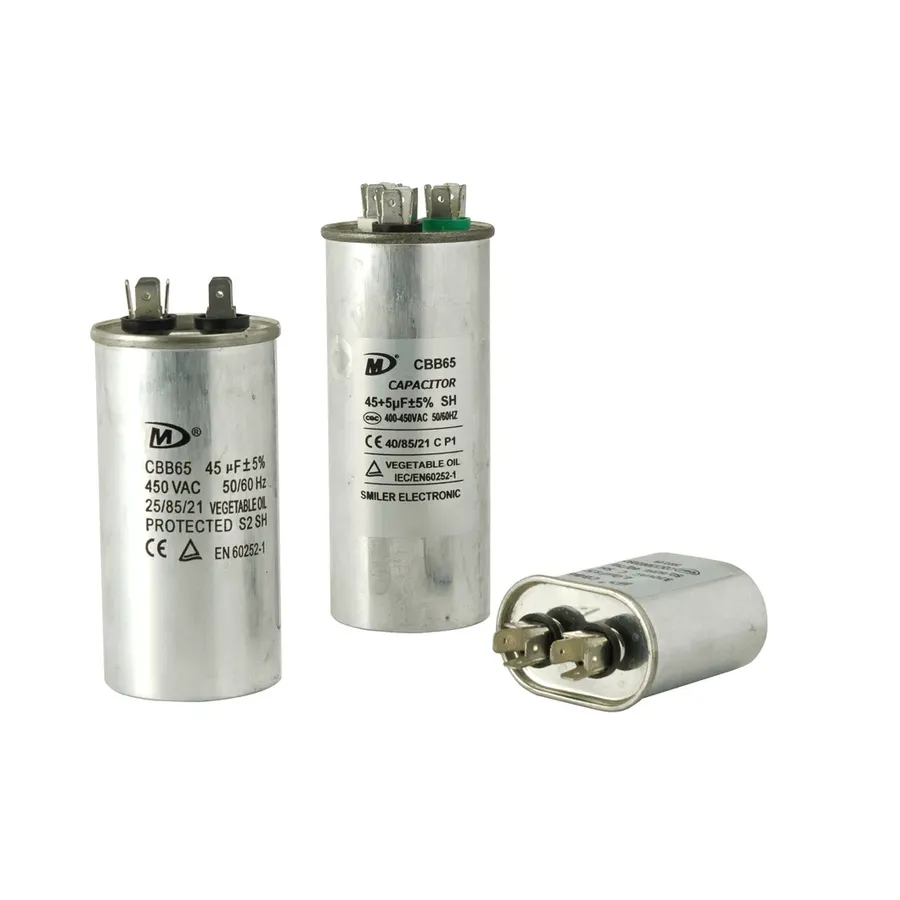
CBB65 capacitors are characterized by several critical specifications that dictate their suitability for specific applications. Understanding these parameters—capacitance, voltage rating, operating frequency, and physical dimensions—is paramount for proper selection and optimal performance of AC motors. These specifications ensure the capacitor can effectively perform its function of providing the necessary phase shift for motor operation, while also ensuring safe and reliable use.
| Specification | Description | Typical Values | Importance |
|---|---|---|---|
| Capacitance | The ability of the capacitor to store electrical charge, measured in microfarads (µF or MFD). | Varies widely, e.g., 5µF to 100µF. Common values include 20uF, 40uF, 45uF, 60uF | Determines the amount of phase shift provided to the motor windings and is critical for starting torque and running efficiency. Incorrect capacitance can result in motor failure, overheating, or improper starting. |
| Voltage Rating | The maximum AC voltage the capacitor can safely withstand without dielectric breakdown, measured in Volts AC (VAC). | Commonly 370VAC or 450VAC | This rating must equal to or exceed the voltage applied in the circuit. Using a capacitor with insufficient voltage rating leads to premature failure. It's better to use a capacitor rated for higher voltage than the application, but not lower. |
| Operating Frequency | The frequency of the alternating current the capacitor is designed for, measured in Hertz (Hz). | Typically 50/60Hz | Ensures the capacitor operates correctly with the supplied electrical frequency. Using a capacitor with an incorrect frequency can lead to inefficiency and premature failure. The 50/60Hz rating makes them suitable for most common AC power systems. |
| Physical Dimensions | The size and shape of the capacitor, including diameter and height, which affect its suitability for installation within equipment. | Varies widely based on capacitance and voltage, including round and oval shapes. | The physical size and shape must fit the available space in the equipment and should match the mounting hardware. This ensures secure and safe installation. Pay attention to the type of mounting terminals also. |
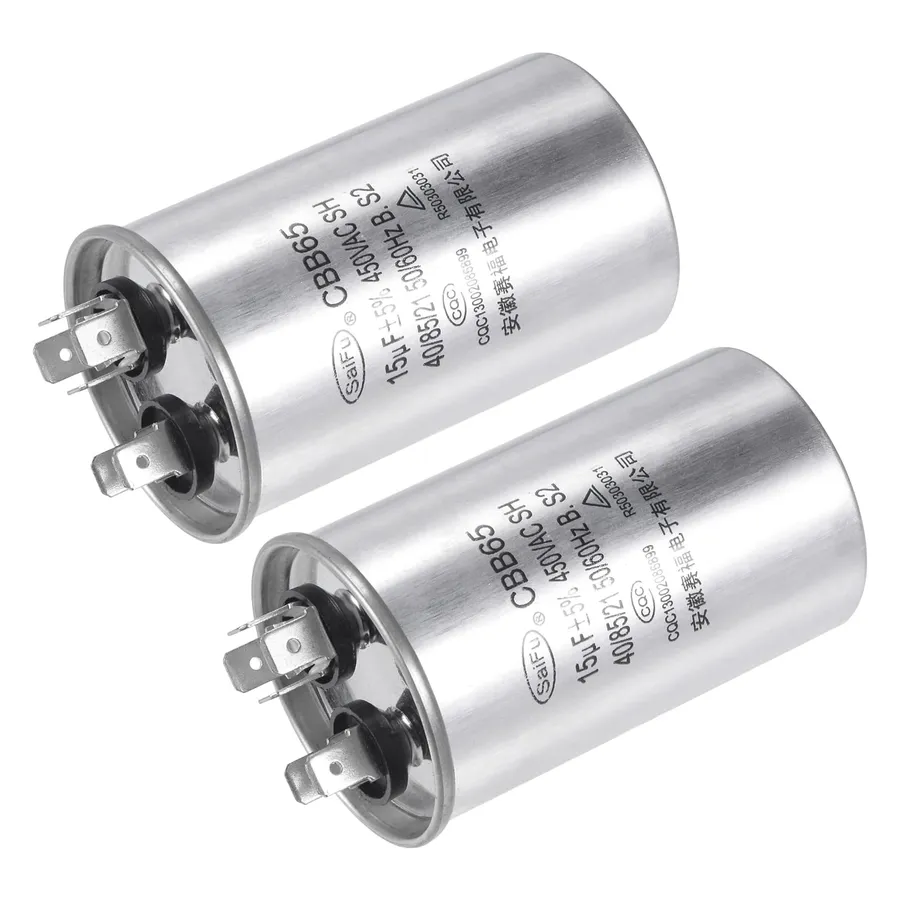
CBB65 capacitors are available in various physical configurations and internal designs to suit different application needs. The two primary distinctions lie in their shape—round or oval—and their internal circuitry, classified as either single or dual run.
| Feature | Round CBB65 | Oval CBB65 |
|---|---|---|
| Shape | Cylindrical, circular cross-section. | Flattened, elliptical cross-section. |
| Mounting | Usually mounted using clamps. | May have mounting studs or brackets for easier installation in space constrained environments. |
| Space Efficiency | Potentially takes up more space in one dimension. | Can fit into narrow or confined spaces more easily. |
| Common Application | Used in various applications, including HVAC systems. | Common in applications where space is limited or specific mounting is required. |
Beyond the shape differences, the internal configuration of CBB65 capacitors is also crucial:
| Type | Description | Application |
|---|---|---|
| Single Run | Has one capacitor element and two terminals. | Used for single-speed motors. |
| Dual Run | Contains two capacitors of different capacitance values within a single case, has three or more terminals. | Typically used in HVAC systems to operate both the fan motor and the compressor motor. |
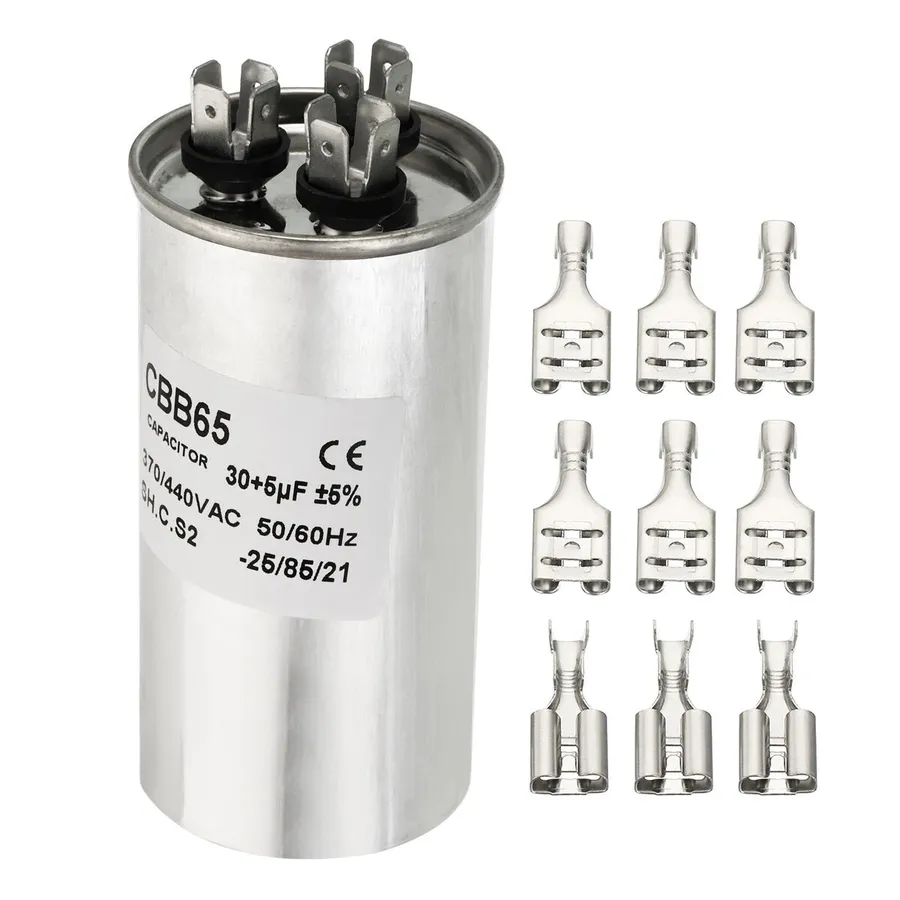
Selecting the appropriate CBB65 capacitor is paramount for ensuring optimal motor performance and extending its operational lifespan. This involves careful consideration of several key parameters, most critically the voltage rating, capacitance value, and physical dimensions, ensuring they align with the specific requirements of your motor. A mismatch can lead to reduced efficiency, overheating, or even complete motor failure.
| Parameter | Description | How to Identify | Consequence of Mismatch |
|---|---|---|---|
| Voltage Rating (VAC) | The maximum voltage the capacitor can safely handle. | Printed on the capacitor's label (e.g., 370VAC, 450VAC). | Using a capacitor with a lower voltage rating can cause it to fail prematurely; using a higher voltage rating is acceptable but may be unnecessary. |
| Capacitance (µF or MFD) | The amount of charge the capacitor can store, directly influencing motor torque and start-up. | Printed on the capacitor's label (e.g., 20µF, 40µF). | Incorrect capacitance can lead to reduced motor torque, starting issues, and motor overheating. Generally, a small variation (+/- 5%) is acceptable. It should never be lower, it's better to go slightly higher rather than lower. |
| Physical Dimensions | The size and shape of the capacitor, crucial for physical fit within the motor housing. | Measure the capacitor's diameter and height. Refer to the original capacitor or motor specifications. | Physically incompatible capacitors cannot be installed or may risk damage due to incorrect fit. |
| Operating Frequency (Hz) | The frequency at which the capacitor is designed to operate. | Usually printed on the capacitor label, typically 50/60Hz | Operating outside the frequency can lead to capacitor damage and reduced efficiency. Generally, most motors operate at 50/60 Hz, so the capacitor should match that. |
To ensure you select the correct CBB65 capacitor, follow this process: First, identify the existing capacitor's specifications, typically found on its label. Verify these specs align with the replacement capacitor you are about to purchase. If the original capacitor's label is no longer legible, check the motor’s documentation or manufacturer's specification. For physical dimensions, utilize calipers to measure the diameter and height to ensure a correct fit. When in doubt it's recommended to consult a qualified electrician, ensuring compliance with relevant safety guidelines and standards.
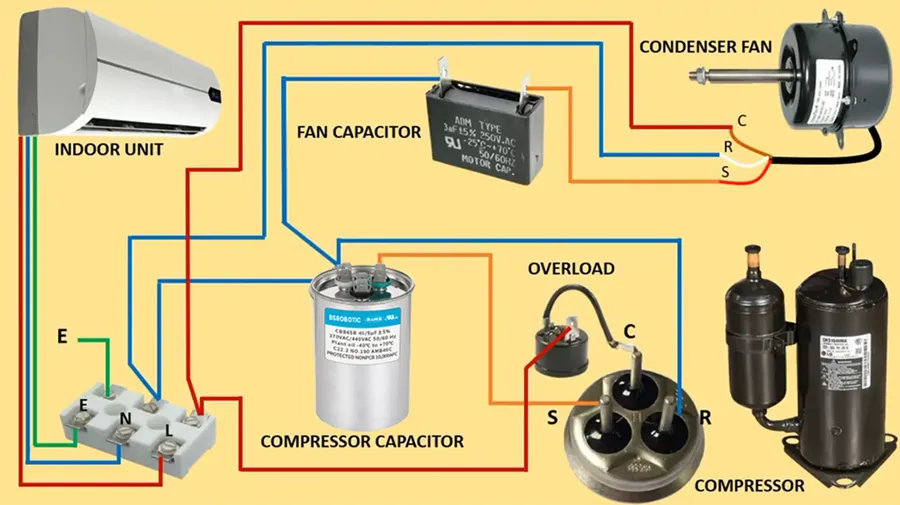
Correctly wiring a CBB65 capacitor is paramount to ensure the efficient and safe operation of your AC motor. Improper wiring can lead to motor malfunction, capacitor damage, or even safety hazards. This section details the wiring process with a step-by-step guide, emphasizing critical safety precautions.
Before beginning, it is crucial to understand that CBB65 capacitors are non-polarized, meaning they do not have designated positive or negative terminals. This simplifies the wiring process but does not diminish the importance of precise connections. Below is a typical wiring scenario for a single-phase AC motor.
Following these steps will help ensure correct and safe installation of the CBB65 capacitor, allowing your motor to run smoothly and efficiently. Always refer to the motor's specific documentation for exact wiring diagrams, as variations may exist.
For any work that you are not comfortable with, consult a qualified electrician. Safety should always be a priority.
While both CBB65 and CBB65B capacitors serve as motor run capacitors, subtle yet significant differences exist, primarily in their construction and performance characteristics. The CBB65B variant is typically engineered for more demanding operational conditions, offering enhanced durability and reliability under stressed environments.
| Feature | CBB65 | CBB65B |
|---|---|---|
| Construction | Standard metallized polypropylene film | Enhanced metallized polypropylene film with heavy-duty encapsulation |
| Operating Temperature | Typically -25°C to +70°C | Typically -40°C to +85°C or higher, depending on the manufacturer |
| Durability | Good, suitable for standard applications | Superior, suitable for harsher environments |
| Expected lifespan | Standard operating life expectancy | Extended operating life expectancy due to improved construction |
| Application | General purpose AC motor applications | Applications requiring increased reliability, such as in industrial equipment or in extreme climates |
In essence, the choice between CBB65 and CBB65B hinges on the specific operational demands and environmental conditions. For standard applications, the CBB65 performs reliably. However, for systems exposed to higher temperatures or demanding operational cycles, the CBB65B offers a more robust solution with an extended lifespan. Always refer to the manufacturer’s datasheets to ensure the chosen capacitor is appropriate for your specific application, and follow safety guidelines for installation and maintenance.
CBB65 capacitors, while reliable, are subject to failure over time due to electrical stress, heat, and physical damage. Identifying and addressing these issues promptly is crucial for maintaining the performance and longevity of motor-driven equipment. This section will detail the common symptoms of a failing CBB65 capacitor, along with practical troubleshooting steps.
When troubleshooting, always disconnect power before inspecting or replacing components. Use a multimeter to test the capacitor's capacitance to confirm the failure, and always replace a faulty capacitor with one of identical specifications.
This section addresses common queries about CBB65 capacitors, providing clear and concise answers to enhance understanding and facilitate informed decision-making regarding their application and maintenance.
Proper maintenance of CBB65 capacitors is essential to ensure their longevity and optimal performance, preventing premature failure and costly replacements. Implementing a few proactive measures can significantly extend the operational lifespan of these critical components in motor systems.
The CBB65 capacitor is an indispensable component in various motor-driven systems, providing the necessary boost for smooth operation and efficient energy use. Understanding its different types, specifications, and how to properly install and maintain it, is essential for both professionals and homeowners. Armed with the knowledge shared in this guide, you are now better equipped to ensure the longevity and optimal performance of your motors. By addressing everything from selection to troubleshooting, we hope this comprehensive exploration of the CBB65 capacitor empowers you to maintain your equipment and keep your motors humming for years to come, from your home air conditioner to industrial equipment.

